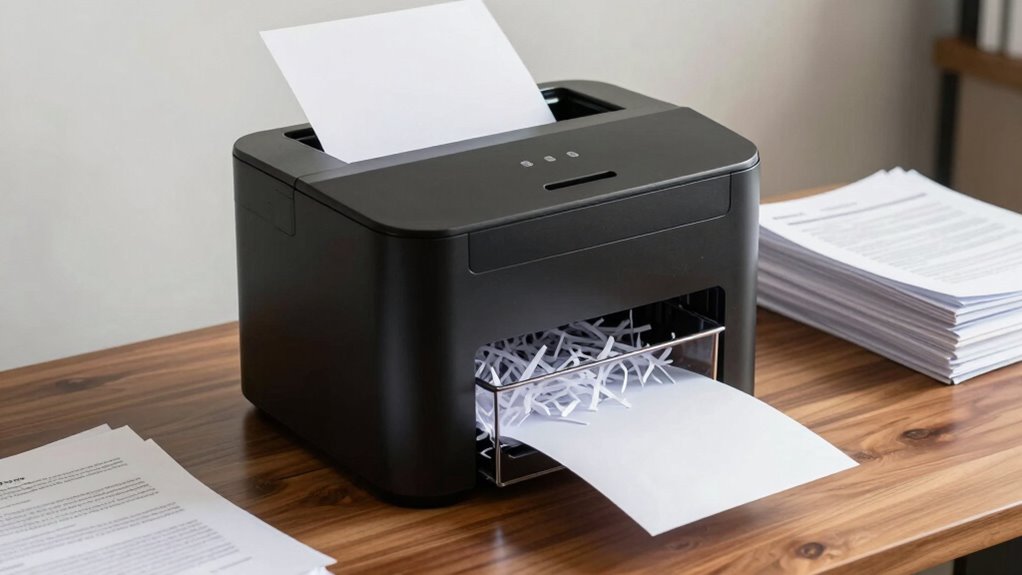

To choose the right sheet capacity for your office shredder, take into account your daily shredding needs and how much volume you process regularly. Small-capacity shredders (5-10 sheets) suit light use, while larger ones (20+ sheets) handle high-volume tasks efficiently. Matching capacity to your workload prevents jams and ensures smooth operation, saving you time and effort. Keep in mind that proper maintenance also extends your shredder’s lifespan. If you want to optimize your shredder’s performance, there’s more to reflect on.

Get smart everyday buys delivered free with Prime
- Fast, free delivery on millions of items
- Prime Video, Amazon Music and more included
- Member-only deals all year
Key Takeaways
- Match shredder capacity to your daily volume of documents to prevent frequent jams and interruptions.
- For low daily shredding needs, a shredder handling 5-10 sheets is sufficient.
- High-volume offices benefit from shredders capable of processing 20 or more sheets at once.
- Consider future growth; choose a shredder with slightly higher capacity than current requirements.
- Regular maintenance ensures the shredder performs optimally at its rated capacity.
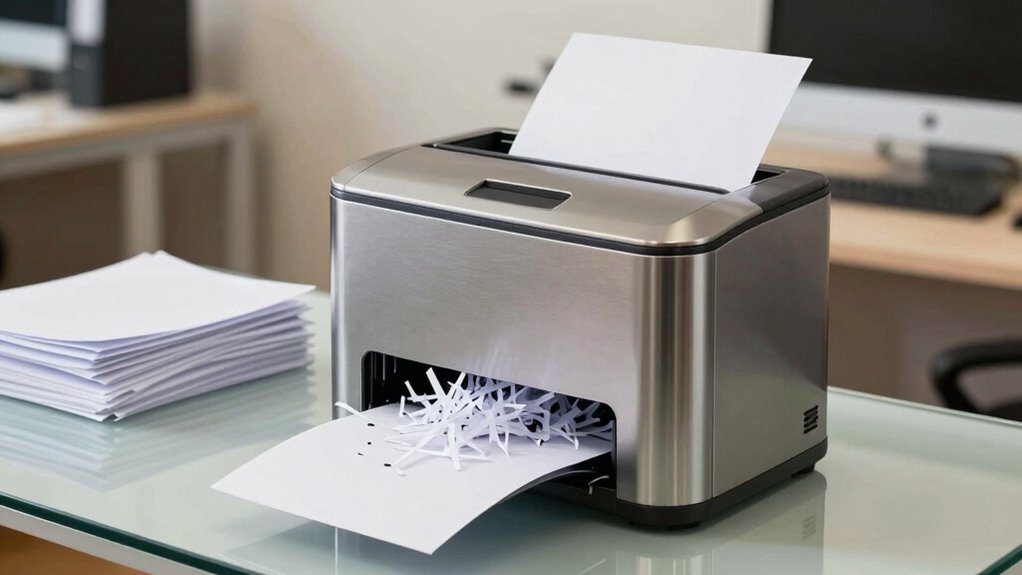
Understanding shredder sheet capacity is essential when choosing the right shredder for your needs. It helps you determine how many sheets you can securely shred at once, guaranteeing your workflow stays smooth and efficient. If you’re managing a busy office, knowing your shredder’s capacity prevents jams and reduces downtime. It also plays a key role in your paper recycling efforts, as shredding larger volumes at once can make recycling more straightforward and eco-friendly.
Understanding shredder capacity ensures smooth workflow, reduces jams, and supports eco-friendly paper recycling.
When selecting a shredder, consider how many documents you typically process daily. If you only shred a few pages at a time, a smaller capacity shredder—say, one that handles 5 to 10 sheets—might suffice. But if your daily shredding volume is higher, especially for confidential documents or bulk paper, you’ll need a shredder with a larger sheet capacity, perhaps 20 sheets or more. Matching the shredder capacity to your workload helps you avoid constant feeding interruptions, saving time and effort.
Shredder maintenance is equally important to keep your machine performing well and to extend its lifespan. Regularly cleaning your shredder, especially around the blades, prevents paper dust buildup that can clog the mechanism. Lubricating the blades with shredder oil ensures smooth operation and reduces the risk of overheating or jams. When you’re shredding large volumes, proper shredder maintenance becomes even more critical—not just for efficiency, but also to support your paper recycling efforts. Proper maintenance ensures that shredded paper is produced cleanly, making it easier to recycle and process.
Additionally, understanding your shredder’s sheet capacity can help you avoid overloading the machine, which can lead to damage and costly repairs.
Understanding your shredder’s sheet capacity and maintaining it properly go hand in hand. A shredder that’s overused beyond its capacity can cause frequent jams, damage the blades, and ultimately require costly repairs or replacement. By choosing a shredder that aligns with your typical workload, you reduce the risk of these issues. Also, by keeping your shredder in good shape through regular maintenance, you ensure it functions effectively for years to come. This way, you won’t have to replace it prematurely or struggle with inefficient shredding.
Products Worth Considering

HP Sprocket Portable 2×3 Instant Photo Printer, Lilac, with ZINK Paper Bundle

Dell XPS 13 9350 Copilot+ Laptop, 13.4-inch 120Hz Display, Intel Core Ultra 7 256V, 16GB RAM, 512GB SSD, Ubuntu Linux 24.04 LTS

Apple MacBook Air 13-inch Laptop with M5 Chip, 16GB Memory, 512GB SSD, Liquid Retina Display, and Touch ID – Midnight
As an affiliate, we earn on qualifying purchases.
Frequently Asked Questions
Can a Shredder Handle Continuous, High-Volume Shredding?
Yes, some shredders can handle continuous, high-volume shredding, especially commercial-grade models. Look for shredders with robust security features like cross-cut or micro-cut options, which guarantee document safety. Keep noise levels in mind, as heavy-duty shredders might be louder during extended use. Regular maintenance and choosing a shredder with a high sheet capacity can help you manage large volumes smoothly without sacrificing security or creating excessive noise.
How Does Sheet Capacity Affect Shredder Lifespan?
Your shredder’s sheet capacity directly impacts its lifespan—overloading it can cause severe damage, like a ticking time bomb ready to explode. When you feed more sheets than recommended, it strains the motor and reduces shredder durability. To prevent paper jams and keep your shredder running smoothly, always follow the manufacturer’s capacity guidelines. Proper use guarantees your shredder stays efficient and lasts longer, saving you money and frustration.
Are There Differences in Capacity for Cross-Cut Versus Strip-Cut Shredders?
Yes, cross-cut shredders typically have lower sheet capacities than strip-cut models because they create smaller, more secure paper pieces. This difference impacts paper security, making cross-cut shredders harder to reconstruct documents. Additionally, higher capacity shredders often produce more noise, affecting shredder noise levels. You should consider your security needs and noise tolerance when choosing between cross-cut and strip-cut shredders, balancing capacity with paper security and noise considerations.
What Features Improve Shredding Efficiency for Large Volumes?
Think of your shredder as a busy highway; efficient features keep traffic flowing smoothly. To improve shredding for large volumes, look for paper safety features that prevent jams and injuries, and noise reduction technology that keeps the chaos quiet. These features guarantee your shredder handles high demand seamlessly, maintaining safety and comfort. With the right tools, your shredding process becomes a swift, secure journey through the busy data highway.
How Often Should a Shredder With High Capacity Be Maintained?
You should maintain your high-capacity shredder regularly, ideally following the manufacturer’s maintenance schedules. Oil lubrication is essential to keep the blades sharp and prevent overheating. Typically, you’ll need to oil the shredder after every few hours of use or weekly, depending on usage volume. Regular maintenance ensures smooth operation, prolongs your shredder’s lifespan, and reduces the risk of jams or breakdowns during heavy-duty shredding tasks.
Conclusion
So, when you’re choosing a shredder, remember that your needs might surprise you—sometimes, a smaller capacity fits perfectly, especially when you least expect it. You might find yourself clearing out a pile of documents, only to realize your shredder’s capacity was just enough to handle the job. It’s funny how these little coincidences happen, making the right choice not just practical but surprisingly effortless. Trust your instincts, and your shredder will serve you well.