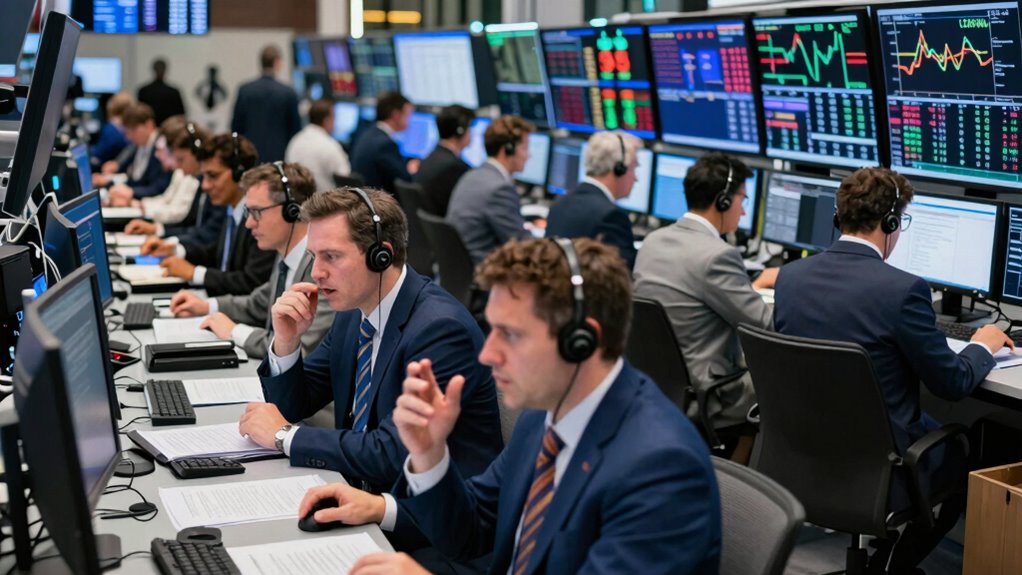

When many investors chase the same factor, like value or momentum, it creates crowded trades that can distort prices and give a false sense of security. During market stress, these trades tend to unwind rapidly, causing wild swings and quick losses. Liquidity can dry up, making it tough to exit positions without accepting losses. Technology and algorithms can speed up these moves, turning seemingly smart strategies into fragile, high-risk trades. Knowing how to identify these risks is vital—continue to explore how to protect your investments.

Get smart everyday buys delivered free — and shop member deals
- Fast, free delivery on millions of items
- Access to Prime Big Deal Days deals on October 6–7
- Prime Video, Amazon Music and more included
Key Takeaways
- Crowding inflates factor prices, creating false security and temporary gains in investment strategies.
- During market stress, crowded trades unwind rapidly, causing sharp declines and increased chaos.
- High concentration in factors reduces liquidity, making it costly and difficult to exit positions.
- Technology accelerates crowding and unwinding, magnifying market volatility and risking instability.
- Effective risk management involves early detection of crowding and diversification to prevent fragile trades.
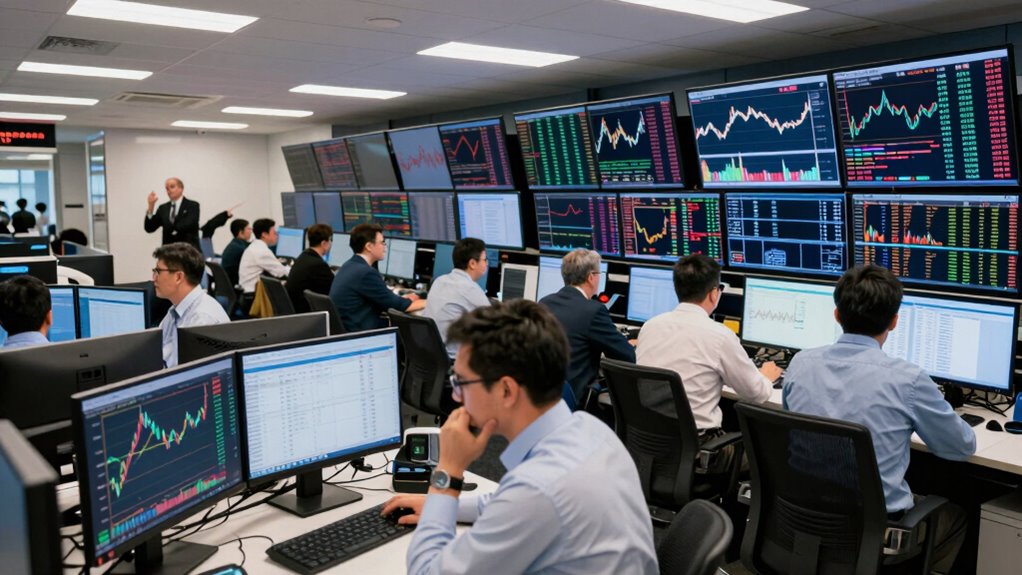
When too many investors pile into the same factor, even the smartest strategies can become dangerously fragile. This phenomenon, known as factor crowding, amplifies the risks associated with market volatility and liquidity. As more market participants chase the same signals—be it value, momentum, or low volatility—the price of these factors can become distorted, creating a false sense of security. You might see consistent returns for a while, but the underlying stability is delicate. When a sudden shift occurs, such as a market downturn or a change in economic outlook, the crowded trade can unravel quickly, leaving you exposed to sharp losses.
Factor crowding makes even solid strategies vulnerable to sudden market shifts and sharp losses.
Market volatility intensifies this vulnerability. When crowded trades start to unwind, prices can swing wildly as investors rush to exit their positions simultaneously. Because many are in the same boat, the speed and magnitude of these moves can be overwhelming. Your previous gains might evaporate in a matter of days, and trying to stay afloat becomes a game of managing the chaos rather than executing a well-thought-out plan. This heightened volatility makes it difficult to predict how markets will behave, especially when the crowd begins to panic. Additionally, market dynamics can accelerate the pace of these unwinding processes, making timing even more challenging. Recognizing the importance of market structure in these situations can help investors better anticipate and respond to abrupt shifts. Furthermore, the interconnectedness of modern markets often means that a disturbance in one area can rapidly spread, *highlighting the importance of systemic risk awareness* and increasing the risk of a sudden collapse.
Liquidity risks also play a significant role. When a large portion of investors is concentrated in a specific factor, liquidity can dry up quickly. It becomes harder to exit positions without causing a significant impact on the market price. You may find yourself caught in a situation where selling your holdings at a reasonable price is impossible, forcing you to accept losses or hold onto assets longer than you’d like. During times of stress, liquidity tends to evaporate faster, turning what seemed like a safe investment into a trap. This liquidity crunch can deepen losses and increase the likelihood of a forced liquidation, further exacerbating the downward spiral. Recognizing liquidity risk early can help you formulate better exit strategies and reduce potential losses.
Additionally, understanding the role of technology and trading algorithms in modern markets is essential, as they can accelerate the pace of crowding and unwinding processes. These technological tools often magnify market movements, turning what could be a disciplined investment strategy into a fragile, high-risk trade. You need to stay alert to signs of crowded trades and be cautious about overexposure in popular factors. Diversification and risk management become even more critical when the crowd begins to shift, as the unwinding process can be swift and severe. Recognizing the signs of crowding early can help you avoid getting caught in the storm, but once the crowd starts to panic, even the best strategies can falter. Being prepared for sudden shifts and understanding the risks of market volatility and liquidity crunches are crucial to protecting your investments in these crowded environments.
risk management investment books
As an affiliate, we earn on qualifying purchases.
As an affiliate, we earn on qualifying purchases.
Frequently Asked Questions
How Can Investors Identify Signs of Factor Crowding Early?
To spot signs of factor crowding early, pay close attention to market sentiment and investor behavior. When you notice many investors piling into the same factor or strategy, it’s a red flag that crowding might be happening. Look for rapid inflows, heightened trading volumes, and a shift in market sentiment toward optimism. These signs suggest that the crowding could make the strategy fragile, increasing your risk of a sudden reversal.
What Historical Examples Demonstrate the Impact of Factor Crowding?
You see how market liquidity shrinks during the 2007-2008 financial crisis, exposing the dangers of factor crowding. Behavioral biases like herding led many to pile into certain factors, amplifying risks and causing rapid sell-offs. Similarly, the 2015 Chinese stock sell-off showed how crowded factor trades can trigger panic, revealing vulnerabilities. These examples highlight how crowding can turn seemingly smart strategies into fragile, liquidity-driven trades.
Are There Specific Markets More Susceptible to Factor Crowding Effects?
Did you know that emerging markets often experience higher susceptibility to factor crowding? You’ll find that in these markets, herd behavior and market saturation amplify risks, making smart strategies fragile. When too many investors chase the same factors, market moves become volatile and unpredictable. This environment creates a delicate balance where crowding can quickly turn promising trades into risky bets, especially in less liquid or smaller markets.
How Does Factor Crowding Influence Long-Term Investment Returns?
Factor crowding can negatively impact your long-term investment returns by amplifying behavioral biases like herding, which may lead to overvalued assets. It also tightens liquidity constraints, making it harder to exit positions without significant losses during market downturns. As more investors chase the same factors, your strategy becomes fragile, increasing the risk of sharp declines. To protect your returns, diversify and monitor crowding indicators regularly.
What Strategies Can Mitigate Risks Associated With Factor Crowding?
Irony strikes: the best way to avoid the fragility of crowded factors is to embrace risk management and diversify. You can mitigate risks by spreading your investments across various factors and asset classes, preventing overexposure. Regularly rebalancing your portfolio and staying alert to shifting market conditions also help. These diversification strategies act as a safety net, ensuring you’re not vulnerable when crowded trades unwind unexpectedly.
market volatility analysis tools
As an affiliate, we earn on qualifying purchases.
As an affiliate, we earn on qualifying purchases.
Conclusion
Remember, even the smartest strategies can be gently nudged into delicate situations when too many follow the same path. While crowding may seem like a sign of confidence, it often whispers a quiet caution. Stay vigilant, diversify your approach, and don’t let the allure of consensus lull you into vulnerability. By paying attention to subtle shifts, you can navigate the complexities with resilience, turning potential fragility into a quiet strength that endures beyond fleeting trends.
liquidity risk assessment software
As an affiliate, we earn on qualifying purchases.
As an affiliate, we earn on qualifying purchases.
diversification investment strategies
As an affiliate, we earn on qualifying purchases.
As an affiliate, we earn on qualifying purchases.
Halloween Picks
halloween
As an affiliate, we earn on qualifying purchases.