

You’ll get a clearer picture of a potential recession when you look at multiple indicators instead of just one. Relying solely on stock market trends or unemployment rates can be misleading because they don’t show the full economic story. Combining data like consumer sentiment and manufacturing output offers a more reliable warning system. Stick with this approach, and you’ll better understand the complexities of economic shifts, helping you stay ahead of potential downturns.

Get smart everyday buys delivered free with Prime
- Fast, free delivery on millions of items
- Prime Video, Amazon Music and more included
- Member-only deals all year
Key Takeaways
- Multiple indicators provide a fuller, more accurate picture of economic health than any single measure.
- Consumer sentiment and manufacturing output together strengthen recession signals.
- Relying on diverse data helps avoid false alarms caused by short-term fluctuations.
- Isolated signals may mislead; combining indicators reduces the risk of misinterpretation.
- A comprehensive approach improves recession prediction accuracy and economic decision-making.
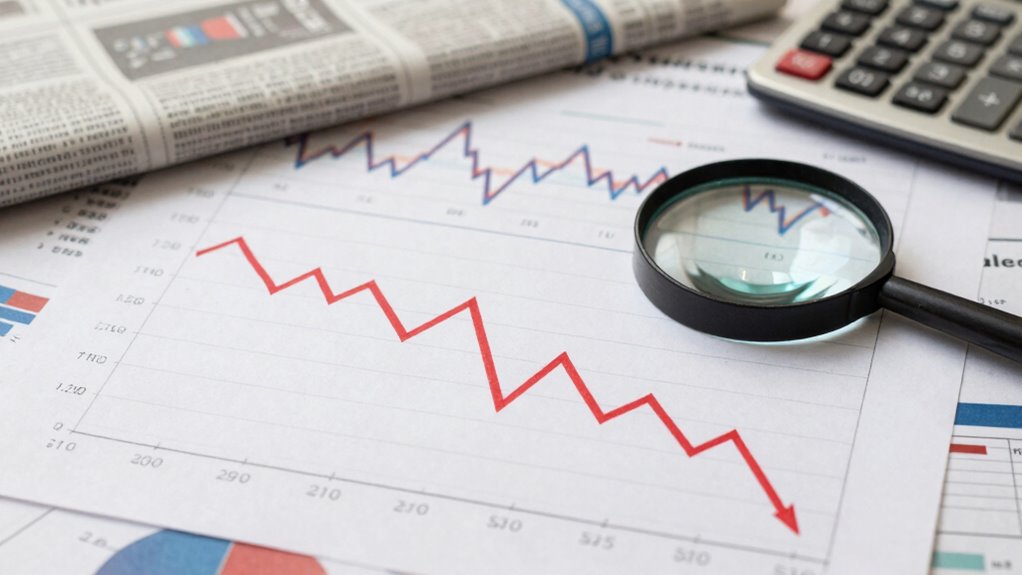
Are you wondering how to tell if an economic downturn is on the horizon? It’s a common question, and the truth is, relying on just one indicator isn’t enough. Many people look solely at stock market trends or unemployment rates, but these signals can be misleading if taken in isolation. Instead, you should focus on multiple indicators that, when combined, give a clearer picture of where the economy is headed. Two crucial signals to watch are consumer sentiment and manufacturing output. Both provide valuable insights into the health of the economy and, when they decline, can hint at a looming recession.
Consumer sentiment reflects how confident people feel about their financial futures and the overall economy. When consumers feel uncertain or pessimistic, they tend to cut back on spending, which directly impacts economic growth. A drop in consumer sentiment often precedes a slowdown because people start saving more and spending less, leading to decreased demand for goods and services. Watching this indicator alone isn’t enough, but when it aligns with other signs—like decreasing manufacturing output—it becomes a strong warning signal. If consumers are worried and factories are producing less, it’s a sign that economic activity is waning. Recognizing the importance of economic indicators helps in understanding broader market trends and avoiding false alarms. Additionally, looking at multiple data points offers a more robust analysis, reducing the risk of misinterpretation.
Manufacturing output measures how much factories are producing and is a vital indicator of economic vitality. When manufacturing output declines, it suggests that demand for goods is dropping, which can ripple across other sectors. A slowdown in manufacturing often signals that businesses anticipate weaker sales ahead, leading them to cut back on production. This reduction can cascade into layoffs and decreased investment, further slowing the economy. However, manufacturing output alone can sometimes dip temporarily due to supply chain issues or seasonal factors, so it’s important to look at it alongside other indicators like consumer sentiment. Additionally, sustained declines in manufacturing output are more reliable signals of economic trouble than short-term fluctuations. Understanding the diverse range of economic signals is crucial for a comprehensive assessment, as it helps avoid misinterpreting temporary setbacks as signs of a recession. Recognizing the importance of economic indicators helps in understanding broader market trends and avoiding false alarms.
consumer sentiment analysis tools
As an affiliate, we earn on qualifying purchases.
As an affiliate, we earn on qualifying purchases.
Frequently Asked Questions
How Do Different Economic Sectors Signal Recession Risks?
You can spot recession risks by analyzing sector-specific trends and market sentiment. When sectors like manufacturing or retail show declining activity, it signals economic slowdown. Negative market sentiment, such as falling stock prices or reduced investment, further confirms risks. By observing multiple sectors and how investors feel, you get a clearer picture of potential recession signs, rather than relying on just one indicator. This all-encompassing approach helps you better understand economic health.
Can Consumer Behavior Predict Recession Earlier Than Economic Data?
Yes, consumer behavior can predict a recession earlier than official economic data. You can spot signs in consumer sentiment and spending patterns—if sentiment drops or spending declines sharply, it suggests people are worried about the economy. These early signals often precede broader economic downturns, giving you a heads-up. Monitoring shifts in consumer confidence and spending habits helps you stay ahead of potential recession risks.
What Role Do Global Events Play in Recession Indicators?
Think of global events as the weather affecting your financial forecast. Geopolitical tensions and currency fluctuations act like sudden storms, shaking markets and clouding recession signals. These external factors can distort economic indicators, making it harder to predict a downturn accurately. Staying aware of international developments helps you interpret recession signs more clearly, ensuring you’re not caught off guard when global shifts ripple into your local economy.
Are There Lag Times Between Indicator Signals and Recession Onset?
Yes, there are lag times between indicator signals and recession onset. Through lag analysis, you can see that some indicators, like unemployment rates or yield curves, tend to signal a recession months before it begins. Understanding indicator timing helps you interpret these signals more accurately, giving you a better chance to prepare or adjust your strategies. Recognizing these lags is vital for making informed decisions in economic forecasting.
How Reliable Are Recession Indicators During Unprecedented Crises?
Ironically, during unprecedented crises, recession indicators become surprisingly unreliable. You’d think they’d predict accurately, but financial forecasts often miss the mark because policy responses complicate the picture. In such times, relying solely on these indicators can mislead you, as governments and central banks act unpredictably. To navigate these turbulent waters, you need a broader view—combining multiple signals and understanding how policy responses shape the economic landscape.
As an affiliate, we earn on qualifying purchases.
Conclusion
So, next time you’re watching those recession indicators, remember: focusing on just one can mislead you. By analyzing multiple signals together, you get a clearer picture of the economy’s true health. Are you truly prepared to make informed decisions, or are you relying on a single alarm? Don’t let one indicator fool you — broaden your perspective and stay ahead of the curve. After all, a well-rounded view is your best defense against unexpected downturns.
economic recession indicator kit
As an affiliate, we earn on qualifying purchases.
As an affiliate, we earn on qualifying purchases.
economic trend forecasting books
As an affiliate, we earn on qualifying purchases.
As an affiliate, we earn on qualifying purchases.
Halloween Picks
halloween
As an affiliate, we earn on qualifying purchases.