
TL;DR
Investment tracking apps bring information from accounts and assets into one place so you can review balances, holdings, and portfolio performance. Before choosing one, check account support, update frequency, return calculations, fees, and data protections; a dashboard can simplify oversight, but it cannot guarantee accurate data or better investment results.
Your retirement account says one thing, your brokerage shows another, and that old spreadsheet is two months behind. Investment tracking apps can bring those scattered figures together, giving you a clearer view of your holdings without requiring you to open five tabs.

Get smart everyday buys delivered free with Prime
- Fast, free delivery on millions of items
- Prime Video, Amazon Music and more included
- Member-only deals all year
This guide explains what these apps track, how to judge their return numbers, and what to check before linking an account. You’ll also see why a neat dashboard can still be wrong—and how to use one as a tracking tool, not a promise about future returns.
Check whether a tracker supports your actual brokerages, retirement accounts, regions, and asset types.
Compare return figures only after checking the method, dates, cash flows, dividends, and fees.
Confirm that balances and transactions update accurately; missing or duplicated data can distort a portfolio view.
Read the app’s privacy, pricing, and revenue terms, and learn how to revoke access or delete your account.
Use charts and automated insights to review your information, not as a guarantee of results or a substitute for personalized advice.
See what an investment tracking app actually does
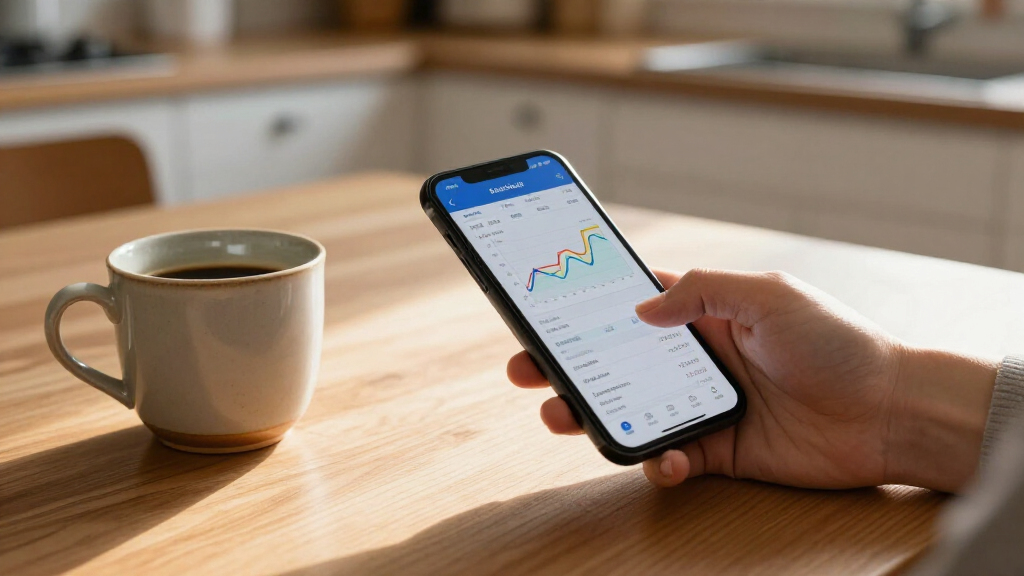
An investment tracking app gathers information about your holdings and presents it in one place. Depending on the service, it may connect to brokerage, retirement, bank, or crypto accounts; accept spreadsheet imports; or rely on manual entries. The result is a consolidated view of balances and investments, though the app may not let you trade.
That distinction matters. A tracker is more like a dashboard in your car: it shows what the systems report, but it doesn’t drive for you. For example, you might use an app to see your workplace retirement plan and personal brokerage side by side, then sign in to each provider separately to make trades.
Some apps focus on portfolio analysis, while others bundle investing views with budgeting, cash flow, net worth, tax records, or financial planning. Those extra features can be useful, but check what each one includes and whether it costs more. A good choice starts with the job you want the app to do.
Products Worth Considering

Logitech MX Master 4 Ergonomic Wireless Mouse with Haptics – Graphite

Canon SELPHY CP1500 Compact Photo Printer Bundle with Two KP-108IN Ink and Paper Sets, Black

FLEXISPOT 36-Inch Height-Adjustable Standing Desk Converter with Keyboard Tray, Black
As an affiliate, we earn on qualifying purchases.
Compare apps by the job you need them to do
Investment tracking apps differ most in the accounts they cover, the detail they show, and the way they earn money. Compare those features against your actual needs instead of picking a service because a list calls it “best.” An app that handles your retirement plan may still miss your other investments.
| What you need | What to check | Example tradeoff |
|---|---|---|
| One view of several accounts | Supported institutions, asset types, and regions | Automatic syncing saves entry time but may not cover every provider |
| Portfolio analysis | Allocation, diversification, overlap, and benchmarks | Charts depend on complete holdings and accurate classifications |
| Tax record support | Dividends, cost basis, realized gains, and jurisdiction | Coverage can vary; estimates may not match official documents |
| Low cost | Plan limits, subscription price, ads, referrals, and promotions | A free plan may have tradeoffs in features or data use |
Say you have a workplace retirement plan, two brokerage accounts, and a small amount of crypto. A tracker that links the first three but requires you to enter crypto manually may still suit you—if it clearly labels manual values and lets you update them. A beautiful chart is less helpful if it quietly leaves out a large account.
Check the numbers before trusting a portfolio return
Investment tracking apps can report different returns because “return” does not always mean the same thing. Time-weighted return helps assess the investments while reducing the effect of deposits and withdrawals; money-weighted return reflects your own cash flows and their timing. A simple price change may leave out dividends, fees, or taxes.
Imagine you add $5,000 to an account just before markets rise. Your account balance may jump, but that deposit is not investment growth. One app might emphasize the change in portfolio value, while another calculates a return that accounts for the cash you added. Neither figure makes sense without knowing the method and dates.
Before comparing performance, check the return type, time period, cash flows, and treatment of dividends and fees. Also inspect whether the app has imported duplicate or missing transactions. A stale price or unrecorded dividend can make a tidy percentage look precise while telling the wrong story.
A return number is only useful when you know what went into it. Check its method, time period, and account data before comparing it with another app or benchmark.
Link accounts with privacy and control in mind
Investment tracking apps may use different methods to retrieve account data, and permissions differ by provider. Some connections use read-only credentials or third-party data aggregators; others rely on institution-specific integrations. Check current terms and permissions directly, because support and account-linking arrangements can change.
Before you connect an account, read the provider’s security documentation and privacy policy. Look for how it protects stored information, shares data, handles account deletion, and lets you revoke access. If you cannot tell who receives your data or how to disconnect an institution, pause and get that answer from the provider.
“Free” also deserves a closer look. A provider may earn revenue from subscriptions, advertising, referrals, or financial-product offers. For example, a dashboard that highlights a recommended service may be showing a paid promotion; check whether the app labels it clearly and whether you can use the tracker without acting on it.
Use a short checklist before picking your tracker
Investment tracking apps are easier to evaluate when you test the details before relying on the dashboard. Start with one or two accounts, compare the imported figures with provider statements, and see whether you can find the source of each balance. A few minutes of checking can reveal whether the app fits your habits.
- List your accounts and assets. Include retirement plans, brokerage accounts, and any investments you would enter by hand.
- Confirm support and permissions. Check institution coverage, connection method, and what the app can access.
- Review a sample update. Compare balances and transactions with your account statements; look for delays, gaps, or duplicates.
- Learn the return method. Find out how the app treats cash flows, dividends, fees, and dates.
- Check the business model and exit options. Review pricing, promotions, export tools, access revocation, and account deletion.
For instance, if your monthly review happens on a laptop, an attractive phone app may not be enough. You may value spreadsheet exports more than alerts. Depending on the service, it may connect automatically to most of your accounts or leave one key plan for manual entry; test that workflow before building a routine around it.
Treat insights as prompts, not personal advice
Investment tracking apps can make allocation, sector exposure, holdings overlap, and benchmark comparisons easier to scan. Those views depend on complete account data and correct classifications. An app may label a fund’s exposure in a way that differs from your own provider’s presentation, so check the underlying holdings before drawing a firm conclusion.
Automated categories, alerts, and AI-assisted summaries can save time, but their conclusions depend on the information they receive. If an account is missing or a transaction has not updated, an alert may describe an incomplete portfolio. Treat a summary as a prompt to inspect the source data, not as individualized investment advice unless the provider explicitly offers that service.
Tracking can help you notice a change; it cannot make that change beneficial or remove investment risk. A beginner might use a monthly allocation view to understand where savings sit, while a long-term investor may only need a quarterly check for missing accounts and stale balances. More alerts do not automatically mean better decisions.
Frequently Asked Questions
Can an investment tracking app trade or move my money?
A tracker often displays and analyzes holdings without offering trades, but features and permissions vary by service. Check the app’s account-linking terms to see whether access is read-only and whether it can initiate transactions.
Why does the app show a different balance from my brokerage?
The app may update on a different schedule, or a transaction, dividend, or price may be missing or duplicated. Compare the same account and date, then review the imported transactions and update time before treating the difference as a mistake by either provider.
Can a tracker calculate my investment taxes?
Some apps track dividends, realized gains, or cost basis, but coverage depends on the account and your jurisdiction. Treat estimates as records to review, not a replacement for official tax documents or professional tax advice.
Are free investment tracking apps reliable?
Price alone does not tell you whether an app’s data is accurate or its protections meet your needs. Check how often accounts update, what the free plan includes, how the provider earns revenue, and what data it shares.
Conclusion
Choose an investment tracker by checking the accounts it covers, the way it calculates returns, and how it handles your data. Then compare its figures with your statements before you rely on the dashboard.
A useful app puts your financial picture in one frame. You still decide where to look—and what to do next.