
The best brokerage accounts for dividend investing pair easy dividend reinvestment and clear income tracking with access to the investments you want. This roundup’s best overall starting point is Dividend Investing Made Easy for readers who want an approachable foundation, while Investing In Dividends For Dummies stands out for structured beginner guidance and The Dividend Journal & Income Tracker for organizing payments. These are books and a tracking journal—not brokerage accounts—so they can help you evaluate an account but cannot replace checking a broker’s current features, fees, or account terms. The main tradeoffs are beginner-friendly explanations versus deeper strategy, and broad investing guidance versus tools focused on tracking or specific securities. Read on for the full breakdown and a guide to choosing an account that fits your dividend plan.

Get smart everyday buys delivered free with Prime
- Fast, free delivery on millions of items
- Prime Video, Amazon Music and more included
- Member-only deals all year
Key Takeaways
- This list contains 13 distinct titles, not 14: Get Rich with Dividends: A Proven System for Earning Double-Digit Returns appears twice in the supplied lineup.
- No listed item is a brokerage account. The books can inform your research, but you will need to compare brokerage platforms separately.
- Beginner-focused titles form the clearest entry path. Investing In Dividends For Dummies, Dividend Investing Made Easy, and the two beginner guides address foundational learning rather than account-specific features.
- The journal has a distinct practical role. The Dividend Journal & Income Tracker is aimed at recording income, while strategy books focus on how to think about dividend portfolios.
- Several titles make narrow or ambitious claims. Books centered on SCHD, stock picks, or specific return figures call for extra scrutiny; no book title alone can establish that a strategy or projected income is dependable.





| brokerage accounts for dividend investing | Format | Subject |
|---|---|---|
| Dividend Investing: Dependable | Book | Dividend investing |
| Get Rich with Dividends: A Pro | Book | Dividend investing |
| The Dividend Journal & Income | Log book | — |
| The SCHD Blueprint: Build Mont | Book | — |
| Dividend Investing Made Easy | Book | Dividend investing |
| Investing In Dividends For Dum | Book | Dividend investing |
| Dividend Investing for Beginne | Book | Beginner dividend investing |
| Dividend Investing for Beginne | Book | Beginner dividend investing |
| Dividend Growth Investing and | Book | Dividend-growth investing |
| Get Rich with Dividends: A Pro | Book | Dividend investing |
| Dividend Growth Investing: Get | Book | Dividend growth investing |
| Dividend Investing 101: What A | Book | Dividend investing basics |
| Mastering Trading & Investing: | Book | Trading and investing |
| 20 Dividend Stocks to Buy and | Book | Dividend stocks |
More Details on Our Top Picks
Dividend Investing: Dependable Income to Navigate All Market Environments
This book focuses on dividend income across changing market conditions, making it a strategy-oriented companion for investors deciding what to research in a brokerage account. Its broad framing contrasts with The SCHD Blueprint, which centers on one ETF, and with The Dividend Journal & Income Tracker, which is for recording payouts rather than choosing investments. That gives this title a wider stated scope, though the supplied details do not identify specific methods, account features, or examples. It is a book, not a brokerage account: it cannot provide trading, dividend reinvestment, tax reporting, or account support. I would pair it with a broker that offers access to dividend-paying securities and clear income records, while treating the title as general strategy material rather than a guide to comparing account platforms.
Pros:- Addresses dividend income across various market conditions
- Focuses on selecting and managing dividend-paying stocks
- Keeps attention on income and investment growth
Cons:- The provided information does not describe specific strategies or examples
- Does not compare brokerage accounts or explain their features
- Cannot track income or manage investments directly
Best for: Dividend investors who want broad strategy ideas for thinking about income across different market conditions before choosing a brokerage platform.
Not ideal for: Readers looking for brokerage comparisons, account-opening instructions, detailed portfolio examples, or a tool for tracking actual payouts.
- Format:Book
- Subject:Dividend investing
- Stated focus:Dependable dividend income
- Market scope:Various market conditions
- Investment topics:Selecting and managing dividend-paying stocks
- Account features:Not specified
Our verdict“Choose it for broad dividend strategy context, but pair it with a brokerage-focused resource before selecting an account.”
Get Rich with Dividends: A Proven System for Earning Double-Digit Returns
Its stated emphasis is building wealth through dividend-paying stocks, with a system presented around pursuing double-digit returns. That ambitious framing distinguishes it from Dividend Investing Made Easy, which is described as a straightforward introduction, and from The Dividend Journal & Income Tracker, which helps organize income after investments are held. For a brokerage-account roundup, the useful angle is the investment approach a reader may want to implement; the description does not say which platforms, account types, or practical steps the book covers. Return targets are not guarantees, and dividend payouts and share values can change. I would treat the title as strategy reading, not as a reason to expect a particular result or as a substitute for comparing a broker’s available investments, reinvestment options, and account tools.
Pros:- Centers its approach on dividend-paying stocks
- Presents a system-oriented wealth-building focus
- Offers a different emphasis from basic dividend income tracking
Cons:- The supplied description gives few details about how to apply the system
- Does not identify brokerage platforms or account features
- The double-digit return framing should not be read as a promised outcome
Best for: Investors who already understand basic stock investing and want a wealth-building framework centered on dividend-paying companies.
Not ideal for: New investors seeking step-by-step brokerage account guidance, or readers who want documented examples of how the proposed system works.
- Format:Book
- Subject:Dividend investing
- Stated system:Dividend-focused wealth-building approach
- Return framing:Double-digit returns
- Investment focus:Dividend-paying stocks
- Brokerage details:Not specified
Our verdict“Pick it for a dividend-focused wealth-building framework, not for brokerage comparisons or assured return expectations.”
The Dividend Journal & Income Tracker: A Dividend Income Log Book for US Investors
This log book is the most hands-on organizer in this group: it is described as a way for US investors to record dividend payouts across brokerage and retirement accounts. That makes it a practical complement to a broker’s own records, while Dividend Investing: Dependable Income to Navigate All Market Environments is aimed at investment strategy rather than logging. Its narrow purpose is also its limitation: it tracks income, but the supplied description does not indicate analysis tools, digital integration, or help selecting securities. It does not replace a brokerage account or provide trades, tax documents, or automated updates. I would choose it if keeping payout records in one place is the main need; investors who want account comparisons, portfolio research, or a digital dashboard should look for those capabilities from their brokerage or another tool.
Pros:- Designed to organize dividend payouts
- Described for use across brokerage and retirement accounts
- Provides a structured log-book format
Cons:- No digital integration is specified
- Limited to dividend income tracking
- Does not offer brokerage, trading, or investment research features
Best for: US dividend investors who hold investments in multiple brokerage or retirement accounts and want a structured paper log of payouts.
Not ideal for: Investors who want automatic dividend syncing, portfolio analysis, security recommendations, or a brokerage platform itself.
- Format:Log book
- Intended audience:US investors
- Primary function:Dividend income tracking
- Account coverage:Brokerage and retirement accounts
- Organization:Structured recording format
- Digital integration:Not specified
Our verdict“Choose this log book to consolidate payout records across accounts, but skip it if you need automated tracking or investment guidance.”
The SCHD Blueprint: Build Monthly Passive Income With Dividend Growth Investing (SCHD Schwab US Dividend Equity ETF Book 1)
This is the most ETF-specific strategy title in the group, centering on SCHD and dividend growth as a route toward monthly passive income. That focus separates it from Dividend Investing: Dependable Income to Navigate All Market Environments, which is described more broadly, and from Get Rich with Dividends, which frames its subject around a general wealth-building system. The specialization may suit a reader who already wants to learn about SCHD, but it narrows the perspective for anyone comparing a wider range of dividend funds or individual stocks. The supplied description does not establish that SCHD itself pays monthly, nor does the book provide a brokerage account. Broker choice still matters for access, reinvestment, and account reporting, none of which are specified here.
Pros:- Clearly centers on SCHD
- Focuses on dividend growth investing
- Addresses building an income stream through investment strategy
Cons:- Its ETF-specific focus may not fit investors seeking broad portfolio guidance
- Brokerage platform and account features are not described
- The supplied information does not detail methods or examples
Best for: Investors already researching SCHD who want a dividend-growth strategy resource focused on that ETF.
Not ideal for: Readers who want a neutral comparison of dividend ETFs, guidance across many securities, or practical brokerage account features.
- Format:Book
- Series designation:SCHD Schwab US Dividend Equity ETF Book 1
- Primary investment focus:SCHD
- Strategy:Dividend growth investing
- Income aim:Monthly passive income
- Brokerage features:Not specified
Our verdict“Choose it if SCHD is already central to your research; choose a broader resource if you are still comparing dividend investments.”
Dividend Investing Made Easy
This book is the clearest fit for readers who want accessible dividend-investing basics, with a straightforward approach to concepts and strategies for building an income stream. Compared with The SCHD Blueprint, it is not presented as tied to one ETF; compared with Get Rich with Dividends, its description emphasizes ease of understanding rather than a return-oriented system. That broad, approachable framing can help a beginner prepare to use a brokerage account, but the supplied details do not say whether it covers account selection, order entry, taxes, or specific case studies. It is educational material, not a brokerage service, so it cannot provide investment access or account tools. I would favor it for an accessible starting point, while experienced investors seeking detailed analysis may want a more specific resource.
Pros:- Described as clear and easy to understand
- Covers dividend investing concepts and strategies
- Aims to help readers build an income stream
Cons:- The supplied information does not identify detailed case studies
- Brokerage account selection and platform tools are not specified
- No specific implementation examples are described
Best for: New dividend investors who want an approachable introduction before choosing securities or setting up a brokerage account.
Not ideal for: Experienced investors looking for detailed case studies, advanced portfolio analysis, or broker-by-broker account comparisons.
- Format:Book
- Subject:Dividend investing
- Stated level:Beginner-friendly
- Topics:Concepts, tips, and strategies
- Income focus:Building a dividend income stream
- Case studies:Not specified
Our verdict“Choose it for an accessible introduction to dividend investing, but look elsewhere for detailed brokerage comparisons or advanced analysis.”
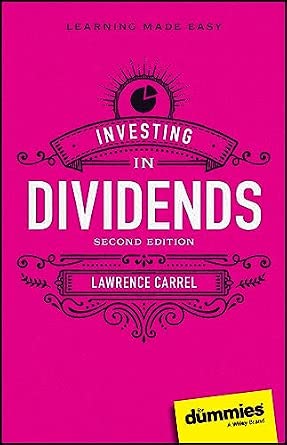
Investing In Dividends For Dummies
Investing In Dividends For Dummies is the broadest starting point in this group for readers who want to understand dividend strategies and risks before choosing a brokerage account. Its beginner-friendly explanations can help readers make sense of account features such as dividend reinvestment and recurring purchases, though the description does not confirm that it covers those tools directly. Compared with Dividend Investing for Beginners: Build Wealth While You Sleep, this book is less narrowly framed around monthly income and more focused on dividend investing as a whole. That wider scope suits someone still deciding what kind of dividend approach fits, but it may feel basic to investors seeking advanced portfolio methods. It also offers no accompanying digital resources, so readers looking for interactive worksheets or online tools will need to source them elsewhere.
Pros:- Easy-to-understand explanations aimed at beginners
- Covers dividend strategies and risks
- Offers a broad introduction rather than focusing only on monthly income
Cons:- Does not provide detailed advanced investment techniques
- No accompanying digital resources are specified
- The product information does not confirm coverage of brokerage account features
Best for: New investors who want a plain-language introduction to dividend strategies and risks before selecting a brokerage account.
Not ideal for: Experienced investors seeking advanced portfolio techniques, or learners who want digital exercises and companion resources.
- Format:Book
- Subject:Dividend investing
- Audience:Beginners and investors seeking to build their knowledge
- Coverage:Strategies, risks, and dividend-focused portfolio building
- Advanced techniques:Not detailed, according to the supplied product information
- Digital resources:No accompanying digital resources specified
Our verdict“Choose this for a broad, accessible introduction to dividend investing, but look elsewhere for advanced methods or brokerage-tool instruction.”
Dividend Investing for Beginners: Build Wealth While You Sleep with a Portfolio That Pays You Every Single Month with Zero Investing Experience Required
This book is aimed at readers whose first goal is to understand a portfolio designed around monthly dividend income. That focus gives it a clearer starting point than Investing In Dividends For Dummies, which covers dividend strategies and risks more broadly. For brokerage-account shoppers, the monthly-income angle can help clarify the outcome they are pursuing, but the supplied description does not establish that the book explains account selection, dividend reinvestment settings, or specific securities. Its beginner framing lowers the assumed knowledge barrier; the tradeoff is that its investment strategies are described as limited and it does not provide specific investment recommendations. I would treat it as an introductory guide to an income goal, not a substitute for comparing brokerage tools or learning how to evaluate individual holdings.
Pros:- Written for readers with no prior investing experience
- Centers its introduction on generating monthly income
- Explains the passive-income portfolio concept in beginner-friendly terms
Cons:- The supplied description indicates limited detail on investment strategies
- Provides no specific investment recommendations
- Brokerage account features and tools are not specified
Best for: First-time investors who want an accessible introduction to building a dividend portfolio with a monthly-income goal.
Not ideal for: Readers seeking detailed security-selection methods, specific investment recommendations, or guidance comparing brokerage account features.
- Format:Book
- Subject:Beginner dividend investing
- Audience:Readers with zero investing experience
- Portfolio focus:Dividend income intended to arrive monthly
- Investment strategies:Limited detail, according to the supplied product information
- Specific investment recommendations:None specified
Our verdict“Pick this if monthly income is your main learning goal, but pair it with a source that explains security research and brokerage features.”
Dividend Investing for Beginners: Build Your Dividend Strategy, Buy Dividend Stocks Easily, and Achieve Lifelong Passive Income
Dividend Investing for Beginners: Build Your Dividend Strategy is the most practice-oriented beginner pick here: its stated focus is forming a plan, selecting dividend stocks, and responding to unpredictable markets. That makes it a stronger fit for readers moving from basic concepts toward a repeatable approach than Dividend Investing for Beginners: Build Wealth While You Sleep, which puts monthly income at the center. Still, buyers focused on brokerage accounts should keep expectations measured. The supplied information does not identify particular account tools, research platforms, or companion materials, so it cannot establish which brokerage capabilities matter most. Its value is the emphasis on strategy and market conditions; the tradeoff is that the available details do not show how deeply it supports stock analysis or account comparisons.
Pros:- Introduces strategy building for beginner investors
- Covers selecting dividend stocks
- Addresses investing in unpredictable markets
- Connects dividend investing with passive-income goals
Cons:- The supplied product information gives limited detail about the depth of stock-selection guidance
- Brokerage tools and account features are not specified
- No companion resources are identified
Best for: Beginning investors who want a basic framework for choosing dividend stocks and setting a strategy for uncertain markets.
Not ideal for: Readers who need detailed brokerage comparisons, named research tools, or confirmed companion resources.
- Format:Book
- Subject:Beginner dividend investing
- Audience:Beginning investors
- Strategy coverage:Building a dividend investment plan
- Stock-selection coverage:Selecting dividend stocks
- Market coverage:Practical advice for unpredictable markets
- Brokerage tools:Not specified in the supplied product information
Our verdict“Choose this for a beginner strategy framework that includes stock selection and market uncertainty, not for brokerage-specific instruction.”
Dividend Growth Investing and Portfolio Management: Use the Power of Dividend Growth to Create a Winning Portfolio
Unlike the beginner guides focused on starting a passive-income plan, Dividend Growth Investing and Portfolio Management centers on growing dividends and managing a resilient portfolio. That gives it a distinct role for investors who already understand the basics and want to think about portfolio durability through changing markets. Compared with Investing In Dividends For Dummies, its stated scope is narrower but more focused on dividend growth and portfolio management. That focus may help a reader form better questions about research and monitoring tools at a brokerage, yet the description does not confirm specific account guidance or examples. The main drawback is the lack of case studies and detailed content information, which makes it harder to judge how actionable its methods are before buying.
Pros:- Focuses on dividend-growth investing rather than monthly-income framing
- Covers portfolio management
- Addresses resilience in unpredictable markets
Cons:- No specific examples or case studies are identified
- The supplied information provides no detailed chapter or content outline
- Brokerage account guidance is not specified
Best for: Investors who know basic dividend concepts and want to focus on dividend growth and portfolio resilience.
Not ideal for: Complete beginners seeking step-by-step instruction, or readers who need demonstrated case studies and brokerage-specific guidance.
- Format:Book
- Subject:Dividend-growth investing
- Portfolio focus:Dividend growth and portfolio management
- Market focus:Resilience in unpredictable markets
- Examples or case studies:None specified in the supplied product information
- Chapter details:No detailed chapter summaries provided
- Brokerage guidance:Not specified in the supplied product information
Our verdict“This is the more focused choice for investors planning around dividend growth and resilience, provided they are comfortable with limited detail about its examples.”
Get Rich with Dividends: A Proven System for Earning Double-Digit Returns
Get Rich with Dividends is the most system-led option in this set, positioning its approach around dividend investing and a stated goal of double-digit returns. That makes it a different proposition from Dividend Growth Investing and Portfolio Management, whose description emphasizes portfolio resilience rather than a return target. For a brokerage-account buyer, a defined method can offer a framework for researching and managing dividend holdings, but the supplied information does not explain the system’s steps or connect them to particular brokerage tools. The title’s ambitious return framing also calls for careful reading: it is not a guarantee, and the product details supplied here do not document how the claim is supported. Its approach may suit income-focused investors, while beginners may prefer the more accessible introductions in this group.
Pros:- Presents a system-based approach to dividend investing
- Focuses on growing income through dividend-paying stocks
- Aims at investors interested in higher-return strategies
Cons:- The supplied product information does not detail the system’s steps
- The double-digit return framing should not be treated as a guarantee
- May be complex for beginners and does not specify brokerage guidance
Best for: Income-focused investors who already understand basic investing and want to explore a structured dividend approach.
Not ideal for: New investors who need plain-language foundations, or readers who expect guaranteed returns or detailed brokerage-account comparisons.
- Format:Book
- Subject:Dividend investing
- Approach:System-based dividend investing
- Income focus:Income from dividend-paying stocks
- Stated return aim:Double-digit returns, as stated in the title; not a guarantee
- Audience fit:Income-focused investors; potentially complex for beginners
- System details:Specific steps are not provided in the supplied product information
Our verdict“Consider this if you want a structured dividend approach and can evaluate its return claims critically; beginners should start with a more foundational guide.”
Dividend Growth Investing: Get a Steady 8% Per Year Even in a Zero Interest Rate World – Featuring The 13 Best High Yield Stocks, REITs, MLPs and CEFs For Retirement Income
This book is the most retirement-focused pick here, pairing dividend-growth strategies with a shortlist of 13 high-yield investments across stocks, REITs, MLPs, and CEFs. That broader mix may give income-seeking readers more avenues to investigate than 20 Dividend Stocks to Buy and Hold Forever, which is limited to stocks. The stated aim of an 8% annual return is a target, not a promised result; high yields can bring risks such as payout cuts and price volatility. Unlike Dividend Investing 101: What Are Dividends?, this title appears aimed at readers ready to evaluate income choices rather than learn only the basics. I’d choose it for retirement-income research, but not as a substitute for checking current holdings, fund structures, and personal risk needs.
Pros:- Addresses dividend income in low-interest-rate settings
- Covers several income-asset types, including REITs, MLPs, and CEFs
- Offers a curated set of 13 investments for further research
- Focuses on retirement-income planning
Cons:- The 8% annual return framing may create expectations that investments cannot guarantee
- High-yield assets can carry payout, market, and structural risks
- No publication, author, or edition details are provided in the supplied product data
Best for: Retirement savers who already understand basic investing and want ideas spanning high-yield stocks, REITs, MLPs, and CEFs.
Not ideal for: New investors seeking a step-by-step introduction, or readers who want verified current recommendations and detailed company-by-company analysis.
- Format:Book
- Subject:Dividend growth investing
- Stated annual return aim:8% per year
- Interest-rate context:Zero-interest-rate environment
- Featured investment count:13
- Investment types:Stocks, REITs, MLPs, and CEFs
- Intended use:Retirement income planning
Our verdict“Choose this for broad retirement-income research across several asset types, but treat its return target and investment list as starting points for independent review.”
Dividend Investing 101: What Are Dividends? (Massive Passive Income Books Book 136)
For someone still asking what a dividend is, this is the clearest entry point in this group: its focus is the basic idea of dividends and how they may contribute to passive income. That narrow scope is a strength for a beginner who wants an accessible starting place, though it offers less investing depth than Dividend Growth Investing: Get a Steady 8% Per Year, which moves into multiple income-investment categories. It also won’t provide the account-selection guidance implied by this roundup’s brokerage theme; readers will need separate research to compare account types, tools, and dividend reinvestment features. Compared with 20 Dividend Stocks to Buy and Hold Forever, this title appears less focused on selecting securities and more on understanding the concept behind them. I’d start here for foundational vocabulary, then move to strategy material before choosing investments.
Pros:- Centers on explaining what dividends are
- Approachable subject matter for people new to investing
- Connects dividends with passive-income goals
- Part of a series focused on passive-income topics
Cons:- Description does not indicate advanced strategy or portfolio guidance
- Does not appear to compare brokerage accounts or account features
- Supplied data does not specify format, author, or edition
Best for: New investors who want a plain introduction to dividends and passive-income concepts before researching stocks or opening a brokerage account.
Not ideal for: Experienced investors seeking portfolio construction, advanced tax considerations, or detailed brokerage-account comparisons.
- Format:Book
- Series:Massive Passive Income Books
- Series number:Book 136
- Subject:Dividend investing basics
- Core topic:What dividends are
- Income focus:Passive income
Our verdict“Pick this as an introductory read if you are learning dividend basics, but pair it with separate research on brokerage accounts and investment risks.”
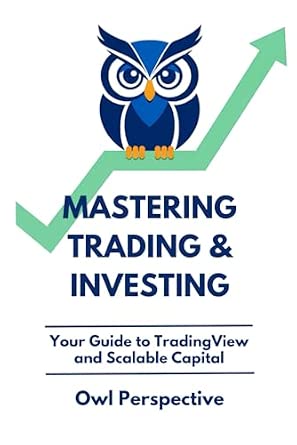
Mastering Trading & Investing: Your Practical Guide to TradingView & Brokerage Accounts
This is the broadest platform-and-market guide in the set, with coverage of TradingView, brokerage accounts, stock analysis, risk management, and macroeconomic factors. That makes it more directly relevant to comparing investing workflows than dividend-specific titles such as Dividend Investing 101: What Are Dividends?, which focuses on foundational income concepts. For dividend investors, the brokerage-account coverage is the key reason to consider it: analysis tools and risk management can support research beyond simply chasing yield. The tradeoff is breadth. The supplied description does not identify a dividend-focused method, specific broker comparisons, or the depth of its account guidance, so readers should not assume it answers every account-selection question. I’d use it as general investing context alongside a dividend-focused resource, not as a dedicated dividend-income manual.
Pros:- Explicitly covers brokerage accounts and TradingView
- Includes stock analysis and risk-management topics
- Brings macroeconomic factors into the investing discussion
- Combines narrative elements with practical instructional material, according to the description
Cons:- The supplied description does not establish a dedicated dividend-investing focus
- Specific brokers, account features, and comparison criteria are not listed
- Author and edition details are not provided in the supplied product data
Best for: Self-directed investors who want one general guide to brokerage accounts, charting tools, stock analysis, and risk concepts while building a dividend portfolio.
Not ideal for: Readers looking only for dividend-growth instruction, a current side-by-side broker comparison, or a beginner explanation of dividend payments.
- Format:Book
- Subject:Trading and investing
- Platform covered:TradingView
- Brokerage accounts:Covered
- Analysis topics:Stock analysis and risk management
- Additional topic:Macroeconomic factors
- Instruction style:Storytelling combined with practical, textbook-style insights
Our verdict“Choose this for broader brokerage and analysis context, but look elsewhere for focused dividend strategies or named broker comparisons.”
20 Dividend Stocks to Buy and Hold Forever: Build Wealth and Passive Income
This title offers a straightforward starting point for readers who want a 20-stock shortlist centered on long-term holding and dividend income. Its stock-only scope is narrower than Dividend Growth Investing: Get a Steady 8% Per Year, which also covers REITs, MLPs, and CEFs; that narrower focus may suit investors who prefer to research individual companies rather than several asset structures. The main limitation is the lack of detailed stock analysis in the supplied description. A list can help organize research, but it cannot establish that a company remains suitable as its business, dividend, or valuation changes. Nor does this book appear to compare brokerage accounts, so it is best treated as a source of ideas rather than an account-selection guide. I’d favor it for building a watchlist, not for making buy-and-hold decisions without further due diligence.
Pros:- Provides a defined list of 20 dividend stocks
- Emphasizes long-term holding rather than short-term trading
- Connects stock investing with wealth-building and passive-income goals
- Stock-only focus may be easier to follow than a guide spanning several asset types
Cons:- The supplied description notes limited detailed analysis of the listed stocks
- A fixed list may not reflect later changes in company fundamentals or dividends
- Does not appear to address brokerage-account features or selection
Best for: Long-term dividend investors who want a compact list of stock ideas to research for a personal watchlist.
Not ideal for: Readers who need detailed company analysis, diversified income-asset coverage, or guidance comparing brokerage accounts.
- Format:Book
- Subject:Dividend stocks
- Featured stock count:20
- Investment approach:Long-term buy and hold
- Stated goals:Wealth building and passive income
- Investment type:Stocks
Our verdict“Use this to seed a long-term dividend-stock watchlist, but verify every company independently and choose a brokerage resource separately.”

How We Picked
I compared the supplied titles as educational resources related to dividend investing, with the stated brokerage-account search intent in mind. Since none of the entries is an actual broker, I did not rank them as accounts or infer platform features. I prioritized practical usefulness for account selection: clarity about dividends and reinvestment, relevance to portfolio decisions, support for tracking income, and how well a title appears suited to a particular experience level.
The ordering favors broadly useful learning resources before narrower strategy titles, specialized stock-selection material, and tools with a more limited purpose. Beginner guides rank well for readers who need core concepts; portfolio and dividend-growth titles may suit readers ready for more detail. I treated promised returns and income claims as claims in a title, not verified outcomes. The duplicate Get Rich with Dividends entry is counted as a repeated listing, so the supplied set contains 13 distinct titles rather than 14.
| brokerage accounts for dividend investing | Format |
|---|---|
| Dividend Investing: Dependable | Book |
| Get Rich with Dividends: A Pro | Book |
| The Dividend Journal & Income | Log book |
| The SCHD Blueprint: Build Mont | Book |
| Dividend Investing Made Easy | Book |
| Investing In Dividends For Dum | Book |
| Dividend Investing for Beginne | Book |
| Dividend Investing for Beginne | Book |
| Dividend Growth Investing and | Book |
| Get Rich with Dividends: A Pro | Book |
| Dividend Growth Investing: Get | Book |
| Dividend Investing 101: What A | Book |
| Mastering Trading & Investing: | Book |
| 20 Dividend Stocks to Buy and | Book |
Factors to Consider When Choosing Brokerage Accounts For Dividend Investing
Books can help you form better questions, but selecting a brokerage account requires checking the platform itself. I would match account features to the way I plan to hold investments, receive distributions, and monitor income—not choose a broker based on a book’s title or return promise.
Check dividend reinvestment controls
Find out whether the broker lets you reinvest dividends automatically and whether that setting can be changed for individual holdings. Some investors want every eligible distribution reinvested, while others prefer cash for spending or to direct into a different investment. A blanket setting may be inconvenient if you want different treatment for different securities. Check how the platform handles fractional shares, since that can affect how fully smaller distributions are reinvested. Read the current terms rather than assuming every investment or account type works the same way. Reinvestment is a convenience, not a guarantee of better results.
Look beyond commission-free trading
A dividend portfolio can involve costs that are not captured by a headline claim about trading commissions. Review account service charges, transfer or closure fees, fund expenses, and any costs tied to optional services. Fund expense ratios are charged by the fund, not simply erased by choosing a broker with no trading commission. If you plan to buy foreign securities, check for currency conversion costs and tax-document handling. A low-friction platform may suit a simple domestic portfolio, while a more complex strategy can make access and service more relevant than a single fee label. Compare the charges that match your actual investing habits.
Match account type to your tax situation
Tax treatment can change how useful dividend income is, so compare taxable accounts with any eligible tax-advantaged accounts before choosing where to invest. The rules depend on your location, account type, and the investments you hold; a brokerage’s educational material is not a substitute for tax advice. In a taxable account, distributions may create tax paperwork even when they are automatically reinvested. Check whether the broker provides clear tax forms and transaction records. Avoid picking an account solely because a book emphasizes passive income: the after-tax result may differ from the cash distribution shown on a statement. If your situation is complicated, consult a qualified tax professional.
Test the income and tax reporting tools
Investors who depend on distributions may value a clear view of payment dates, amounts, and account activity. Look at whether the platform separates dividends from other cash movements and whether statements are easy to export for personal records. A standalone journal, such as the one in this roundup, can help you maintain your own log, but it should not replace official brokerage statements for reconciliation or tax reporting. Be cautious about relying on projected income displays: payment amounts and schedules can change. The most useful tools make past activity easy to verify without presenting estimates as guaranteed cash flow. This matters more when you hold many positions.
Prioritize investment access over a stock list
A book that highlights particular stocks, funds, or income strategies cannot tell you whether a brokerage offers the access and account support you need. Confirm that the platform supports the securities you intend to research, including any relevant funds or specialized investments, and review the risks of those holdings separately. A concentrated list of suggested stocks can be a starting point for study, not a portfolio plan. Avoid confusing a high distribution yield with business quality or sustainable income. A broad, suitable range of investments may matter more than a broker’s featured ideas. Make your selection criteria before comparing products or promotions.
Choose service and tools you will actually use
Account support, research access, and interface design affect how comfortably you can manage a long-term portfolio. New investors may prefer clear explanations and straightforward order entry, while experienced investors may want more detailed screening and reporting tools. Extra features can add complexity without improving your decisions, so avoid paying for services you will not use. Check support availability and account security options before opening an account. If you plan to manage investments from a phone, review whether the mobile experience includes the records and controls you need. A simple platform can be a better fit than a feature-heavy one when it makes regular monitoring easier.
Frequently Asked Questions
Are any of the 14 listed products actual brokerage accounts?
No. The supplied entries are books and a dividend income journal, not brokerage services. They can help explain investing concepts or organize your records, but they cannot open an account, execute trades, or process dividend payments. Compare brokers directly for account eligibility, investment access, reinvestment controls, costs, and reporting. The list also repeats one title, so it contains 13 distinct products.
Which listed title should I start with if I have never invested in dividend stocks?
Investing In Dividends For Dummies and Dividend Investing Made Easy are the most clearly positioned as accessible introductions. The two books titled for beginners may also fit, but their broad income-focused wording should not be read as a promise of results. Start with whichever gives you the clearest explanation of risk, diversification, and how distributions work. Then verify brokerage features using the broker’s current documentation rather than relying on a book for platform details.
Can I use these books to decide which broker has the best dividend reinvestment plan?
Not reliably from the supplied titles alone; none is a broker comparison. Before opening an account, check whether reinvestment is automatic, whether you can set it by holding, and how fractional shares are handled. Confirm any limits or exceptions for the investments you expect to own. Broker policies can change, so use current account terms and support materials. A book can explain why reinvestment matters, but the broker’s own disclosures establish how its service works.
Should I buy a high-yield or stock-picking book before opening a dividend account?
You do not need a stock-picking book to choose an account, and a title advertising a specific return does not establish that the return is achievable. First decide what account type, investment access, reporting, and service features fit your situation. Treat stock lists and yield-focused strategies as material for further research, not instructions to buy. High distributions can reflect added risk or changing circumstances, so assess the underlying investment as well as the payout. If you are new, foundational material may be more useful than a narrow stock list.
Is the dividend journal a substitute for a brokerage account’s tax records?
No. A journal can help you track expected and received distributions, but the broker’s official statements and tax documents remain the records to use for account reconciliation and tax preparation. Entries you make yourself can contain omissions or errors, especially when payments change or are reinvested. Compare your log with brokerage activity regularly. Ask a qualified tax professional about how distributions apply to your circumstances. Use the journal as a personal planning aid, not as an official account record.
Conclusion
Best overall learning pick: Dividend Investing Made Easy is the most approachable fit for readers seeking a broad introduction. Best value for a structured start: Investing In Dividends For Dummies suits readers who want a familiar, stepwise learning format. Best premium-style deep study: Dividend Growth Investing and Portfolio Management is the more strategy-oriented choice for readers ready to explore portfolio construction. Best for beginners: choose one of the explicitly beginner-focused titles, then confirm account details directly with a broker. Best for specific needs: the income tracker fits hands-on record keeping, while the SCHD-focused book serves readers researching that particular fund. None of these products is a brokerage account, so make the actual account decision by comparing current fees, reinvestment settings, investment access, tax reporting, and support.
Halloween Picks
halloween
As an affiliate, we earn on qualifying purchases.