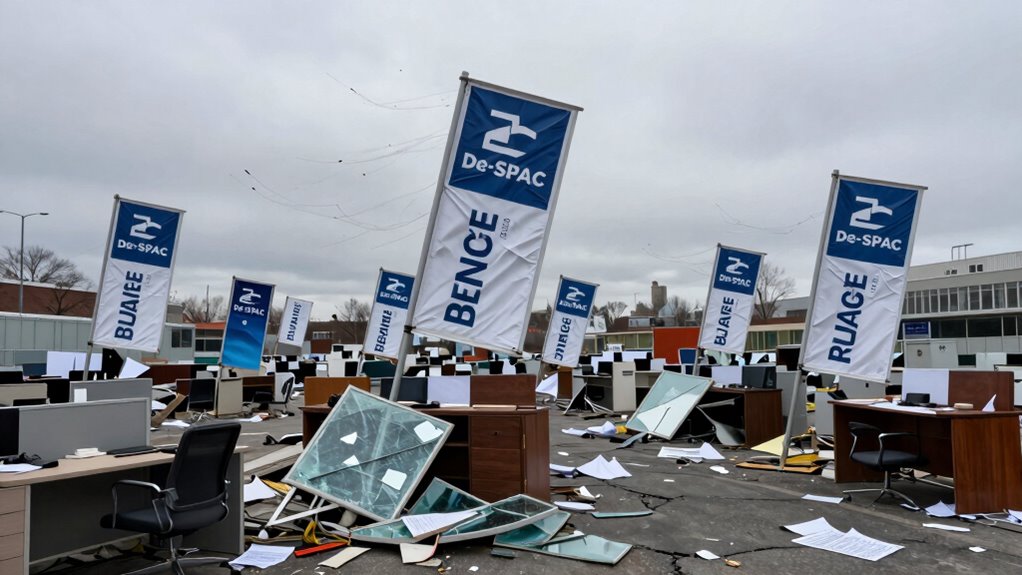

After the de-SPAC process, you often face unexpected challenges that threaten investor confidence and regulatory compliance. Market sentiment can shift quickly if projections fall short or operational issues arise, leading to sharp valuation drops. Increased oversight demands transparency and stricter disclosures, making compliance essential. You’ll need to focus on strategic adjustments and strong governance to stabilize. Many overlook these hurdles, but understanding them is key to steering through the often unpredictable cleanup phase that no one fully plans for.
Key Takeaways
- Post-merger market skepticism increases as actual financials and growth prospects are scrutinized, often leading to stock declines.
- Regulatory oversight intensifies after the merger, requiring enhanced disclosures and compliance to avoid penalties and reputation damage.
- Transparent communication about projections and performance is critical to maintaining investor trust and regulatory adherence.
- Operational changes and strategic adjustments are essential for stabilizing the company and supporting long-term growth.
- The de-SPAC phase’s success depends on accurate valuation, compliance, and proactive management to ensure sustainable future growth.

Have you ever wondered what happens after a SPAC merger wraps up? It might seem like the deal is done once the two companies combine, but the real work often begins afterward. For you, steering through the de-SPAC process means understanding that the initial excitement can give way to complex challenges, especially around SPAC valuation and regulatory hurdles. The valuation of the newly combined company can be a major source of concern. Initially, the market might have been captivated by the promise and potential, but once the merger is complete, investors scrutinize the actual financials and growth prospects. If the valuation was overly optimistic or based on inflated projections, it can lead to sharp declines in stock price, eroding investor confidence. You’ll need to be prepared for the possibility that the market’s perception could shift quickly, especially if the company struggles to meet its projected targets or faces unforeseen setbacks.
Post-merger, market perception shifts as investors scrutinize financials, risking valuation declines and eroded confidence.
Beyond valuation concerns, regulatory challenges loom large in the aftermath. Unlike traditional IPOs, SPAC mergers are less regulated initially, which can create a false sense of security. However, once the deal closes, regulatory agencies ramp up scrutiny. You might find yourself guiding through a maze of disclosures, filings, and compliance requirements that weren’t as prominent pre-merger. The SEC, for instance, has increased oversight on disclosures around the merger process and the target company’s financial health. If the company’s financials or claims don’t align with regulatory standards, you could face penalties, legal issues, or damaged reputation. Managing these regulatory challenges requires a proactive approach, ensuring all disclosures are transparent and accurate to avoid legal pitfalls. Having a clear understanding of projected targets and how they are communicated can be crucial for maintaining trust and compliance.
The de-SPAC phase is also marked by a shift in operational focus. What worked during the merger may not be enough to sustain long-term growth. You’ll need to implement rigorous governance, financial discipline, and strategic planning to stabilize the company’s footing. Failure to do so can exacerbate valuation declines and attract regulatory scrutiny. The post-merger period is critical for laying a solid foundation—this is where many companies stumble if they don’t adjust quickly.
Ultimately, the de-SPAC aftermath isn’t just a cleanup phase but a pivotal period where your company’s future is shaped. Recognizing the importance of accurate SPAC valuation, staying compliant with regulatory requirements, and executing strategic operational adjustments can determine whether the company thrives or falters. It’s a complex, often unpredictable landscape, but with careful planning and transparency, you can steer through this challenging period toward sustainable growth.

MY SOFTWARE – INVOICES
As an affiliate, we earn on qualifying purchases.
As an affiliate, we earn on qualifying purchases.
Frequently Asked Questions
How Long Does the Cleanup Phase Typically Last After a De-Spac?
The cleanup phase after a de-SPAC usually lasts several months, depending on market volatility and regulatory compliance issues. You might find this period extending if there’s significant market upheaval or if regulators scrutinize the process closely. During this time, you’ll work to address legal and financial adjustments, guarantee transparency, and stabilize the company’s operations. Staying adaptable and vigilant helps you navigate this complex, often unpredictable, cleanup process effectively.
What Are the Main Legal Challenges Faced During the Cleanup?
You’ll face significant legal challenges during cleanup, with nearly 60% of de-SPACs encountering regulatory hurdles or litigation risks. These hurdles often stem from misstatements or undisclosed liabilities, leading to lawsuits or investigations. Managing complex securities laws, ensuring transparency, and addressing shareholder concerns demand diligent legal strategies. If overlooked, these challenges can delay or derail the entire post-de-SPAC process, so proactive legal planning is essential for a smooth shift.
How Do Shareholders Respond to Unexpected Post-De-Spac Issues?
You respond to unexpected post-de-SPAC issues through shareholder activism, pushing for transparency and accountability. Shareholders may file lawsuits, demand board changes, or vote against proposed resolutions to address these problems. Your involvement influences corporate governance, ensuring the company rectifies issues and aligns management actions with shareholder interests. Active engagement helps protect your investments, promotes better oversight, and encourages the company to navigate the cleanup phase more effectively.
What Financial Risks Emerge in the Aftermath of De-Spac?
You face financial risks like market volatility, which can cause sharp stock price swings and impact your investments. Regulatory compliance becomes a concern as authorities scrutinize de-SPAC transactions, potentially leading to legal penalties or forced restructuring. These risks can strain your financial position, making it essential to stay informed about changing regulations and market trends. Preparing for these uncertainties helps you mitigate potential losses and navigate the post-de-SPAC landscape more confidently.
Are There Industry-Specific Factors Influencing the Cleanup Process?
Think of the cleanup process as maneuvering a maze with industry-specific factors as hidden traps. Industry regulations and sector-specific liabilities substantially influence how smoothly you can clear this maze. For example, biotech firms face intense regulatory scrutiny that can delay asset valuation, while tech companies might encounter unique cybersecurity liabilities. These factors directly shape the complexity and speed of the cleanup, making industry knowledge critical for a successful shift.

Budget Tools: Financial Methods in the Public Sector
As an affiliate, we earn on qualifying purchases.
As an affiliate, we earn on qualifying purchases.
Conclusion
Now, as you face the de-SPAC cleanup, remember this: over 90% of de-SPAC mergers face significant regulatory and financial hurdles within the first year. You might think the toughest part is going public, but the real challenge begins afterward. This overlooked phase can threaten your company’s future if not managed carefully. Staying proactive and prepared isn’t just smart—it’s essential to guarantee your post-merger success and avoid becoming just another statistic in the de-SPAC aftermath.

Non-Invasive Data Governance: The Path of Least Resistance and Greatest Success
As an affiliate, we earn on qualifying purchases.
As an affiliate, we earn on qualifying purchases.
post-merger financial analysis tools
As an affiliate, we earn on qualifying purchases.
As an affiliate, we earn on qualifying purchases.