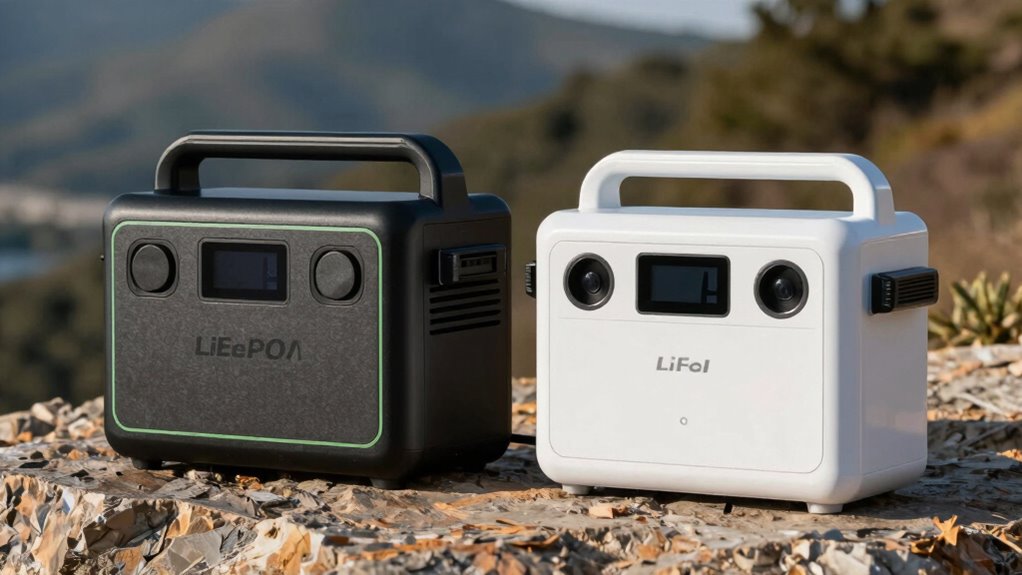

If you’re choosing a power station, LiFePO4 batteries are generally the better option for long-term use. They offer longer cycle life, making them last over 2,000 charges, and are safer thanks to superior thermal stability. Plus, they’re more environmentally friendly, with no cobalt or nickel. While they’re bulkier and cost more upfront, their durability and reliability make them a smarter investment for stationary setups. Want to see how they stack up in different applications? Keep exploring to find out more.
Key Takeaways
- LiFePO4 batteries offer longer cycle life and greater reliability, reducing replacement costs over time.
- They are more environmentally friendly, containing no toxic metals and producing less hazardous waste.
- LiFePO4 provides superior thermal stability and safety, especially in high-temperature environments.
- Lithium-ion batteries are more compact and lightweight, ideal for portable applications, while LiFePO4 suits stationary setups.
- Although initially more expensive, LiFePO4 batteries deliver better long-term value due to durability and longevity.
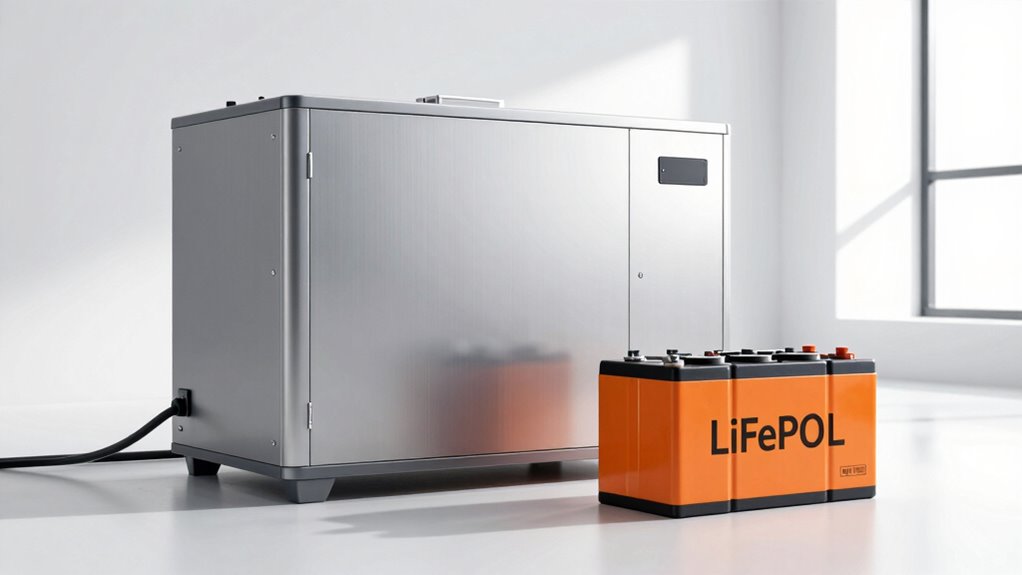
When choosing between LiFePO4 and lithium-ion batteries, understanding their differences can help you make a more informed decision. Both types power portable stations and large-scale energy systems, but they vary markedly in key areas like battery longevity and environmental impact. LiFePO4 batteries generally offer a longer lifespan, often lasting over 2,000 charge cycles, compared to lithium-ion batteries, which typically reach around 500 to 1,000 cycles. This means that with LiFePO4, you’ll get more use out of each battery, reducing the need for frequent replacements and ultimately saving you money over time. Plus, their stability and resistance to overheating make them more reliable for long-term use.
LiFePO4 batteries last over 2,000 cycles, offering greater longevity and reliability than lithium-ion options.
When it comes to environmental impact, LiFePO4 batteries tend to be more eco-friendly. They contain no cobalt or nickel, materials associated with environmental and ethical concerns, and their manufacturing process produces less hazardous waste. Since they last longer, you generate less electronic waste, which helps reduce landfill accumulation. Lithium-ion batteries, on the other hand, often involve mining practices that can harm ecosystems and pose health risks to workers. Their shorter lifespan means more frequent disposal and recycling, which can increase environmental strain if not managed properly. If sustainability and reducing your ecological footprint are priorities, LiFePO4 batteries are a compelling choice. Additionally, the cost-effectiveness of LiFePO4 batteries becomes more apparent over their extended lifespan, making them a smarter investment for environmentally conscious consumers.
Additionally, LiFePO4 batteries are known for their thermal stability, making them safer in high-temperature environments and less prone to thermal runaway. However, lithium-ion batteries still dominate in terms of energy density. They store more power in a smaller, lighter package, making them highly suitable for portable applications where size and weight matter. LiFePO4 batteries tend to be bulkier and heavier, which might limit their use in portable power stations meant for backpacking or mobile setups. But if you’re planning a stationary or semi-permanent setup, their durability and safety features outweigh the size disadvantage. Furthermore, advancements in battery technology continue to improve the performance and versatility of LiFePO4 cells, making them increasingly attractive for various applications.
In terms of cost, lithium-ion batteries usually come with a lower upfront price, but their shorter lifespan means you’ll spend more over time replacing them. Conversely, although LiFePO4 batteries might have a higher initial cost, their longer cycle life and stability make them more economical in the long run. When considering your specific needs—whether for frequent use, environmental concerns, or portability—these factors can help you decide which chemistry aligns best with your goals. Ultimately, both have their strengths, but understanding how they differ in longevity and environmental impact ensures you choose a power solution that’s both reliable and responsible.
LiFePO4 deep cycle battery for stationary power station
As an affiliate, we earn on qualifying purchases.
As an affiliate, we earn on qualifying purchases.
Frequently Asked Questions
How Do Battery Recycling Processes Differ Between Lifepo4 and Lithium-Ion?
You’ll find that recycling processes for LiFePO4 and lithium-ion batteries differ mainly in methods and disposal challenges. LiFePO4 batteries are easier to recycle because they contain fewer hazardous materials, reducing disposal issues. Lithium-ion batteries, however, require specialized recycling methods to safely extract valuable materials like cobalt and nickel, but their toxic components pose disposal challenges. Proper recycling minimizes environmental impact, making the process essential for both chemistries.
Which Battery Type Performs Better in Extreme Temperature Conditions?
Imagine a brave traveler facing a harsh winter—LiFePO4 batteries handle extreme temperatures better than lithium-ion ones. Their thermal performance shines in cold resilience, maintaining stability where lithium-ion batteries struggle and risk capacity loss or safety issues. If you need power in chilly conditions, LiFePO4 offers superior reliability, enduring the cold like a seasoned explorer. This makes them the smarter choice for extreme temperature environments.
Are There Specific Safety Concerns Unique to Each Battery Chemistry?
You should be aware that each battery chemistry has unique safety concerns affecting battery lifespan and charging safety. Lithium-ion batteries can overheat or swell if not managed properly, risking fire hazards. Conversely, LiFePO4 batteries are more stable and less prone to thermal runaway, making them safer during charging. Proper handling and adhering to manufacturer guidelines guarantee safety, prolong battery lifespan, and prevent potential accidents with either chemistry.
How Does Cost-Effectiveness Compare Over the Battery’s Lifespan?
Sure, because who wouldn’t love a battery that’s basically a money pit, right? In reality, LiFePO4 batteries often win in cost-effectiveness over their lifespan thanks to better longevity and fewer replacements. A thorough cost analysis shows they might cost more upfront but save you money long-term. Comparing longevity, LiFePO4 batteries typically last more cycles, making them a smarter investment for durability and overall value.
What Are the Environmental Impacts of Manufacturing Each Battery Type?
You should know that manufacturing LiFePO4 batteries generally produces less environmental impact, thanks to safer, more abundant materials. They also offer a longer battery lifespan, reducing waste over time. Lithium-ion batteries, however, involve more resource extraction and toxic chemicals, leading to higher environmental concerns. While LiFePO4 batteries may have slightly lower charging efficiency initially, their durability makes them a more eco-friendly choice overall.
lithium-ion portable power station
As an affiliate, we earn on qualifying purchases.
As an affiliate, we earn on qualifying purchases.
Conclusion
As you choose your power source, think of LiFePO4 as a steady, unwavering lighthouse guiding you safely through storms, while lithium-ion batteries are like flickering flames—bright but fleeting. Both shine in their own way, but your decision depends on whether you seek enduring stability or immediate energy. Whichever you pick, remember it’s more than just chemistry; it’s your beacon for reliable power in life’s unpredictable voyage.
long-lasting battery for solar energy storage
As an affiliate, we earn on qualifying purchases.
As an affiliate, we earn on qualifying purchases.
eco-friendly stationary battery system
As an affiliate, we earn on qualifying purchases.
As an affiliate, we earn on qualifying purchases.