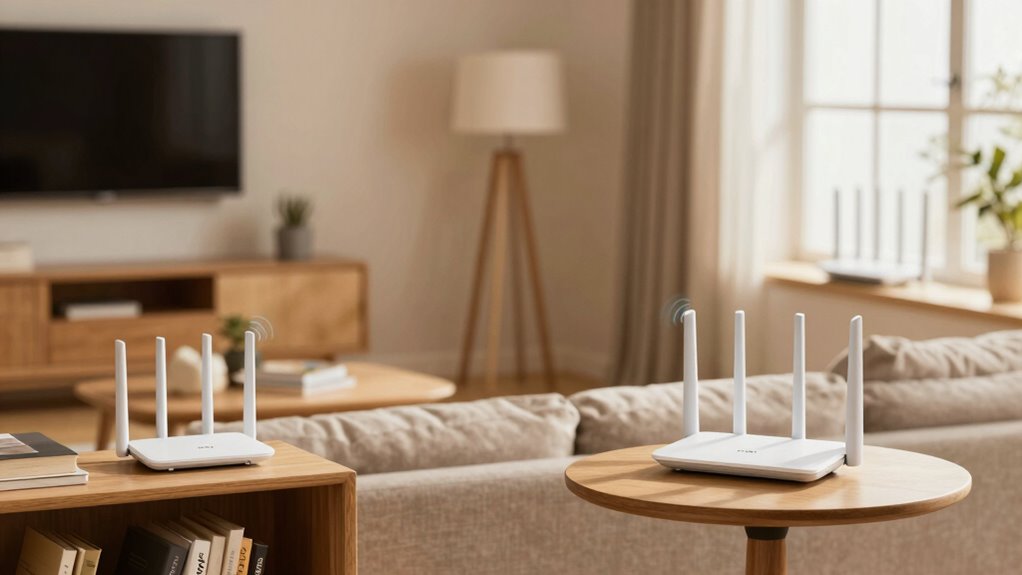

Mesh Wi-Fi coverage claims can be misleading because real-world factors like device compatibility issues, signal interference, and home construction often reduce performance. Thick walls, electronic devices, and outdated gadgets can weaken signals and limit coverage, despite what manufacturers claim. You might need to test and adjust node placement for better results. If you want to understand the key challenges that affect coverage, keep exploring the details ahead.

Get smart everyday buys delivered free — and shop member deals
- Fast, free delivery on millions of items
- Access to Prime Big Deal Days deals on October 6–7
- Prime Video, Amazon Music and more included
Key Takeaways
- Manufacturer coverage estimates often assume ideal conditions, not real-world home environments.
- Physical obstacles and construction materials significantly reduce actual mesh Wi-Fi coverage.
- Device compatibility issues can limit network performance, regardless of coverage claims.
- Signal interference from other electronics and walls impacts mesh system effectiveness.
- Testing and adjusting node placement are necessary to achieve reliable coverage beyond initial claims.
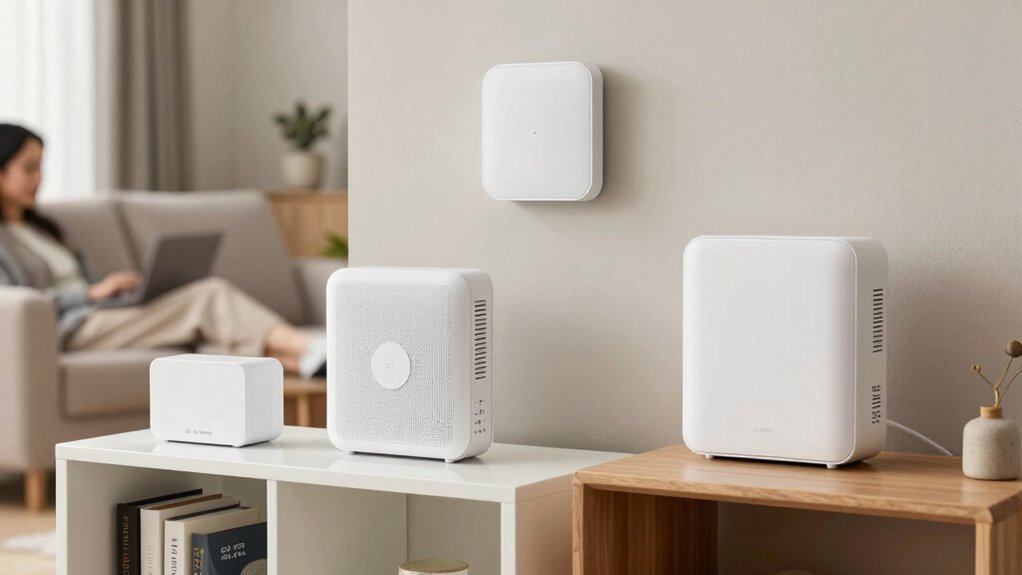
Mesh Wi-Fi systems are often promoted as the ultimate solution for seamless home coverage, but it’s important to scrutinize these claims carefully. While they promise to eliminate dead zones and simplify your network setup, the reality can be more complex. One key issue you should consider is device compatibility. Not all devices work equally well with mesh systems, especially older smartphones, tablets, or laptops. Some gadgets might struggle to connect or experience slower speeds, undermining the system’s supposed seamless coverage. If you rely on a variety of devices, you need to verify whether the mesh system supports them fully. Manufacturers often list compatibility lists, but these can be incomplete or overly optimistic. It’s smart to do your research before investing, making sure your most-used devices will integrate smoothly.
Device compatibility issues can limit mesh Wi-Fi performance, especially with older devices—research support before buying.
Another factor that can diminish the effectiveness of mesh Wi-Fi coverage claims is signal interference. Despite the promise of a strong, unified network, your mesh system can still be vulnerable to interference from other wireless devices, thick walls, or electronic appliances. This interference can cause signal degradation, resulting in slow speeds or dropped connections, especially in parts of your home that are farther from the main router or mesh nodes. Mesh systems are designed to distribute coverage evenly, but if interference disrupts the signals, the system’s ability to provide consistent service reduces. Sometimes, placing nodes strategically can mitigate interference issues, but it’s not always enough. You might find yourself needing to troubleshoot or change the location of your nodes, which can be inconvenient and counteract the simplicity that mesh systems advertise.
Furthermore, the actual coverage you get will depend heavily on your home’s layout and construction materials. Open-concept homes with minimal obstacles will usually see better results, but if your house has many thick walls, floors, or metal reinforcements, even the best mesh system can struggle to blanket the entire space. The coverage claims are often based on ideal conditions, which rarely match real-world scenarios. So, instead of relying solely on the manufacturer’s estimates, you should expect to perform some testing and adjustments to achieve the coverage you desire. Additionally, understanding home construction factors can help you better evaluate how much coverage you can realistically expect from your mesh system.
In the end, while mesh Wi-Fi systems can be a helpful upgrade, their coverage claims shouldn’t be taken at face value. Device compatibility issues and signal interference considerably impact performance. Be prepared to do some research and troubleshooting to ensure your home network performs as promised.
mesh Wi-Fi extender for thick walls
As an affiliate, we earn on qualifying purchases.
As an affiliate, we earn on qualifying purchases.
Frequently Asked Questions
How Do Mesh Wi-Fi Systems Differ From Traditional Routers?
You’ll notice that mesh Wi-Fi systems differ from traditional routers through their mesh setup, which involves multiple nodes working together for broader coverage. Unlike traditional routers, you don’t need to focus on strict router placement; instead, you place nodes strategically around your home. This setup reduces dead zones and guarantees a more consistent signal, making your internet experience smoother and more reliable across all areas.
Can Mesh Wi-Fi Improve Coverage Outdoors?
Yes, mesh Wi-Fi can improve outdoor coverage by extending your outdoor signal and increasing range. When you set up mesh nodes outside, they work together to provide seamless coverage across larger areas, reducing dead spots. You’ll notice better outdoor signal strength and more reliable internet for activities like gardening, outdoor dining, or working outside. Just make certain the mesh system is rated for outdoor use, and place nodes strategically for maximum range extension.
Do Mesh Systems Support Multiple Devices Simultaneously?
You can definitely support multiple devices simultaneously with mesh systems. They’re designed to handle device compatibility and manage signal interference efficiently. While some systems might struggle under heavy load, most modern mesh networks spread the bandwidth evenly, ensuring smooth performance. Think of it as juggling many balls at once; your mesh system keeps everything moving without dropping a connection, so you stay connected no matter how many devices are online.
What’s the Average Lifespan of a Mesh Wi-Fi System?
A mesh Wi-Fi system typically lasts about 3 to 5 years, depending on factors like network congestion and firmware updates. During this time, you’ll need to regularly update firmware to keep your network secure and running smoothly. As technology advances, newer systems may offer better performance, so staying current guarantees your mesh network remains efficient. Proper maintenance and timely updates help extend your system’s lifespan.
Are There Security Concerns With Mesh Wi-Fi Networks?
Yes, there are security concerns with mesh Wi-Fi networks, but you can address them by ensuring your network uses strong encryption like WPA3. Regular firmware updates are essential—they patch vulnerabilities and improve security. Keep your admin passwords strong and change them periodically. By actively managing these aspects, you reduce risks and keep your network safe from potential threats. Staying vigilant helps protect your connected devices and personal information.
Wi-Fi signal interference blocker
As an affiliate, we earn on qualifying purchases.
As an affiliate, we earn on qualifying purchases.
Conclusion
So, next time you see a mesh Wi-Fi system boasting endless coverage, remember this: the truth might not be as impressive as it sounds. There’s more to reliable Wi-Fi than just coverage areas—speed, consistency, and interference matter just as much. Are you truly getting the connection you need? Don’t be fooled by claims that sound too good to be true. Keep digging, because what you discover could change how you experience your home network forever.
mesh Wi-Fi system compatible with older devices
As an affiliate, we earn on qualifying purchases.
As an affiliate, we earn on qualifying purchases.
Wi-Fi node placement testing tools
As an affiliate, we earn on qualifying purchases.
As an affiliate, we earn on qualifying purchases.
Halloween Picks
halloween
As an affiliate, we earn on qualifying purchases.