Use this guide to choose financial planning books for beginners, check whether their advice fits your circumstances, and turn what you read into a practical learning plan. It is for readers who are new to personal finance and want a clear starting point without buying a stack of books they may not finish. Allow about 1–2 hours to compare options and set up your plan; reading the books and applying the ideas will take longer.

Get smart everyday buys delivered free with Prime
- Fast, free delivery on millions of items
- Prime Video, Amazon Music and more included
- Member-only deals all year

Financial Literacy Essentials for Dummies
- ✔ Format: Text-based beginner guide
- ✔ Budgeting: Covered
- ✔ Saving: Covered

Money Skills for Young Adults: A Beginner’s Guide to Smart Financial Habits, with Simple Tools to Manage Your Budget, Save for Go…
- ✔ Audience: Young adults and beginners
- ✔ Format: Beginner guide with practical tools
- ✔ Budgeting: Includes templates
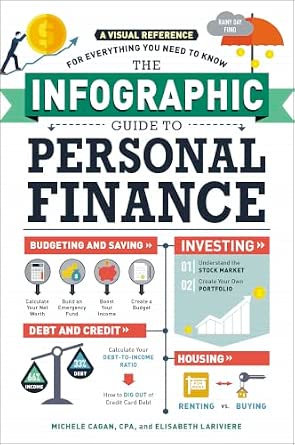
The Infographic Guide to Personal Finance: A Visual Reference for Everything You Need to Know
- ✔ Format: Infographic-based visual reference
- ✔ Budgeting: Covered
- ✔ Investing: Covered
Difficulty: Beginner | Time: 1–2 hours to choose books and set up a reading plan
What You’ll Need
Tools & Materials:
- A library card, bookstore access, or ebook app
- A notes app or notebook
- A short list of your financial questions
Knowledge:
- No prior investing or financial planning experience is needed
Write down your country or tax jurisdiction before choosing books. Rules for taxes, retirement accounts, insurance, and investing vary by location, so books focused on another country may explain principles well but give unsuitable account or legal details.
Financial Literacy Essentials for Dummies
For readers who want one starting point across everyday money subjects, Financial Literacy Essentials for Dummies offers the broadest stated foundation in this group. Its plain-language approach covers budgeting, saving, investing, and debt management, giving beginners a way to connect topics that are often learned separately. The inclusion of practical tips and real-world examples is useful because a new concept is easier to act on when it is tied to a recognizable decision.Compared with Money Skills for Young Adults, this book appears less focused on worksheets and a specific life stage, but its topic range makes it a more general first pick. The infographic guide is easier to skim visually, while this title is better suited to readers who want explanations in text. Its limitation follows from that beginner focus: readers seeking complex investment strategies or advanced financial analysis may need a more specialized resource. We rank it first for breadth and accessibility, not for technical depth.
Pros:
- Uses clear, jargon-light language for novices.
- Covers budgeting, saving, investing, and debt management.
- Includes practical tips and real-world examples.
- Quick-reference organization can help readers revisit topics.
Cons:
- May feel too introductory to readers with existing finance knowledge.
- Does not provide deep treatment of complex investment strategies.
Best for: Beginners who want a general, plain-language guide across budgeting, saving, investing, and debt management.
Not ideal for: Readers who already understand financial basics or want detailed, advanced investment strategies.
Bottom line: We recommend it as the most balanced first book here for beginners who want broad coverage and accessible explanations.
“We recommend it as the most balanced first book here for beginners who want broad coverage and accessible explanations.”
Money Skills for Young Adults: A Beginner’s Guide to Smart Financial Habits, with Simple Tools to Manage Your Budget, Save for Go…
This guide has the clearest practical angle in the lineup: budgeting templates and goal-setting worksheets are intended to help readers work through their own money plans, rather than only read about concepts. It addresses budgeting, saving, investing, and money management with a young-adult audience in mind. That framing can make it a natural fit for someone taking first steps toward financial independence and trying to turn good intentions into repeatable habits.Where Financial Literacy Essentials for Dummies offers a broader general introduction, this title emphasizes tools and action. That focus is its advantage if a reader wants prompts for setting goals; it may be less suitable for someone seeking an all-purpose reference that is not tied to an age or life-stage framing. Like the other books here, it is described as a beginner guide and offers limited depth on advanced investing. We place it second because its hands-on promise is strong, while the first book claims a wider general foundation.
Pros:
- Offers budgeting templates and goal-setting worksheets.
- Presents step-by-step guidance for new learners.
- Addresses saving, investing, and everyday money management.
- Connects financial habits with early independence.
Cons:
- Its young-adult framing may not fit every beginner.
- Advanced investment strategies receive limited depth.
Best for: Young adults who want structured prompts and worksheets to start budgeting, saving toward goals, and building money habits.
Not ideal for: Experienced readers, people seeking advanced investing guidance, or beginners who prefer a general reference without a young-adult focus.
Bottom line: Choose it over the broader Dummies guide when worksheets and goal-setting matter more than a general-purpose introduction.
“Choose it over the broader Dummies guide when worksheets and goal-setting matter more than a general-purpose introduction.”
The Infographic Guide to Personal Finance: A Visual Reference for Everything You Need to Know
The Infographic Guide to Personal Finance takes a different route from the other two books: it explains money concepts through visual summaries. Budgeting, investing, credit, taxes, and retirement planning are presented as topics to scan and revisit, making this the clearest match for readers who find a dense page of prose difficult to absorb. Its concise reference format may also help someone refresh a familiar idea without reading a whole chapter.Its breadth resembles Financial Literacy Essentials for Dummies in covering multiple areas of personal finance, but the learning experience is less about extended explanation and more about quick visual orientation. Compared with Money Skills for Young Adults, it does not have the same stated emphasis on budgeting templates or goal-setting worksheets. That tradeoff matters: graphics can simplify an unfamiliar concept, but they may omit context needed for nuanced decisions. We rank it third for a beginner’s main planning book, while seeing it as a useful companion or a better first choice for strongly visual learners.
Pros:
- Uses infographics to make concepts easier to scan.
- Covers budgeting, investing, credit, taxes, and retirement planning.
- Works as a concise reference to revisit.
- Offers a distinct alternative to prose-heavy beginner guides.
Cons:
- Visual summaries may leave out detail needed for nuanced decisions.
- May not satisfy advanced or professional readers.
Best for: Readers who learn well from diagrams and want a concise visual reference to revisit across core finance topics.
Not ideal for: Beginners who need detailed explanations, guided worksheets, or substantial help weighing complex financial choices.
Bottom line: Pick it for visual learning and quick refreshers, but choose one of the more explanatory guides if you need depth to plan.
“Pick it for visual learning and quick refreshers, but choose one of the more explanatory guides if you need depth to plan.”
As an Amazon Associate we earn from qualifying purchases.
Before You Start
Decide what you want to learn first: budgeting, paying down debt, saving, investing, retirement, or organizing your finances. Beginner books often cover several subjects, but one may give much more attention to a particular approach. Treat a book as education, not individualized financial, tax, or legal advice. Check current rules with reliable local sources before acting on account, tax, or investment instructions.
Step-by-Step Instructions
Step 1: Write down your first financial goal
Choose one question you want a book to help answer. Make it specific, such as “How do I make a monthly spending plan?” or “How can I begin investing for retirement?” If you have several questions, rank them and start with the one that affects your next decision.
Tip:If money feels disorganized, begin with a broad personal finance guide before choosing a specialized investing book.
Check: You can describe your first learning goal in one sentence.
Step 2: Set your location and reading preferences
Write down your country, preferred format, and available weekly reading time. Choose whether you want a short overview, a workbook with exercises, or a detailed reference. Use your location to flag books whose account names, tax rules, or retirement examples may not apply to you.
Tip:A book from another country can still explain general ideas, but verify local rules separately.
Check: You have a short list of practical filters: topic, location, format, and reading pace.
Step 3: Find a small set of candidate books
Search a public library catalog, a reputable bookseller, or recommendations from a trusted financial education organization. Select three to five candidates. Look for books described as beginner friendly, with a clear contents page and chapters that match your goal. Prefer authors who explain terms, show examples, and distinguish general guidance from personal recommendations.
Tip:Borrow or preview books before purchasing. The introduction and contents page often reveal whether the writing assumes knowledge you do not yet have.
Check: You have three to five titles to compare, rather than an unfiltered reading list.
Step 4: Check each book for fit and credibility
Read the author biography, publication date, contents, and a sample chapter. Check whether the author has relevant experience or clearly identifies sources. Look for explanations of risks, costs, tradeoffs, and situations where advice may not fit. For detailed claims about investments, taxes, debt, or retirement accounts, see whether the book points to evidence or official resources.
Tip:Be cautious of books built around guaranteed returns, pressure to buy a course, or one product presented as right for everyone.
Check: You can explain why each finalist suits your goal and identify any advice that needs local or current verification.
Step 5: Choose one starting book
Pick the candidate that best matches your first goal and reading style. Choose a broad personal finance book if you need an overview; choose a focused title if you already know the topic you need. Borrow it or buy one copy. Avoid buying several books at once before you know which explanations work for you.
Tip:If two books seem equally suitable, start with the shorter or more practical one. You can add a second perspective later.
Check: You have one book ready to read and a clear reason for choosing it.
Step 6: Set a reading schedule and note questions
Choose a repeatable reading slot, such as 20 minutes twice a week. Keep a notebook or notes app nearby. Record unfamiliar terms, ideas you want to verify, and actions you might take; note the chapter or page so you can find the information again. Do not treat every suggestion as an instruction to act immediately.
Tip:Write down questions that depend on your location or personal circumstances and check them with official sources or a qualified professional.
Check: Your plan names when you will read and where you will save questions and useful ideas.
Step 7: Apply one suitable idea and review it
After finishing a chapter, choose one low risk action that fits your goal, such as listing recurring expenses, setting a savings target, or learning the fees on an account you already use. Verify any tax, legal, or investment detail before making a consequential change. Review your notes after a few weeks and decide whether to continue, choose a specialized book, or seek professional advice.
Tip:Learning can be useful even when a book’s specific recommendation does not fit your situation. Keep the principle, verify the details, and make your own decision.
Check: You have a short set of notes, one verified next action, and a decision about what to learn next.
Common Mistakes to Avoid
- Choosing a book based only on a bestseller label or dramatic promise. — Preview the contents and sample chapter, check the author’s background, and look for discussion of costs and risks.
- Following account or tax instructions written for another country. — Check your location before selecting a book and verify local rules through official sources.
- Buying many books before finishing any of them. — Start with one title, borrow when possible, and add another only after you identify a remaining question.
- Treating general examples as personal financial instructions. — Use books to learn concepts, then verify consequential choices against your own circumstances and reliable sources.
Troubleshooting
Problem: The book uses unfamiliar financial terms.
Solution: Pause at the term, write it down, and look it up in a reputable glossary or official financial education resource. Continue once you understand how the term is used in the chapter.
Problem: The examples focus on accounts or laws unavailable where you live.
Solution: Use the book for general concepts, mark the location specific details, and find equivalent rules from your government, regulator, or tax authority.
Problem: The book feels too advanced or hard to finish.
Solution: Switch to a more introductory title with shorter chapters and practical examples. Preview a sample chapter before committing to the next book.
Problem: The advice conflicts with another book or source.
Solution: Identify whether the disagreement concerns a general principle or a personal choice. Compare the evidence, dates, assumptions, and location; verify current rules with an official source before acting.
What Success Looks Like
You have selected one beginner friendly book that fits your goal and reading preferences, checked whether its examples apply in your location, and set a realistic schedule. Your notes identify questions to verify and at least one low risk next action. You know where to check current account, tax, or legal details before making a consequential decision.
Next Steps
Finish the first book or stop when it no longer answers your goal. Review your notes, mark which ideas you have verified, and choose the next title based on an unanswered question. Recheck time sensitive rules with current official sources before acting. If a decision involves substantial debt, taxes, insurance, or investments and remains unclear, consult a qualified professional who is required to act in your interests where applicable.
Frequently Asked Questions
Should I start with budgeting or investing books?
If you are unsure where your money goes or how much you can save, start with budgeting and basic cash flow. If you already understand your income, expenses, and savings goals, a beginner investing book may be a useful next step.
Do I need to read a book from my own country?
For taxes, retirement accounts, insurance, and financial regulation, local material is usually more relevant. A book from elsewhere can teach general principles, but verify its account and legal details against current local sources.
Is an older financial planning book still useful?
It may explain durable concepts such as spending plans or diversification, but laws, account limits, product costs, and market details can change. Check the publication date and verify time sensitive information before relying on it.
How many books should I read before making a financial plan?
There is no required number. One clear introductory book may help you make a basic plan. Read more when you have a specific unresolved question, and verify important details using current reliable sources.