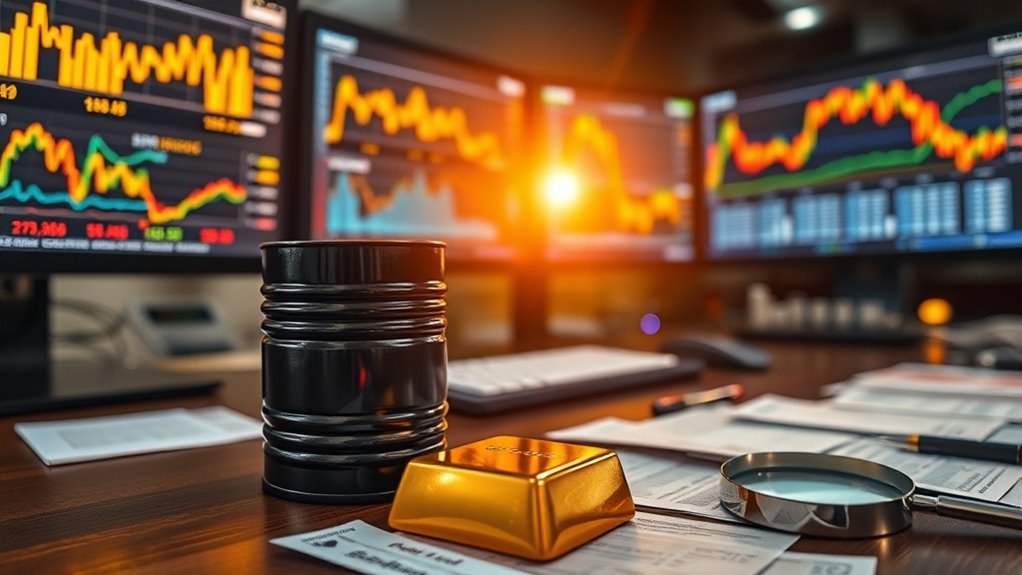

Investing in commodities like oil, gold, and beyond can diversify your portfolio and protect against inflation. Prices are influenced by supply chain disruptions, geopolitical risks, and economic cycles, making them an essential part of risk management. Market shifts often reflect global stability and economic health, so staying aware of geopolitical events and supply issues helps you make smarter moves. Continue exploring to discover strategies that can maximize your commodity investments and manage risks effectively.
Listen free for 30 days with Audible
Thousands of audiobooks and originals — cancel anytime.
As an affiliate, we earn on qualifying purchases.
Key Takeaways
- Diversify your portfolio with commodities like oil and gold to hedge against inflation and reduce market volatility.
- Stay informed on supply chain disruptions and geopolitical risks that can impact commodity prices.
- Understand how economic cycles influence commodity demand and pricing for strategic investment timing.
- Monitor supply factors such as mining output, transportation, and environmental policies affecting commodity availability.
- Use a diversified approach to manage risks associated with geopolitical tensions and global market fluctuations.
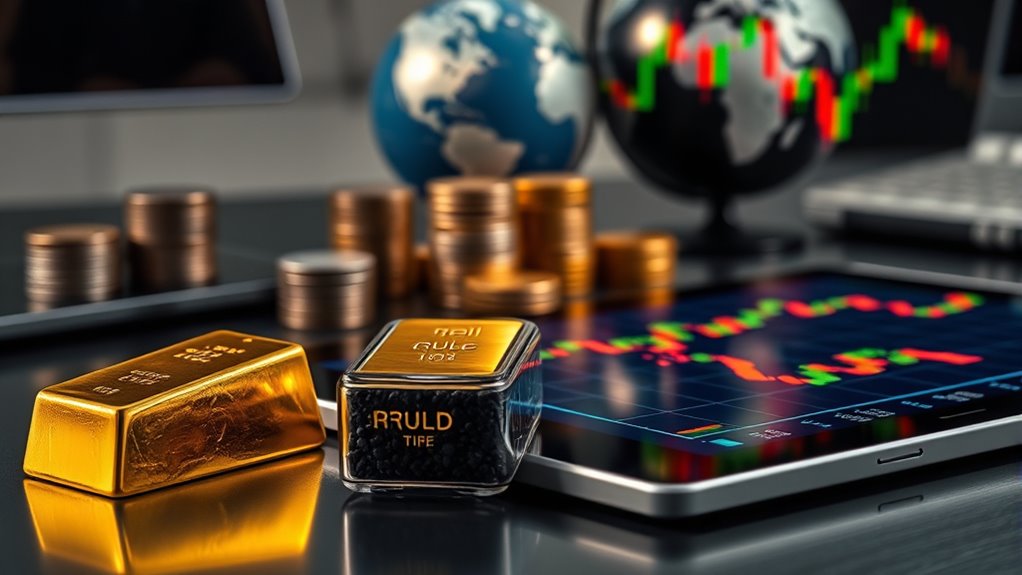
Have you ever considered diversifying your investment portfolio beyond stocks and bonds? If not, commodities like oil, gold, and other raw materials could be a valuable addition. Unlike traditional assets, commodities often react differently to economic shifts, providing a hedge against inflation and market volatility. But before jumping in, it’s essential to understand the factors that influence commodity prices, such as the supply chain and geopolitical risks. These elements can dramatically impact your investments, sometimes in unpredictable ways.
The supply chain plays a key role in commodity markets. For oil, disruptions in transportation, refinery outages, or political instability can tighten supply and push prices higher. Similarly, gold’s availability can be affected by mining output, labor strikes, or environmental restrictions. Recognizing how supply chain issues affect these markets helps you anticipate potential price swings. For example, if a major oil-producing country faces unrest or logistical challenges, you might see crude oil prices spike unexpectedly. Being aware of these vulnerabilities allows you to make more informed decisions about when to buy or sell. It also emphasizes the importance of staying updated with news and trends that could disrupt supply chains, as these are often the catalysts for sudden price movements.
Supply chain issues can cause sudden commodity price swings and impact your investment decisions.
Geopolitical risks are another critical factor influencing commodity investments. Political instability, sanctions, trade disputes, or conflicts in key regions can cause sharp fluctuations in prices. For instance, tensions in the Middle East often lead to fears of supply disruptions, boosting oil prices. Similarly, political turmoil in gold-producing countries can reduce supply, increasing prices. These risks are often impossible to predict precisely, so they require a strategic approach. Diversification across different commodities can help mitigate some of these risks, but staying informed about global developments is essential. You should monitor news related to major commodity-producing nations and consider how international policies might affect supply and demand.
Investing in commodities also involves understanding the broader economic context. When global growth slows, demand for oil and industrial metals tends to decrease, leading to lower prices. Conversely, during periods of economic expansion, prices usually climb. Recognizing these cycles helps you time your investments better. Remember, commodities can be volatile, and prices can swing rapidly due to supply chain disruptions or geopolitical events. To navigate these risks successfully, diversify your holdings and stay vigilant about world affairs. Doing so allows you to capitalize on opportunities while reducing potential losses caused by unpredictable factors. Additionally, understanding the influence of market sentiment can help you anticipate shifts in commodity prices driven by investor psychology and expectations.
As an affiliate, we earn on qualifying purchases.
Frequently Asked Questions
What Are the Tax Implications of Trading Commodities?
When trading commodities, the tax treatment varies based on your trading activity, and you must report gains or losses on your tax return. Generally, commodities are taxed as short-term or long-term capital gains, depending on holding periods. You need to keep detailed records for reporting requirements, including transaction details and dates. Be aware that some commodities, like futures, may have special tax rules, so consulting a tax professional is advisable.
How Do Geopolitical Events Impact Commodity Prices?
Geopolitical tensions act like a storm on calm waters, causing commodity prices to fluctuate wildly. You’ll see prices surge or plunge as supply disruptions unfold, especially in oil and precious metals. When countries face conflicts or sanctions, supply chains tighten, driving up costs. Staying aware of global events helps you anticipate these shifts and make smarter investment decisions, turning geopolitical turbulence into potential opportunities rather than setbacks.
What Are the Best Platforms for Commodity Trading?
You should explore platforms like TD Ameritrade, E*TRADE, and Interactive Brokers for commodity trading. They offer robust tools for market analysis and support various trading strategies, making it easier to manage your investments. These platforms provide real-time data, advanced charting, and risk management features. Choose one that aligns with your experience level and trading goals, so you can effectively analyze market trends and execute your strategies confidently.
How Can I Hedge Against Commodity Price Volatility?
To tackle turbulence in commodity prices, try tactics like trading commodity futures, which provide a proactive approach to price hedging. You can lock in prices ahead of time, reducing risk and maintaining stability. Diversify your portfolio to spread out exposure, and consider options strategies for flexible hedging. By blending these methods, you’ll bolster your defenses against unpredictable price swings and safeguard your investments effectively.
What Are the Risks of Investing in Emerging Commodity Markets?
When investing in emerging commodity markets, you face risks like low market liquidity, making it hard to buy or sell assets without impacting prices. Regulatory challenges also pose a threat, as inconsistent rules can increase compliance costs or restrict trading. These factors can lead to higher volatility and unpredictability, so you should carefully assess market conditions and stay informed about regulatory developments before committing your funds.
As an affiliate, we earn on qualifying purchases.
Conclusion
Investing in commodities is like riding a wave—you’ll feel the thrill of ups and downs, but with careful planning, you can stay afloat. Whether you choose oil, gold, or other commodities, remember that diversification is your lifeboat in choppy waters. Keep an eye on market trends and stay informed. With patience and strategy, you’ll navigate this exciting landscape and turn potential risks into rewarding opportunities. Plunge in with confidence—you’re the captain of your investment voyage.
As an affiliate, we earn on qualifying purchases.
As an affiliate, we earn on qualifying purchases.
Fall Picks
fall essentials
As an affiliate, we earn on qualifying purchases.