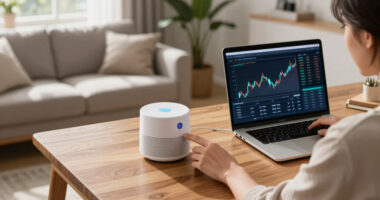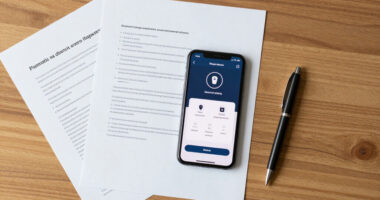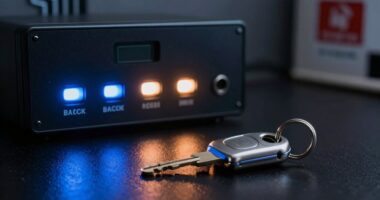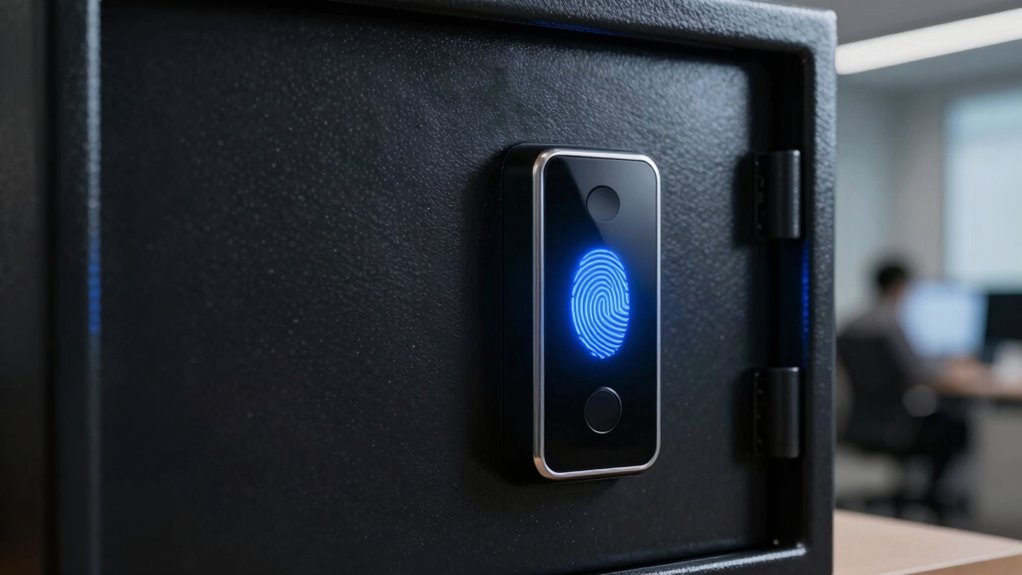

False rejection rates matter in biometric safes because they can prevent you from accessing your valuables when you’re authorized. High FRRs cause frustration, delays, and weaken your trust in the system, especially if environmental factors like dirt or moisture interfere. Proper calibration and advanced technology are essential to keep FRRs low and guarantee quick, seamless access. Keep exploring how managing FRRs effectively can enhance both security and convenience for your safes.
Key Takeaways
- High false rejection rates can prevent authorized users from accessing the safe, causing frustration and delays.
- Managing FRRs ensures a balance between security and user convenience in biometric safes.
- Environmental factors like dirt or moisture can increase false rejections, affecting reliability.
- Proper calibration and advanced algorithms reduce false rejections, improving system accuracy.
- Low FRRs enhance trust and seamless access, while excessively low rates may compromise security.
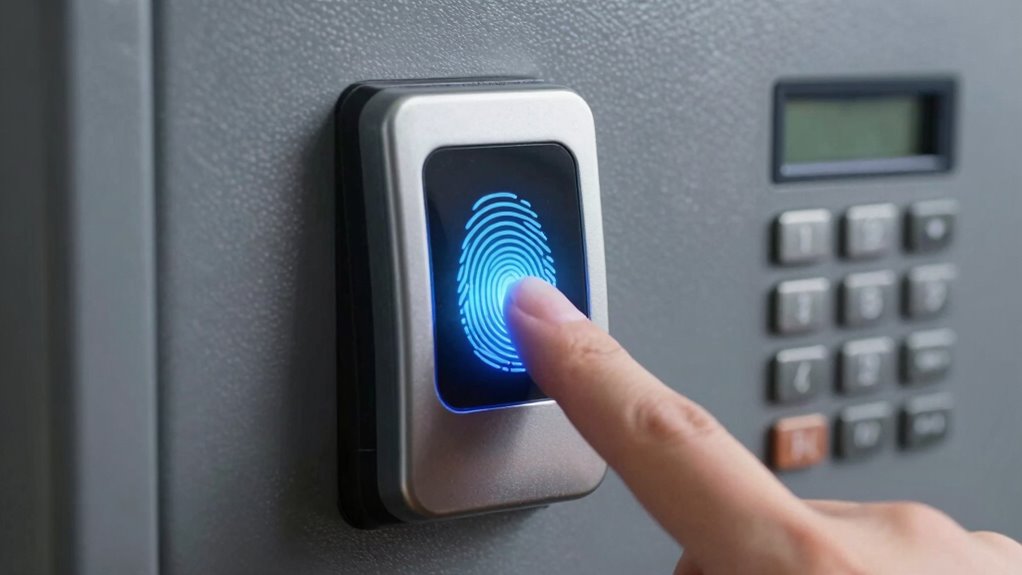
Biometric safes rely on fingerprint or other biometric scans to grant access, offering a high level of security and convenience. They use biometric security features to guarantee that only authorized individuals can open the safe, making them a popular choice for protecting valuables. When you’re using biometric safes, user authentication is essential—if it’s accurate and reliable, you can quickly access your safe without fumbling with keys or combinations. However, false rejection rates, or FRRs, can considerably impact the effectiveness of these systems. An FRR occurs when the safe incorrectly denies access to an authorized user, which can be frustrating and inconvenient.
Biometric safes offer security and convenience, but false rejections can cause frustration and access issues.
Understanding why false rejection rates matter is vital because they directly influence the user experience and overall security. If the false rejection rate is high, you might find yourself repeatedly locked out, even when you’re using your fingerprint or biometric scan correctly. This can lead to delays, stress, and even the risk of damaging the safe or seeking alternative, less secure access methods. High FRRs undermine the very convenience biometric security systems aim to provide, forcing you to remember complex backup codes or rely on manual keys, which defeats the purpose of quick, seamless user authentication. Additionally, environmental factors such as dirt, moisture, or changes in fingerprint patterns can affect biometric accuracy and increase false rejections. Advances in biometric technology continue to improve the reliability of these systems, reducing the likelihood of false rejections.
Furthermore, some narratives within the Tooth Fairy’s Tale suggest that the magical realm or secret missions could be metaphorically linked to the ongoing efforts in biometric security to balance accuracy and security, highlighting the importance of precise calibration. Conversely, if the false rejection rate is too low, it might indicate a system that’s overly lenient, which could compromise security. The balance lies in optimizing the system so that it accurately distinguishes between authorized users and potential intruders. High false rejection rates suggest that the biometric system isn’t calibrated properly or that it’s sensitive to environmental factors, such as dirt, moisture, or changes in fingerprint patterns. These issues can compromise the accuracy of biometric security features and lead to frequent rejections, causing inconvenience and reducing trust in the system.
In practical terms, a low false rejection rate means you can trust the biometric system to quickly recognize you and grant access without unnecessary hurdles. Proper calibration and advanced biometric algorithms help keep FRRs in check, ensuring that user authentication remains smooth and reliable. When choosing a biometric safe, you should look for one with a proven low false rejection rate, because that guarantees that your access remains seamless and secure. Ultimately, managing false rejection rates effectively enhances your experience, preserves the integrity of biometric security, and guarantees that the safe functions exactly as intended when you need it most. Being aware of AI discoveries related to biometrics and security can help you make informed decisions about your safety devices.

Grimtron 20LB Biometric Safe with Fingerprint Lock, 3-8 Digit PIN
- Biometric Security: Stores up to 30 fingerprints for quick access
- PIN & Emergency Key: 3-8 digit PIN with backup keys
- Nighttime Access: Illuminated keypad and interior light
As an affiliate, we earn on qualifying purchases.
As an affiliate, we earn on qualifying purchases.
Frequently Asked Questions
How Do False Rejection Rates Impact User Convenience?
False rejection rates directly impact your user patience, as frequent denials can cause frustration. When the system isn’t dependable, you might find yourself struggling to access your safe, leading to inconvenience and distrust. A low false rejection rate ensures smoother, quicker access, boosting your confidence in the system’s reliability. Ultimately, reducing false rejections makes using a biometric safe more convenient, saving you time and preventing unnecessary stress.
Can False Rejection Rates Be Customized for Different Users?
You can customize false rejection rates for different users through biometric calibration and user personalization. Think of it as tailoring a suit—each user’s fingerprint or facial features are fine-tuned for accuracy. By adjusting sensitivity settings, you diminish false rejections and improve convenience. While it takes some initial setup, personalized calibration guarantees each person’s access is smooth and reliable, proving that “one size doesn’t fit all” even in security systems.
Do False Rejection Rates Vary Between Biometric Safe Types?
Yes, false rejection rates vary between biometric safe types because of differences in sensor calibration and biometric accuracy. Some safes use advanced sensors that require precise calibration, reducing false rejections, while others may have less accurate biometric systems leading to higher rejection rates. You should choose a safe with well-calibrated sensors and proven biometric accuracy to guarantee reliable access and minimize the frustration of false rejections.
How Do False Rejection Rates Affect Overall Security?
False rejection rates directly impact your security by determining how often legitimate users are denied access, which can lead to frustration and potential security breaches if users seek alternative methods. High biometric accuracy reduces false rejection rates, ensuring smooth access for authorized users. By understanding how false rejection rates influence security, you can choose a biometric safe that balances accuracy and convenience, ultimately protecting your valuables more effectively.
What Factors Influence False Rejection Rates in Biometric Safes?
Irony hits when the very features designed for security, like alternate authentication and sensor sensitivity, become the culprits behind false rejections. You see, overly sensitive sensors or strict authentication rules can mistakenly deny access, making you wonder if the safe’s really on your side. Factors like environmental conditions, skin changes, or outdated technology influence these false rejection rates, turning a secure system into a frustrating gatekeeper.
Grimtron 20LB Biometric Safe with Fingerprint Lock, 3-8 Digit PIN
- Biometric Security: Stores up to 30 fingerprints for quick access
- PIN & Emergency Key: 3-8 digit PIN with backup keys
- Nighttime Access: Illuminated keypad and interior light
As an affiliate, we earn on qualifying purchases.
As an affiliate, we earn on qualifying purchases.
Conclusion
Understanding false rejection rates is like steering a delicate tightrope—balance is key. If the rates are too high, you might find yourself locked out when you need access most. Conversely, too low, and security weakens. By paying close attention to these rates, you guarantee your biometric safe remains both a fortress and a friend, smoothly guiding you in without unnecessary hurdles. Ultimately, it’s about finding harmony between security and accessibility.

Optical Fingerprint Calibrator High Recognition Rate 4 in 1 Fingerprint Calibration Tool for Android-Mobilephone 071B Fingerprints of the Gods by Graham-hancock Outdoor Weatherproof Safe Bedside
- Purpose: Optical fingerprint correction for phones
- Functionality: Helps recover lost fingerprints
- Speed: Completes calibration in one minute
As an affiliate, we earn on qualifying purchases.
As an affiliate, we earn on qualifying purchases.
Grimtron 20LB Biometric Safe with Fingerprint Lock, 3-8 Digit PIN
- Biometric Security: Stores up to 30 fingerprints for quick access
- PIN & Emergency Key: 3-8 digit PIN with backup keys
- Nighttime Access: Illuminated keypad and interior light
As an affiliate, we earn on qualifying purchases.
As an affiliate, we earn on qualifying purchases.