
For most buyers comparing investment property calculators, I would start with the Calculated Industries 3415 Qualifier Plus IIIx, which centers real estate loan and qualification calculations. The HP 10bII+ is a versatile alternative for broader financial work, while the Texas Instruments BA II Plus suits users who want a familiar financial-calculator layout. The main tradeoff is between dedicated real estate functions and general-purpose financial tools; portability, display format, and learning curve also matter. No handheld calculator replaces a spreadsheet for full cash-flow projections, taxes, or sensitivity analysis. Read on for the full comparison and guidance on matching a calculator to your property workflow.

Get smart everyday buys delivered free with Prime
- Fast, free delivery on millions of items
- Prime Video, Amazon Music and more included
- Member-only deals all year
Key Takeaways
- Dedicated real estate models lead for loan-focused work: The Calculated Industries Qualifier Plus and Real Estate Master options prioritize property finance tasks, while general financial calculators require more manual setup.
- The 3415 is the strongest all-around fit in this lineup: Its real estate orientation makes it a practical starting point for buyers who regularly compare mortgage scenarios and qualification figures.
- General-purpose models offer flexibility, not property-specific shortcuts: HP, Texas Instruments, ROATEE, CATIGA, and Casio options can serve broader finance tasks, but buyers should expect to learn their financial functions and workflows.
- Form factor changes how a calculator fits the job: The pocket Real Estate Master favors portability, while the Victor and Calculated Industries desktop models suit a stationary workspace.
- Entry-level and specialty picks involve different compromises: The TI BA II Plus offers a simpler alternative to the Professional version, while the Qualifier Plus IIIfx models cater to real estate users who want more specialized tools.
| Calculated Industries 3415 Qualifier Plus IIIx Real Estate Finance Calculator |  | Best for Buyer Qualification | Brand: Calculated Industries | Model number: 3415 | Item weight: 91 g | VIEW LATEST PRICE | See Our Full Breakdown |
| Calculated Industries 3405 Real Estate Master IIIx Finance Calculator |  | Best for Residential Loan Scenarios | Brand: Calculated Industries | Model: 3405 | Weight: 91 g | VIEW LATEST PRICE | See Our Full Breakdown |
| HP 10bII+ Financial Calculator |  | Best for Flexible General Finance | Brand: HP | Model: 10bII+ | Model number: HEW2716570 | VIEW LATEST PRICE | See Our Full Breakdown |
| HP 12C Financial Calculator |  | Best for Experienced Finance Users | Brand: HP | Model: HP 12C | Functions: 120+ including TVM, NPV, IRR, amortization, and bond calculations | VIEW LATEST PRICE | See Our Full Breakdown |
| Texas Instruments BA II Plus Professional Financial Calculator |  | Best for Advanced Cash-Flow Analysis | Brand: Texas Instruments | Model: BA II Plus Professional | Display: 10-digit | VIEW LATEST PRICE | See Our Full Breakdown |
| Texas Instruments BA II Plus Financial Calculator | 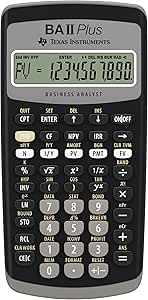 | Best for Cash-Flow Analysis | Brand: Texas Instruments | Model: BA II Plus | Functions: NPV, IRR, time-value-of-money, amortization, cash-flow analysis, and statistics | VIEW LATEST PRICE | See Our Full Breakdown |
| Calculated Industries 3400 Pocket Real Estate Master Financial Calculator |  | Best for Everyday Property Math | Brand: Calculated Industries | Model: 3400 Pocket Real Estate Master | Calculator type: Financial | VIEW LATEST PRICE | See Our Full Breakdown |
| ROATEE AC0601 Financial Calculator |  | Best Compact Study Companion | Brand: ROATEE | Model: AC0601 | Financial worksheets: 11, including TVM, NPV, IRR, and bond pricing | VIEW LATEST PRICE | See Our Full Breakdown |
| CATIGA CF-300 Professional Financial Calculator |  | Best for Broad Worksheet Coverage | Brand: CATIGA | Model: CF-300 | Calculator type: Financial | VIEW LATEST PRICE | See Our Full Breakdown |
| Calculated Industries 3430 Qualifier Plus IIIfx Real Estate Calculator |  | Best for Investor-Lenders and Client Qualification | Brand: Calculated Industries | Model: 3430 Qualifier Plus IIIfx | Calculator focus: Real-estate finance and investment analysis | VIEW LATEST PRICE | See Our Full Breakdown |
| Victor 6500 12-Digit Desktop Financial Calculator with Loan Wizard |  | Best for Quick Loan Scenarios | Calculator type: Financial | Display: Angled 12-digit LCD with 21 mm digits | Power: Hybrid solar and battery; requires two AA batteries | VIEW LATEST PRICE | See Our Full Breakdown |
| Calculated Industries 43430 Qualifier Plus IIIfx Desktop Real Estate Calculator |  | Best for Investment Analysis | Calculator type: Desktop real estate calculator | Mortgage functions: Dedicated keys for loan amount, interest, and payments | Investment functions: Cash-flow analysis, IRR, and NPV | VIEW LATEST PRICE | See Our Full Breakdown |
| Casio FC-200V-2 Financial Calculator | 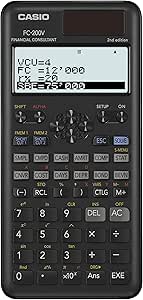 | Best Portable Financial All-Rounder | Calculator type: Financial | Display: 4-line LCD | Screen size: 2.8 inches | VIEW LATEST PRICE | See Our Full Breakdown |
| investment property calculator | Brand | Model | Display |
|---|---|---|---|
| Calculated Industries 3415 Qua | Calculated Industries | — | — |
| Calculated Industries 3405 Rea | Calculated Industries | 3405 | — |
| HP 10bII+ Financial Calculator | HP | 10bII+ | 12-digit LCD with adjustable contrast |
| HP 12C Financial Calculator | HP | HP 12C | LCD |
| Texas Instruments BA II Plus P | Texas Instruments | BA II Plus Professional | 10-digit |
| Texas Instruments BA II Plus F | Texas Instruments | BA II Plus | — |
| Calculated Industries 3400 Poc | Calculated Industries | 3400 Pocket Real Estate Master | LCD, 2.5-inch screen |
| ROATEE AC0601 Financial Calcul | ROATEE | AC0601 | LCD, 3-inch screen |
| CATIGA CF-300 Professional Fin | CATIGA | CF-300 | LCD, 2-inch screen |
| Calculated Industries 3430 Qua | Calculated Industries | 3430 Qualifier Plus IIIfx | — |
| Victor 6500 12-Digit Desktop F | — | — | Angled 12-digit LCD with 21 mm digits |
| Calculated Industries 43430 Qu | — | Qualifier Plus IIIfx Desktop | — |
| Casio FC-200V-2 Financial Calc | — | — | 4-line LCD |
More Details on Our Top Picks
Calculated Industries 3415 Qualifier Plus IIIx Real Estate Finance Calculator
The Qualifier Plus IIIx is the clearest fit here for investors who need to assess a borrower’s buying capacity, not just work out a loan payment. Its dedicated pre-qualification keys use income, debt, and expense figures, while support for FHA, VA, jumbo, combo, and ARM loans helps model residential financing scenarios. Compared with the Calculated Industries 3405 Real Estate Master IIIx, this model puts more emphasis on qualification rather than a broad set of payment schedules. That focus makes it useful for investor-agents and lending conversations, but less appealing if you only need occasional rental-property cash-flow math. It is still a specialized finance calculator, not a full investment analysis tool for operating costs or rental returns. The slide cover and reference guides help with portability and lookup, though the tool-secured battery compartment can make replacement less convenient.
Pros:- Dedicated keys support buyer pre-qualification using income, debt, and expense figures.
- Handles FHA, VA, jumbo, combination, and adjustable-rate loan scenarios.
- Protective slide cover and reference guides support portable use and quick lookup.
- Battery compartment meets child-safety requirements.
Cons:- Its specialized real estate workflow may be harder to use for people unfamiliar with mortgage terminology.
- The button-cell battery compartment requires a tool to access.
- Mortgage calculations do not replace a rental-property cash-flow analysis.
Best for: Real estate investors and agents who regularly pre-qualify residential buyers and compare common mortgage programs.
Not ideal for: Rental owners seeking a dedicated cash-flow or return-on-investment calculator, or casual users who need only basic arithmetic.
- Brand:Calculated Industries
- Model number:3415
- Item weight:91 g
- Loan types:Jumbo, FHA, VA, combination, and ARM
- Included accessories:Protective slide cover and reference guides
- Warranty:1-year limited
- Battery compliance:Reese’s Law compliant (16 CFR Part 1263)
Our verdict“Choose this model when buyer qualification and residential loan comparisons matter more than broader investment-property analysis.”
Calculated Industries 3405 Real Estate Master IIIx Finance Calculator
The Real Estate Master IIIx suits investors who want mortgage calculations organized around residential financing terms. It covers amortization, remaining balances, ARMs, combination loans, and less typical schedules such as biweekly, quarterly, and interest-only payments. Compared with the 3415 Qualifier Plus IIIx, it gives more attention to payment structures and loan balances than buyer pre-qualification, making it a better match for comparing financing options on a property. Its keys are clearly labeled for real estate use, so the workflow is more direct than a general-purpose financial calculator such as the HP 10bII+. The tradeoff is a narrow scope: it does not calculate the wider operating picture of a rental investment, such as expenses and net cash flow. The included cover and guides help, but the tool-secured battery compartment is less convenient to open.
Pros:- Clearly labeled real estate keys reduce the need to memorize mortgage formulas.
- Supports ARMs, combination loans, amortization, and remaining-balance calculations.
- Includes biweekly, quarterly, and interest-only payment options.
- Comes with a slide cover, reference guides, and two batteries.
Cons:- Focused on residential financing rather than full investment-property performance.
- Button-cell battery access requires a tool.
- The specialized layout is less flexible for general business or financial calculations.
Best for: Residential property investors comparing payment schedules, adjustable-rate terms, and remaining loan balances.
Not ideal for: Investors who need rental income, expense, or return calculations in one workflow, or users who want a general-purpose finance calculator.
- Brand:Calculated Industries
- Model:3405
- Weight:91 g
- Payment schedules:Biweekly, quarterly, and interest-only
- Loan functions:Mortgage payments, amortization, remaining balances, ARMs, and combination loans
- Included accessories:Protective slide cover, quick reference guide, pocket user’s guide, and two batteries
- Warranty:1 year
- Battery compartment:Tool-secured button-cell compartment
Our verdict“Pick the 3405 for frequent residential loan comparisons, but choose a broader financial calculator for whole-property investment analysis.”
HP 10bII+ Financial Calculator
The HP 10bII+ is a flexible alternative for investors who want finance functions beyond mortgage calculations. Its 100-plus functions include probability tools, while the intuitive keyboard aims to keep common calculations to fewer keystrokes. That broader toolkit is an advantage over the Calculated Industries 3405, whose labeled keys make residential loan work more direct but limit its reach outside that niche. For investment-property decisions, the HP can support financial calculations, but it lacks the dedicated real estate loan workflow of the 3415 Qualifier Plus IIIx and does not turn property income and expenses into a complete investment analysis by itself. Its adjustable-contrast 12-digit display helps with readability, and exam approval may appeal to students balancing coursework with property finance. The plastic enclosure and battery-powered design are practical tradeoffs rather than premium-build features.
Pros:- Offers more than 100 functions, including probability distributions.
- Intuitive keyboard reduces keystrokes for common financial tasks.
- 12-digit LCD has adjustable contrast and on-screen labels.
- Permitted for SAT, PSAT/NMSQT, and College Board AP tests.
Cons:- Does not provide the dedicated residential real estate workflow found on the Calculated Industries models.
- Plastic enclosure may feel less robust than the metal-bodied TI BA II Plus Professional.
- Battery-powered operation requires battery replacement over time.
Best for: Students and investors who need a general financial calculator for coursework, loan calculations, and a range of business functions.
Not ideal for: Real estate professionals who want dedicated pre-qualification keys or investors seeking a specialized property cash-flow calculator.
- Brand:HP
- Model:10bII+
- Model number:HEW2716570
- Display:12-digit LCD with adjustable contrast
- Functions:100+ built-in functions, including probability distributions
- Power source:Battery powered
- Weight:3.04 ounces
- Exam compatibility:SAT, PSAT/NMSQT, and College Board AP
Our verdict“Choose the HP 10bII+ when you want one broadly capable finance calculator for study and investment calculations rather than a mortgage-specific tool.”
HP 12C Financial Calculator
The HP 12C favors users who value a broad financial function set and already know, or are willing to learn, Reverse Polish Notation (RPN). It handles TVM, NPV, IRR, amortization, and bond calculations, giving investment-property buyers tools for evaluating financing and cash-flow scenarios beyond the mortgage-focused Calculated Industries 3405. Programmable keystrokes can also reduce repetitive entry for users who regularly run the same calculations. The catch is the input method: RPN can slow down someone accustomed to standard algebraic entry, so the HP 10bII+ is a more approachable general-purpose choice for many beginners. Its compact body is portable, but the small form may be uncomfortable for larger hands or users who prefer larger controls. This is a capable finance tool, not a calculator with dedicated rental-property fields.
Pros:- Supports more than 120 functions, including TVM, NPV, IRR, amortization, and bond calculations.
- RPN entry can reduce keystrokes for practiced users.
- Programmable keys can automate repeated calculation sequences.
- Includes a protective carrying case, cleaning cloth, and pre-installed batteries.
Cons:- RPN has a learning curve for users accustomed to standard algebraic entry.
- Compact dimensions may be uncomfortable for some users and can limit readability.
- Plastic enclosure is less rugged than the metal exterior of the TI BA II Plus Professional.
Best for: Experienced investors and finance professionals who use TVM, NPV, IRR, and amortization calculations and are comfortable learning RPN.
Not ideal for: First-time calculator users who prefer standard algebraic entry, or buyers who need dedicated property income and expense inputs.
- Brand:HP
- Model:HP 12C
- Functions:120+ including TVM, NPV, IRR, amortization, and bond calculations
- Input method:RPN (Reverse Polish Notation)
- Display:LCD
- Dimensions:6 in L x 3 in W
- Power source:Battery powered
- Warranty:2-year manufacturer
Our verdict“The HP 12C makes sense for experienced finance users who want advanced functions and efficient RPN entry, not beginners seeking a property-specific interface.”
Texas Instruments BA II Plus Professional Financial Calculator
The TI BA II Plus Professional is the strongest fit in this group for investors who need structured cash-flow and depreciation analysis alongside standard time-value-of-money calculations. It handles up to 32 uneven cash flows and offers six depreciation methods, which can help compare irregular project cash flows and model asset write-downs. The prompted display guides data entry, making its more advanced work less opaque than the HP 12C’s RPN workflow for users who prefer step-by-step prompts. Its metal exterior and anti-slip feet also give it a sturdier working feel than the plastic HP 10bII+. The limit of 32 uneven cash flows may constrain larger models, and the calculator still does not supply dedicated rental-property fields for income, expenses, or vacancy. It is a finance tool for building an analysis, not a turnkey investment-property calculator.
Pros:- Calculates time value of money, cash flows, and depreciation using six methods.
- Supports up to 32 uneven cash flows for irregular investment scenarios.
- Prompted display guides users through complex financial inputs.
- Metal exterior and anti-slip rubber feet provide a more robust build than the plastic HP models.
Cons:- Cash-flow analysis is limited to 32 uneven cash flows.
- Frequency inputs are restricted to four digits.
- Does not provide dedicated rental income, expense, or property-return fields.
Best for: Investors and finance professionals modeling irregular cash flows, depreciation, and time-value-of-money scenarios.
Not ideal for: Buyers who want guided property-specific rental metrics or need to enter more than 32 uneven cash flows in one analysis.
- Brand:Texas Instruments
- Model:BA II Plus Professional
- Display:10-digit
- Cash-flow capacity:Up to 32 uneven cash flows
- Depreciation methods:6
- Regression options:Linear, logarithmic, exponential, and power
- Weight:6.08 ounces
- Exam approval:CFA and GARP FRM
- Warranty:1-year limited
Our verdict“Choose the TI BA II Plus Professional for advanced cash-flow and depreciation work, while recognizing that property-specific operating analysis must be handled separately.”
Texas Instruments BA II Plus Financial Calculator
The BA II Plus is the strongest fit here for investors who want to model a property’s changing cash flows rather than rely only on mortgage shortcuts. Its NPV and IRR functions handle uneven cash-flow entries, which helps compare deals with renovation costs, staggered income, or a future sale. Worksheets for amortization, depreciation, and compound interest add useful detail, and stored values can save repeat entries. Compared with the Calculated Industries 3400 Pocket Real Estate Master, this TI is more capable for investment-return analysis but less direct for everyday property and date calculations. Its worksheet system has a learning curve, and unfamiliar tasks may require the manual. Choose it for flexible financial modeling, not the quickest keypad route to a routine mortgage answer.
Pros:- Calculates NPV and IRR for uneven cash flows, useful for comparing investment scenarios.
- Worksheets cover amortization, bonds, depreciation, and compound interest.
- Stored worksheet values can reduce repeated data entry.
- Approved for several professional exams, including CFA and FRM exams.
Cons:- Financial worksheets can take time to learn.
- The manual may be needed for unfamiliar calculations.
Best for: Investors and finance students who need NPV, IRR, and uneven cash-flow analysis alongside mortgage and depreciation calculations.
Not ideal for: Buyers who mainly want dedicated real-estate keys for fast loan, balance, and date calculations, or who prefer a calculator that is simple to learn without consulting a guide.
- Brand:Texas Instruments
- Model:BA II Plus
- Functions:NPV, IRR, time-value-of-money, amortization, cash-flow analysis, and statistics
- Statistical regression:Linear, logarithmic, exponential, and power
- Dimensions:6.48 x 2.98 x 0.72 inches
- Weight:3.68 ounces
- Battery:1 CR123A battery, included
- Included accessory:Slide case
Our verdict“Choose the BA II Plus if cash-flow returns matter more to you than dedicated real-estate shortcuts.”
Calculated Industries 3400 Pocket Real Estate Master Financial Calculator
The 3400 Pocket Real Estate Master favors speed on common property questions: dedicated keys cover loan amounts, payments, interest, amortization, remaining balances, and future values. Its date-math tools also suit investors working through loan terms or timing a payoff. That focused layout makes it more approachable for routine real-estate calculations than the Texas Instruments BA II Plus, whose broader cash-flow worksheets offer more flexibility but require more setup. The tradeoff is scope: the 3400 is designed for financial and real-estate work, not general-purpose calculations or detailed uneven-cash-flow return modeling. It arrives with a hard case and battery, though the required CR2 battery is a specific replacement type. This is a practical pick for property calculations performed frequently, not a substitute for a broader investment-analysis tool.
Pros:- Dedicated keys simplify common mortgage and real-estate calculations.
- Handles loan amounts, principal and interest payments, and interest-only payments.
- Calculates amortization, remaining balances, total interest, future values, and dates.
- Includes a protective hard case, user guide, and battery.
Cons:- Its real-estate and finance focus limits general-purpose use.
- Uses a CR2 battery, a less common replacement type than widely used household cells.
Best for: Landlords, agents, and small-scale investors who regularly calculate mortgage payments, payoff balances, interest, and property-related dates.
Not ideal for: Investors who need broad scientific functions or detailed NPV and IRR analysis of uneven property cash flows.
- Brand:Calculated Industries
- Model:3400 Pocket Real Estate Master
- Calculator type:Financial
- Display:LCD, 2.5-inch screen
- Power source:Battery powered
- Battery:1 CR2 battery, included
- Dimensions:5 inches long
- Weight:4 ounces
- Included accessories:Protective hard case, user guide, and battery
Our verdict“Pick the 3400 for quick, recurring mortgage and property calculations rather than broad investment-return modeling.”
ROATEE AC0601 Financial Calculator
The ROATEE AC0601 combines core investment calculations with scientific and statistical functions in a light, pocket-sized body. Its 11 financial worksheets include TVM, NPV, and IRR, giving students a way to study property returns while keeping one calculator for math or statistics coursework. Against the more property-specific Calculated Industries 3400 Pocket Real Estate Master, ROATEE offers broader academic functionality but lacks the same emphasis on dedicated real-estate shortcuts. Its standard finance-course input logic may be familiar to students, while the compact size helps with carrying it between classes. The compromises are a plastic enclosure, small form factor, and dependence on LR44 batteries. It makes sense as a portable study tool; investors seeking a sturdier, specialized calculator for frequent property transactions may prefer another option.
Pros:- Financial worksheets include TVM, NPV, IRR, and bond pricing.
- Scientific and statistical functions extend its usefulness beyond finance.
- Lightweight design includes constant memory and auto power-off.
- Comes with a zippered hard case and English manual.
Cons:- Plastic enclosure may feel less durable than the metal body of the Calculated Industries 3400.
- Requires LR44 batteries, which may need replacement.
- Compact form factor may be uncomfortable for users with larger hands.
Best for: Finance or accounting students who want a portable calculator for coursework, exam preparation, and basic property investment analysis.
Not ideal for: Frequent property professionals who want dedicated real-estate keys, a larger form factor, or a more robust enclosure.
- Brand:ROATEE
- Model:AC0601
- Financial worksheets:11, including TVM, NPV, IRR, and bond pricing
- Display:LCD, 3-inch screen
- Dimensions:6.2 x 3.1 x 0.4 inches
- Weight:3.25 ounces
- Batteries:2 LR44 batteries, pre-installed
- Enclosure material:Plastic
- Included accessories:Zippered hard case and English manual
Our verdict“Choose the AC0601 if portability and coursework versatility matter more than dedicated real-estate controls or a sturdier build.”
CATIGA CF-300 Professional Financial Calculator
The CATIGA CF-300 brings a wide range of investment and finance tools together: TVM, NPV, IRR, cash flow, amortization, break-even analysis, depreciation, bond pricing, and statistics. That mix suits investors who want to compare property returns and financing scenarios on one device, rather than relying on a narrow mortgage calculator. Compared with the Texas Instruments BA II Plus, the CF-300’s listed functions cover a similarly broad financial range, while its flip-open hard case is geared toward portable daily use. The available product details do not specify the CF-300’s full worksheet workflow, so buyers who depend on a familiar calculator interface may want to check its guide before choosing it. Its 2-inch screen is also a real usability limit, and the specialized finance layout is less suitable for general math.
Pros:- Includes TVM, IRR, and NPV functions for investment calculations.
- Supports cash-flow analysis, amortization, depreciation, bond pricing, and break-even analysis.
- Flip-open hard case suits carrying the calculator between work sites or classes.
- Includes statistical calculation capabilities and a two-year manufacturer warranty.
Cons:- The 2-inch display may be difficult to read for some users.
- Finance-focused design is not intended for general-purpose math.
- Product details do not specify the full worksheet workflow, so learning it may require consulting the included documentation.
Best for: Property investors, accountants, and finance students who want multiple return, loan, depreciation, and break-even tools in a portable calculator.
Not ideal for: Users who need a larger display, general-purpose math functions, or a calculator whose input workflow they already know.
- Brand:CATIGA
- Model:CF-300
- Calculator type:Financial
- Functions:TVM, IRR, NPV, cash flow, amortization, break-even, depreciation, bond pricing, and statistics
- Display:LCD, 2-inch screen
- Dimensions:6.46 x 3.15 inches
- Power source:Battery powered
- Included case:Flip-open hard case with snap closure
- Warranty:2-year manufacturer warranty
Our verdict“Choose the CF-300 for its wide range of financial worksheets if you can work comfortably with a small display.”
Calculated Industries 3430 Qualifier Plus IIIfx Real Estate Calculator
The 3430 Qualifier Plus IIIfx is the most specialized choice in this group for people who evaluate both property financing and borrower readiness. Dedicated mortgage and buyer-qualification keys can speed up client scenarios, while IRR, NPV, and cash-flow analysis give it investment uses beyond loan payments. Compared with the Calculated Industries 3400 Pocket Real Estate Master, the 3430 adds buyer qualification and more explicit investment-analysis functions, making it a better match for brokers or loan officers who also assess deals. That specialization brings a learning curve if real-estate finance terms are unfamiliar. Its button-cell battery is secured with a tool-required fastener, so replacement is less convenient than on a standard battery-powered model. Choose it for transaction and financing workflows, not as the simplest option for casual property math.
Pros:- Dedicated keys support residential mortgage finance calculations.
- Includes IRR, NPV, and cash-flow tools for investment analysis.
- Buyer-qualification functions help evaluate clients using income and debt.
- Protective slide cover, quick reference guide, and pocket user’s guide are included.
Cons:- Specialized real-estate terminology and functions may take time to learn.
- The button-cell battery compartment requires a tool for replacement.
Best for: Real-estate agents, brokers, loan officers, and investors who need to qualify buyers while analyzing mortgage terms and investment cash flows.
Not ideal for: Casual landlords or new investors who want a simple mortgage calculator and do not need buyer-qualification functions.
- Brand:Calculated Industries
- Model:3430 Qualifier Plus IIIfx
- Calculator focus:Real-estate finance and investment analysis
- Investment functions:IRR, NPV, and cash flows
- Buyer qualification:Income- and debt-based qualification functions
- Battery type:Button-cell, secured with tool-required fastener
- Warranty:1 year
- Included accessories:Protective slide cover, quick reference guide, and pocket user’s guide
Our verdict“Pick the 3430 if you regularly qualify buyers as well as calculate property financing and investment returns.”
Victor 6500 12-Digit Desktop Financial Calculator with Loan Wizard
The Victor 6500 suits landlords and small investors who repeatedly compare loan terms and want a clear desktop display. Its Loan Wizard finds a missing loan variable after you enter the other three, which can speed up checking payment or rate scenarios without working through each step manually. The large, angled 12-digit screen also makes figures easier to read at a desk than on the compact Casio FC-200V-2. That convenience has limits: the Victor’s listed features focus on loan and general financial calculations, not the cash-flow, IRR, and NPV analysis offered by the Calculated Industries 43430 Qualifier Plus IIIfx. Choose it for straightforward financing comparisons, not a full investment-property evaluation. Its desktop shape and need for two AA backup batteries also make it less convenient to carry between properties.
Pros:- Loan Wizard solves for a missing loan variable after the other three are entered.
- Large, angled 12-digit display helps make figures legible during desk-based calculations.
- Hybrid solar and battery power provides backup when light is limited.
- Tax, grand-total, delta-percent, and independent-memory keys support routine finance calculations.
Cons:- Does not list dedicated cash-flow, IRR, or NPV functions like the Calculated Industries 43430.
- Desktop form factor is inconvenient for calculations on property visits.
- Backup power requires two AA batteries.
Best for: Landlords and small investors who compare loan payments, rates, and terms at a desk and value large, readable keys and figures.
Not ideal for: Investors who need dedicated rental cash-flow, IRR, or NPV functions, or agents who need a portable calculator for property visits.
- Calculator type:Financial
- Display:Angled 12-digit LCD with 21 mm digits
- Power:Hybrid solar and battery; requires two AA batteries
- Key financial feature:Loan Wizard calculates a fourth variable from three entered loan parameters
- Additional keys:Automatic tax, grand total, delta percent, and 3-key independent memory
- Enclosure material:Brushed metal
- Color:Silver
- Item weight:9.6 ounces
Our verdict“Choose the Victor 6500 for readable, desk-based loan comparisons, but pick the Calculated Industries 43430 if investment cash-flow metrics are central to your analysis.”
Calculated Industries 43430 Qualifier Plus IIIfx Desktop Real Estate Calculator
For buyers who want more than mortgage-payment arithmetic, the Qualifier Plus IIIfx is the most directly investment-focused option in this group. It combines dedicated residential mortgage keys with cash-flow analysis, IRR, and NPV, giving investors tools to examine projected returns as well as financing. Its buyer-qualifying functions also make it useful to agents, brokers, and loan officers screening a borrower’s capacity. Compared with the Victor 6500, it offers a much wider real-estate workflow; compared with the Casio FC-200V-2, its dedicated property and mortgage functions are more targeted. The tradeoff is specialization: it is less suited to general arithmetic or finance tasks outside real estate, and the desktop design is less portable than a handheld calculator. Its guides and slide cover help with reference and storage, but it remains a focused tool rather than an all-purpose device.
Pros:- Dedicated mortgage keys make common residential financing calculations more direct.
- Cash-flow, IRR, and NPV functions support investment-return analysis beyond payment estimates.
- Buyer-qualifying calculations help agents and loan officers evaluate income and debt.
- Includes a protective slide cover, quick reference guide, and pocket user’s guide.
Cons:- Desktop design is less convenient to carry than handheld options such as the Casio FC-200V-2.
- Its real-estate specialization is less useful for general arithmetic and non-property work.
- The range of dedicated functions may be unnecessary for buyers who only compare loan payments.
Best for: Real estate investors, agents, and loan officers who need mortgage calculations plus cash-flow, IRR, NPV, or buyer-qualification tools.
Not ideal for: People seeking a portable, general-purpose financial calculator or investors who only need basic loan-payment arithmetic.
- Calculator type:Desktop real estate calculator
- Mortgage functions:Dedicated keys for loan amount, interest, and payments
- Investment functions:Cash-flow analysis, IRR, and NPV
- Additional function:Buyer-qualification calculations based on income and debt
- Included accessories:Protective slide cover, quick reference guide, and pocket user’s guide
- Battery:Long-life battery included
- Battery compliance:Reese’s Law (16 CFR Part 1263)
- Model:Qualifier Plus IIIfx Desktop
Our verdict“Pick the Qualifier Plus IIIfx if you need real-estate-specific return and qualification calculations in one desktop tool.”
Casio FC-200V-2 Financial Calculator
The Casio FC-200V-2 makes sense for investors who want a compact financial calculator that can handle loan work alongside broader finance and coursework. Its four-line LCD and functions for interest, amortization, and cash flow give more context than the Victor 6500’s large single-line display, while statistical tools such as regression and standard deviation suit users who also analyze data. Unlike the real-estate-specific Calculated Industries 43430, the Casio is aimed at finance, banking, and accounting more broadly; that flexibility can be useful if property calculations are only part of the job. The compromise is fewer dedicated property workflows: the supplied data does not list the 43430’s IRR, NPV, or buyer-qualification functions. Its plastic enclosure is less substantial than the Victor’s brushed-metal face, and battery power means keeping a spare AAA on hand for extended use.
Pros:- Four-line LCD shows more calculation context than the Victor 6500’s single-line display.
- Interest, amortization, and cash-flow functions cover common financing and investment calculations.
- Regression and standard-deviation functions add value for finance coursework and data analysis.
- Impact-resistant cover helps protect the handheld calculator when carried.
Cons:- Does not list the dedicated IRR, NPV, or buyer-qualification functions found on the Calculated Industries 43430.
- Plastic enclosure feels less substantial than the Victor 6500’s brushed-metal face.
- Runs on one AAA battery, which requires periodic replacement.
Best for: Finance students and property investors who want a portable handheld for amortization, interest, and cash-flow calculations alongside general finance work.
Not ideal for: Real estate professionals who need dedicated buyer qualification or the listed IRR and NPV functions of the Calculated Industries 43430.
- Calculator type:Financial
- Display:4-line LCD
- Screen size:2.8 inches
- Financial functions:Interest calculations, amortization, and cash-flow analysis
- Statistical functions:Regressions and standard deviation
- Power:One AAA battery, included
- Enclosure material:Plastic
- Dimensions:6.38 inches long by 3.03 inches wide
Our verdict“Choose the Casio FC-200V-2 if portability and broad finance functions matter more than dedicated real-estate analysis and qualification tools.”

How We Picked
I ranked these calculators by how directly they support common investment-property calculations: loan payments, interest, time value of money, and comparing financing scenarios. I also weighed how much a buyer must learn or calculate manually, whether the model is designed for real estate work or broader finance, and how its size and layout suit desk or field use. A property calculator can support financing decisions, but none of these products should be treated as a complete substitute for a spreadsheet, tax advice, or due diligence.
The order favors tools that combine useful real estate functions with a workable range of finance calculations. The 3415 leads as a balanced dedicated option; other Calculated Industries models rank by how specialized or portable their real estate workflows are. General-purpose financial calculators follow where they provide a useful alternative but less property-specific guidance, while desktop and less-established options are best for particular workflows rather than the broadest audience. Buyers should verify the included functions and operating instructions for the exact model before purchase.
| investment property calculator | Brand |
|---|---|
| Calculated Industries 3415 Qua | Calculated Industries |
| Calculated Industries 3405 Rea | Calculated Industries |
| HP 10bII+ Financial Calculator | HP |
| HP 12C Financial Calculator | HP |
| Texas Instruments BA II Plus P | Texas Instruments |
| Texas Instruments BA II Plus F | Texas Instruments |
| Calculated Industries 3400 Poc | Calculated Industries |
| ROATEE AC0601 Financial Calcul | ROATEE |
| CATIGA CF-300 Professional Fin | CATIGA |
| Calculated Industries 3430 Qua | Calculated Industries |
| Victor 6500 12-Digit Desktop F | — |
| Calculated Industries 43430 Qu | — |
| Casio FC-200V-2 Financial Calc | — |
Factors to Consider When Choosing Investment Property Calculators
Choosing among investment property calculators is less about finding one device that predicts a deal’s success and more about reducing friction in the calculations you repeat. I would first map the calculator to the decisions you make, then weigh portability, learning time, and the limits of handheld analysis.
Match the Calculator to the Decisions You Repeat
Write down the calculations you make most often before choosing a model: loan payments, interest-rate comparisons, amortization, or qualification estimates. A dedicated real estate calculator can shorten common property-finance workflows, while a general financial calculator may be a better fit if your work spans investments and business finance. Do not assume that a tool labeled for real estate calculates every measure you need. Verify the functions and the steps required for your specific use, especially if you rely on cash-on-cash return or cap rate. Those measures may require inputs and formulas beyond a calculator’s built-in loan functions. A short list of recurring tasks helps prevent paying for specialized shortcuts you will rarely use.
Separate Financing Math From Deal Analysis
Loan calculations answer questions about borrowing, not whether a property will generate an attractive return. A mortgage payment estimate leaves out vacancy, repairs, insurance, property taxes, management, and capital expenses. Buyers often mistake a precise payment result for a complete investment forecast. Use a calculator for quick financing comparisons, then move the numbers into a spreadsheet or analysis tool that can model operating income and changing assumptions. If you compare properties, keep the same expense assumptions across each one. That consistency makes differences between deals more meaningful than extra decimal places.
Account for Learning Time and Calculation Workflow
Specialized functions can save steps after you know how to use them, but unfamiliar key sequences can slow down a new buyer. If you only run occasional estimates, a familiar layout may be more useful than a deeper feature set. Before choosing, check whether the instructions clearly explain clearing values, changing payment periods, and switching between calculation modes. A common error is carrying an old input into a new scenario without noticing. Practice with a known loan example and confirm the result against another source before relying on the calculator for a purchase decision. A device that fits your routine is more useful than one with functions you cannot recall under time pressure.
Choose Portability for Site Work, a Desktop for Repeated Use
Buyers who compare financing while touring properties may prefer a compact model that fits in a bag or pocket. A larger desktop calculator can be easier to read and operate at a desk, especially during longer sessions or when several figures need repeated entry. Neither format improves the quality of your assumptions, so portability should follow your actual workflow rather than an imagined one. Think about where you will enter figures, whether you need a stable work surface, and how often you will carry the calculator. If you already do most analysis on a computer, a desktop unit may duplicate tools you have nearby. If you frequently make quick estimates away from your desk, portability may be worth more than a larger keypad.
Pay for Real Estate Shortcuts Only When You Will Use Them
A dedicated property-finance model can justify its added complexity when you regularly compare mortgage terms or work with clients and deals throughout the week. For occasional calculations, a general financial calculator may cover enough ground without a real estate-specific workflow. The better choice depends on how often specialized functions save time and how much setup they remove. Avoid judging value by the number of buttons or functions alone; extra capability has little use if it does not match your calculations. Also check whether your employer, course, or professional process expects a particular calculator layout. A familiar standard can matter more than a feature you would otherwise need to learn.
Keep Records and Check Assumptions Outside the Device
Handheld calculators are useful for quick comparisons, but they are not a durable record of how you reached a decision. Save key inputs, dates, loan terms, and outputs in a spreadsheet or deal file so you can revisit the analysis later. This matters when rates change or a lender revises fees and terms. Round figures consistently and label whether a number is monthly or annual; mixing periods is an easy way to distort a result. For complex tax, legal, or financing questions, confirm assumptions with a qualified professional. Treat the calculator as a fast arithmetic aid, not as a source of investment advice.
Frequently Asked Questions
Can a financial calculator tell me whether a rental property is a good investment?
It can help you calculate financing figures, but it cannot decide whether the property is a sound investment on its own. A loan payment does not include operating costs, vacancy, future repairs, taxes, or changes in rent. Use the calculator to test financing scenarios, then combine those results with a full property cash-flow model. Keep assumptions visible so you can revise them as you learn more about the property. For tax and legal impacts, get advice specific to your situation.
Should I choose a real estate calculator or a general financial calculator?
Choose a real estate-focused model if you repeat property loan or qualification calculations and want workflows tailored to those tasks. A general financial calculator may suit you better if you also handle broader time-value-of-money calculations and are comfortable entering figures manually. Compare the exact functions you need rather than relying on the product category name. The specialized option may reduce steps, but its added workflow can take time to learn. If you only run occasional estimates, versatility and familiarity may matter more than property-specific shortcuts.
Do I need the Professional version of a financial calculator for property investing?
Not automatically. A Professional model is worth considering when its extra functions support calculations you perform regularly, but a simpler model can be enough for common loan and time-value-of-money work. List your required calculations and check each model’s function set before paying for added capability. Also account for setup time: features you rarely use do not improve your everyday workflow. If you are unsure, start with the tasks you can describe clearly rather than choosing by the product label.
Is a dedicated investment property calculator enough for comparing two rental deals?
It can help compare their financing, but a fair property comparison needs more than debt payments. Use consistent estimates for rent, vacancy, maintenance, insurance, taxes, management, and planned improvements across both deals. A spreadsheet makes those assumptions easier to inspect and change than a handheld calculator. The calculator is still useful for testing different rates, terms, or down payments. Keep financing results separate from operating assumptions so one strong loan estimate does not obscure weak property economics.
What should I check before relying on a calculator’s mortgage result?
Confirm the interest rate, loan term, payment frequency, and whether the entered rate is annual or periodic. Check that the payment result corresponds to principal and interest rather than any extra costs a lender may include. Clear or overwrite old values between scenarios, since a retained input can quietly change the answer. Run a sample calculation whose result you can verify with a lender worksheet or trusted spreadsheet. Record the inputs alongside the output so the figure remains interpretable later.
Conclusion
For most property buyers, I recommend the Calculated Industries 3415 Qualifier Plus IIIx as the best overall pick because its dedicated real estate focus makes financing comparisons the center of the workflow. The Texas Instruments BA II Plus is my best value-style choice for buyers who want a straightforward general financial calculator, while the HP 10bII+ is a stronger fit for broader finance tasks. Beginners should start with the model whose instructions and key layout they can follow comfortably, rather than buying extra functions they may not use. For specialized real estate calculations, compare the Qualifier Plus IIIfx and Real Estate Master models; for a compact carry option, look at the Pocket Real Estate Master, and for a desk setup, consider the Victor or desktop Qualifier Plus IIIfx. Whichever you choose, pair it with a documented cash-flow model before making an offer.
Fall Picks

Samsung Essential S3 27-Inch FHD Curved Monitor (S36GD)
As an affiliate, we earn on qualifying purchases.