

Choosing the right automated investing tool in 2027 is less about finding a magic button and more about matching your risk tolerance with the right level of automation. I have evaluated the current landscape to identify which options actually help you build wealth without requiring a finance degree. The market is split between educational resources that teach you how to use these platforms and the platforms themselves that execute trades for you.

Get smart everyday buys delivered free with Prime
- Fast, free delivery on millions of items
- Prime Video, Amazon Music and more included
- Member-only deals all year
My top pick for understanding the mechanics is Robo-Advisors Explained, which breaks down the algorithms behind the scenes. For those who want to start with minimal effort, How to Invest in the Stock Market Using Acorns offers a clear path to passive wealth building through spare change. If you are interested in leveraging artificial intelligence for stock picking, StockRank: AI-Guided Investing provides a distinct approach compared to traditional robo-advisors. The main tradeoff across these options is control versus convenience. Some tools automate everything but remove your ability to tweak portfolios, while others require more initial setup in exchange for granular control.
Key Takeaways
- Robo-advisors are best for hands-off investors who prioritize long-term asset allocation over short-term trading gains.
- AI-guided tools like StockRank offer predictive analytics but require more active monitoring than traditional index fund automation.
- Educational books on automated investing are essential for beginners who want to understand the underlying logic before committing capital.
- Micro-investing platforms like Acorns are ideal for those with irregular income streams who struggle to save lump sums.
- Copy trading strategies allow you to mirror successful traders but carry the risk of inheriting another person’s poor risk management.




| automated investing app | Format | Subject | Target Audience | Key Feature |
|---|---|---|---|---|
| Robo-Advisors Explained: How A | Book | Personal Finance / Investing | Novices and Seasoned Investors | AI-Driven Strategy Analysis |
| AI Investing for Beginners: Ho | Book | AI Investing | Beginners | AI Tool Strategies |
| Copy Trading 101: A Beginner’s | Book | Copy Trading | Beginners | Social Trading Basics |
| How to Invest in the Stock Mar | Book | Personal Finance / Investing | Beginners | Spare Change Investing |
| StockRank: AI-Guided Investing | App/Service | Stock Market Analysis | Active Traders | AI Predictions |
More Details on Our Top Picks
Robo-Advisors Explained: How Automated Investing Systems Manage Money, Risk, and Behavior
This book stands out because it treats automated investing as a system of logic rather than a black box. Unlike AI Investing for Beginners, which focuses on the tools themselves, this text explains the risk assessment algorithms that drive robo-advisors. I find this distinction critical for readers who want to trust their automated portfolios. It details how platforms allocate assets based on your answers to a risk questionnaire, demystifying why your portfolio looks the way it does.
The integration of AI-driven strategies with personal finance fundamentals makes it suitable for both novices and seasoned investors. However, it is important to note that the focus is primarily on U.S. regulations. This means international investors may find certain sections less applicable to their local tax or legal frameworks. Compared to the practical, hands-on approach of the Acorns guide, this is more theoretical. But for anyone who wants to understand the ‘why’ behind the ‘what,’ this is the strongest resource in the lineup. It helps you diagnose when an automated system might be misaligned with your actual goals.
Pros:- Clear explanation of complex robo-advisor concepts
- Integrates AI and personal finance insights
- Includes real-world examples and case studies
- Helpful for both beginners and experienced investors
Cons:- May be too technical for absolute beginners
- Focuses primarily on U.S. regulations, limiting global relevance
Best for: Investors who want to understand the underlying logic of robo-advisors before committing capital.
Not ideal for: Absolute beginners who need step-by-step app instructions rather than theoretical concepts.
- Format:Book
- Subject:Personal Finance / Investing
- Focus Area:Robo-Advisor Mechanics
- Target Audience:Novices and Seasoned Investors
- Regulatory Scope:Primarily U.S.
- Key Feature:AI-Driven Strategy Analysis
- Case Studies:Included
- Complexity Level:Intermediate
Our verdict“This option is the most intellectually rigorous in the group, best suited for those who value understanding over immediate action.”
AI Investing for Beginners: How to Build Wealth with AI Tools and Automation
This guide targets a specific niche: investors who believe artificial intelligence is the future of wealth building. While Robo-Advisors Explained covers the general concept of automation, this book dives specifically into AI tools and apps. It presents practical strategies for leveraging these technologies, which is a significant differentiator. I appreciate that it focuses on the beginner’s perspective, assuming little to no prior knowledge of how AI interacts with market data.
However, a notable drawback is the lack of specific tool details in the raw data provided. This means the advice may feel somewhat generalized compared to platform-specific guides like the Acorns book. It is better suited for those who want to explore the ecosystem of AI investing rather than mastering one specific platform. If you are looking for a broad overview of how automation is changing investing, this is a solid starting point. But if you need a step-by-step tutorial on a specific app, you might find it lacking in concrete implementation details.
Pros:- Aimed at beginner investors
- Focuses on practical AI investing strategies
- Covers AI tools, apps, and automation
Cons:- No details about specific tools or strategies are provided
- Raw data does not include reviews or additional product information
Best for: Beginners specifically interested in the role of AI in modern investing.
Not ideal for: Investors looking for detailed tutorials on specific, named investment platforms.
- ASIN:B0HBJBMMN5
- Format:Book
- Subject:AI Investing
- Target Audience:Beginners
- Key Feature:AI Tool Strategies
- Complexity Level:Entry-Level
- Platform Specificity:General
- Focus:Automation and AI
Our verdict“A good conceptual bridge for those wanting to enter the world of AI-driven finance, though it lacks specific platform tutorials.”
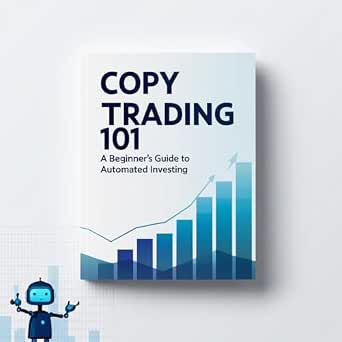
Copy Trading 101: A Beginner’s Guide to Automated Investing
Copy trading represents a different branch of automated investing, where you mirror the trades of experienced investors. This guide serves as an introduction to that specific model. Unlike the Robo-Advisors Explained book, which focuses on algorithmic asset allocation, this text deals with human-led automation. It is a distinct category that appeals to those who trust social proof over pure mathematical models.
My assessment is that this is the most niche entry in the list. It lacks the broad applicability of the Acorns guide or the technical depth of the Robo-Advisor text. For readers interested in the social aspect of investing, this provides the necessary framework. However, because it is a beginner’s guide, it may not cover the risks of performance decay in copy trading strategies in great depth. It is a useful starting point, but I would recommend pairing it with a more rigorous risk management resource.
Pros:- Introduces the concept of copy trading
- Simplifies automated social investing
- Accessible language for beginners
Cons:- Lacks detailed risk management strategies
- Niche focus may not appeal to all investors
Best for: Investors interested in mirroring the strategies of successful traders.
Not ideal for: Those who prefer algorithmic, non-human-driven investment decisions.
- ASIN:B0DMM32GJ6
- Format:Book
- Subject:Copy Trading
- Target Audience:Beginners
- Key Feature:Social Trading Basics
- Complexity Level:Entry-Level
- Strategy Type:Human-Led Automation
- Focus:Mirroring Trades
Our verdict“A specialized introduction to copy trading, best for those who prefer social validation over algorithmic logic.”
How to Invest in the Stock Market Using Acorns: Turn Spare Change into Wealth
This is the most practical, action-oriented guide in the roundup. It focuses entirely on the Acorns platform, which is a leader in micro-investing. Compared to the broader AI focus of AI Investing for Beginners, this book gives you a specific workflow: round up purchases and invest the difference. This lowers the barrier to entry significantly, making it ideal for those who struggle with traditional savings discipline.
The strength here is its low-barrier investing strategies. It turns daily spending habits into wealth accumulation. However, the limitation is obvious: it is tied to one specific app. If you do not like Acorns, or if you are looking for a platform with lower fees or different investment options, this guide will not help you. It is a tool-specific manual. For the target audience—people who want to start investing with pennies—it is excellent. But for investors seeking a diversified understanding of the entire automated landscape, it is too narrow.
Pros:- Accessible entry point for beginner investors
- Focuses on low-barrier investing strategies
- Practical application of the Acorns platform
Cons:- Limited to a specific app platform
- May not cover broader investment strategies
Best for: Beginners who want to start investing with very little money using round-up features.
Not ideal for: Investors who want to compare multiple platforms or avoid subscription-based fees.
- ASIN:B0FL1DNSPS
- Format:Book
- Subject:Personal Finance / Investing
- Platform:Acorns
- Key Feature:Spare Change Investing
- Target Audience:Beginners
- Complexity Level:Entry-Level
- Strategy:Micro-Investing
Our verdict“The best choice for those who need a concrete, step-by-step guide to starting with micro-investing.”
StockRank: AI-Guided Investing
StockRank differs from the robo-advisors discussed in the other entries because it provides buy, sell, or hold recommendations rather than just managing a passive portfolio. This is an active tool for those who want to trade stocks with AI assistance. It analyzes market data to predict movements, which is a more aggressive strategy than the passive index fund allocation seen in Acorns or typical robo-advisors.
I find this option appealing for investors who want to stay involved in the market but need analytical support. It is not a ‘set it and forget it’ solution. You must act on the recommendations. Compared to Copy Trading 101, which relies on human traders, StockRank relies on data patterns. This reduces emotional bias but introduces algorithmic risk. It is best for those who are comfortable with the idea that past performance does not guarantee future results, a concept that is central to AI predictions.
Pros:- Analyzes the stock market
- Predicts stock movements
- Provides buy, sell, or hold recommendations
Cons:- Requires active user engagement to act on signals
- Algorithmic predictions carry inherent market risk
Best for: Active traders who want AI-driven stock recommendations.
Not ideal for: Passive investors who want a fully managed, hands-off portfolio.
- ASIN:B08DN51HMS
- Format:App/Service
- Subject:Stock Market Analysis
- Key Feature:AI Predictions
- Target Audience:Active Traders
- Action Type:Buy/Sell/Hold
- Complexity Level:Intermediate
- Strategy:Active Trading
Our verdict“A powerful tool for active traders who want data-driven insights without doing the analysis themselves.”

How We Picked
I selected these five options based on a combination of accessibility, automation depth, and educational value. The goal was to cover the entire spectrum of automated investing, from the theoretical understanding of how robo-advisors work to practical applications like micro-investing and AI-driven stock selection. I looked for resources that clearly explain the tradeoffs between manual control and algorithmic management.
My criteria included the clarity of instructions, the specific use case each product serves, and whether the tool or guide helps the user avoid common behavioral biases. I prioritized items that address the 2027 landscape, where AI integration and fractional trading have become standard. I excluded generic stock market primers that did not focus specifically on automation or app-based workflows, ensuring that every entry here is directly relevant to automated investing systems.
| automated investing app | Format | Subject | Target Audience | Key Feature |
|---|---|---|---|---|
| Robo-Advisors Explained: How A | Book | Personal Finance / Investing | Novices and Seasoned Investors | AI-Driven Strategy Analysis |
| AI Investing for Beginners: Ho | Book | AI Investing | Beginners | AI Tool Strategies |
| Copy Trading 101: A Beginner’s | Book | Copy Trading | Beginners | Social Trading Basics |
| How to Invest in the Stock Mar | Book | Personal Finance / Investing | Beginners | Spare Change Investing |
| StockRank: AI-Guided Investing | App/Service | Stock Market Analysis | Active Traders | AI Predictions |
Factors to Consider When Choosing Automated Investing Apps
Choosing an automated investing solution depends on your desired level of involvement and your starting capital. I have broken down the key factors to consider to help you match your profile with the right tool.Passive vs. Active Automation
The first decision is whether you want a passive or active approach. Passive automation, like that found in Robo-Advisors or Acorns, allocates your money into diversified portfolios based on your risk profile. You do not pick individual stocks. This is ideal for long-term wealth building. Active automation, represented by StockRank, provides signals for individual stocks. This requires you to monitor the app and execute trades. I recommend passive options for most beginners because they reduce the chance of emotional trading errors.
Understanding Fees and Barriers to Entry
Automated investing apps often use different fee structures. Micro-investing platforms like Acorns may charge a flat monthly fee, which can be high relative to small balances. Robo-advisors typically charge a percentage of assets under management. I advise checking the minimum investment requirements. If you have less than a few hundred dollars, a platform with a flat fee might eat into your returns significantly. In contrast, educational books have no ongoing fees, making them a low-risk way to learn before investing capital.
The Role of AI in Your Strategy
AI is not a monolith. In Robo-Advisors Explained, AI is used for optimization and tax-loss harvesting. In StockRank, it is used for predictive analytics. You need to decide what role you want AI to play. Do you want it to manage your taxes and rebalance your portfolio automatically? Or do you want it to tell you which tech stock is likely to rise next week? These are fundamentally different use cases. My advice is to start with optimization AI if you are new to markets, and only move to predictive AI if you have a higher risk tolerance.
Educational Value vs. Execution
Some products in this list are execution platforms, while others are educational resources. I strongly believe that understanding the mechanism is key to sticking with an automated strategy during market downturns. Books like Robo-Advisors Explained provide this context. If you simply download an app without understanding why it is buying certain assets, you are more likely to panic-sell when the market drops. Pairing a platform with an educational guide is the most robust strategy I can recommend.
Frequently Asked Questions
What is the main difference between a robo-advisor and copy trading?
The primary difference lies in the source of the investment decisions. A robo-advisor uses algorithms and mathematical models to allocate assets based on your risk tolerance and financial goals, typically investing in diversified index funds. Copy trading, as described in Copy Trading 101, involves automatically mirroring the trades of a specific human trader or group of traders. Robo-advisors are generally more consistent and lower risk, while copy trading inherits the specific strategy and risks of the person you are following.
Is micro-investing with apps like Acorns effective for long-term wealth?
Yes, but consistency is the key factor. Micro-investing works by accumulating small amounts over time, which can add up significantly due to compound interest. However, as noted in the How to Invest in the Stock Market Using Acorns guide, the flat monthly fees can impact returns if the balance remains low. It is most effective for those who struggle with traditional savings methods and need a behavioral nudge to start investing. It is a starting point, not necessarily a complete wealth strategy on its own.
Do AI investing tools guarantee profits?
No AI tool guarantees profits. Tools like StockRank use historical data and patterns to predict future movements, which is probabilistic, not certain. Market conditions change, and algorithms can fail during black swan events or periods of high volatility. I always emphasize that AI should be viewed as an analytical assistant, not a crystal ball. You must still manage your risk and understand that losses are possible in any market strategy, automated or otherwise.
Why should I read a book before using an automated investing app?
Reading a book like Robo-Advisors Explained provides the necessary context to trust and maintain your automated portfolio. Many investors abandon their strategies during market dips because they do not understand why the algorithm is behaving in a certain way. Education helps you distinguish between normal market volatility and structural problems with your investment strategy. It transforms you from a passive user into an informed investor who can make better long-term decisions.
Are automated investing apps suitable for international investors?
It depends on the platform. Many U.S.-based robo-advisors and apps have strict residency requirements or do not support non-U.S. tax forms. As mentioned in the review of Robo-Advisors Explained, many resources focus on U.S. regulations. International investors should carefully check the availability of the specific app in their country and consider the tax implications. Some global platforms exist, but they are often less feature-rich than their U.S. counterparts.
Conclusion
Selecting the right automated investing path requires honest self-assessment. If you are a complete beginner who needs a simple way to start, How to Invest in the Stock Market Using Acorns is the most accessible entry point. For those who want to understand the technology before deploying capital, Robo-Advisors Explained is the superior educational resource. If you are an active trader looking for an edge, StockRank offers the predictive capabilities you need, provided you accept the risks of active management.
I recommend combining an educational resource with a platform. For example, pair the AI Investing for Beginners book with a robo-advisor of your choice. This approach ensures you are not just automating your finances, but also automating your education. Remember, the best app is the one you will stick with during market volatility, and understanding how it works is the best way to ensure you stay the course.
Halloween Picks

Spirit Halloween 54-Inch Sitting Scarecrow Animatronic

Jenaai 5.3-Foot Motion-Activated Halloween Animatronic Skeleton

Vexalify 11-Inch Halloween Pumpkin Fog Machine with 12-Color Lights
As an affiliate, we earn on qualifying purchases.