
This checklist is for investors who want their portfolio records to be easier to find, update, and protect. It covers both physical paperwork and digital files, with a practical focus on keeping important information organized.

Get smart everyday buys delivered free with Prime
- Fast, free delivery on millions of items
- Prime Video, Amazon Music and more included
- Member-only deals all year
Each section covers one organization slot. Some include a named product pick; others offer guidance only. The checklist moves from a central planning resource to paper records, scanning, storage, and a digital backup option.
Use it to identify what you need before choosing an item. Check the fit and compatibility points against your records, workspace, and routine, then build your system one useful piece at a time.
Portfolio Binder
A central place for portfolio notes can make it easier to keep track of decisions, account details, and documents you want close at hand. The listed pick is Investment Planner: A 365-Day Guide to Investing and Portfolio Managem. Its product name suggests a planner focused on investing and portfolio management, but the name alone does not establish its page layout, included topics, or whether it has dedicated spaces for your holdings.
Before choosing a planner, consider how you prefer to organize information. If you want to use it alongside statements and other paper records, check whether its size and format suit your filing setup. If you mainly keep records digitally, decide whether a physical planner will add a useful summary or create duplicate work. A common mistake is assuming that a planner includes specific tracking pages without confirming its contents. Also consider whether a dated daily format matches how often you plan to review your portfolio; a format that does not fit your routine may be harder to maintain. Keep sensitive account credentials out of a general-purpose planner, and store any personal financial details with care.
What to look for:
- Check the full product name and edition before ordering.
- Confirm the contents and page layout meet your tracking needs.
- Consider whether a daily format fits your review routine.
- Check the physical size against your binder or shelf.
- Decide which information belongs in the planner and which should stay separate.
Investment Planner: A 365-Day Guide to Investing and Portfolio Management

A 365-day planner for tracking and planning investments. It is intended for use with stocks, bonds, real estate, and other investment types.
Pros:
- Supports investment tracking and planning
- Covers multiple investment types
- Provides a full year of planning
Cons:
- Specific planner layouts and features are not provided
Best for: Investors who want a dedicated investing planner to support regular organization.
Not ideal for: People who prefer a fully digital workflow or need a confirmed, specific tracking layout.
Bottom line: Review the planner’s contents and format before making it the center of your portfolio records.
Stock Certificate Album
A stock certificate album can give paper certificates a consistent storage place and make them easier to locate among other portfolio records. This section is advice only; no product is specified. First determine whether you actually hold physical certificates, since an album may add little value if all your ownership records are electronic.
When comparing albums, look for pockets or sleeves that fit the dimensions of your certificates without forcing folds or tight bends. Check how pages are attached and whether the construction supports the way you plan to store and retrieve documents. A common mistake is choosing by appearance alone: capacity, certificate dimensions, and ease of access matter more. Think about where the album will live and whether it should be stored separately from everyday paperwork. Certificates and related records can contain sensitive information, so consider secure storage as part of the choice. Keep a separate record of what is stored in the album, without including unnecessary account details, and check that the album can be clearly labeled without exposing private information.
What to look for:
- Measure certificates and compare them with sleeve dimensions.
- Choose sleeves that hold documents without bending or compressing them.
- Check the binding and page arrangement for convenient access.
- Consider storage location and how the album will be secured.
- Use a discreet label and maintain a separate inventory if useful.
Financial Document Scanner
Scanning can make financial paperwork easier to organize alongside digital portfolio records. The listed pick is the Epson WorkForce ES-865 High-Speed Color Duplex Document Scanner. A scanner’s stated product name does not establish which file formats, software features, or connection options are included, so check the manufacturer’s current specifications and included accessories for the exact model.
Consider the kinds and volume of documents you plan to scan. Confirm the scanner supports the paper sizes and document types you need, and check how it connects to your computer or other devices. Duplex scanning may be useful when documents have information on both sides, but verify the feature and workflow against your use case. A common mistake is focusing on scanning speed while overlooking file naming, backup, and retrieval. Plan a consistent folder structure and a secure backup destination before digitizing sensitive records. Check whether your preferred workflow supports searchable files if that matters to you, and test a sample before scanning a large archive. Store originals according to your needs rather than assuming a scan replaces every paper document.
What to look for:
- Verify supported paper sizes and document types in the current specifications.
- Confirm duplex scanning and connection options suit your workflow.
- Check included software and whether it supports your preferred file organization.
- Plan secure storage and backup for scanned financial records.
- Test scan quality and file retrieval with a sample document.
Epson WorkForce ES-865 High-Speed Color Duplex Document Scanner

The Epson WorkForce ES-865 is a high-speed color document scanner designed for business use. It features duplex scanning at up to 65 ppm, a 100-page automatic document feeder, and software support for OCR and cloud storage integration, making it efficient for large scanning jobs.
Pros:
- Fast duplex scanning at up to 65 ppm
- Supports OCR for searchable and editable files
- Includes software for easy document management and cloud integration
- Handles various document types including business cards
Cons:
- Requires internet connection for cloud features
- Peak duty cycle may limit continuous large-volume scanning
- Complex setup may be challenging for some users
Best for: Investors who want to digitize paper financial documents in a regular workflow.
Not ideal for: People with few documents to scan or a workflow that is already fully digital.
Bottom line: Confirm the scanner’s specifications and plan secure file storage before digitizing records.
Locking File Box
A locking file box can keep paper portfolio records together and provide a single storage location for documents you want to protect from casual access. The listed pick is the “Aluminum Alloy Portable Document Case File Box with Locking Security a” (the supplied product name is truncated). That title mentions a lock and an aluminum alloy case, but does not confirm its dimensions, locking mechanism, or internal layout.
Check the full listing and measurements before deciding whether it suits your files. Compare the interior dimensions with the largest documents and folders you plan to store, and consider how the box will fit in its intended location. A common mistake is assuming that “portable” means comfortable to carry when full, or that a locking case provides a particular level of security. Verify the handle, lock details, and storage configuration from the product information. Think about access: records you consult often may be better organized in folders inside the box, while rarely used paperwork can be filed separately. Keep the box in a place that fits your privacy needs, and maintain a separate inventory so you can locate documents without repeatedly searching through everything.
What to look for:
- Find the complete product name and listing details.
- Compare interior dimensions with your largest files and folders.
- Verify lock type and operation rather than relying on the title.
- Check handle and portability details for your intended use.
- Consider internal organization and the planned storage location.
Aluminum Alloy Portable Document Case File Box with Locking Security and Telesco
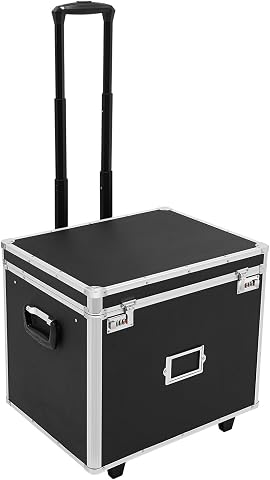
This durable aluminum alloy file box offers a stylish and organized storage solution for documents, notebooks, and office supplies. It features lockable security, large capacity, and easy mobility with wheels and a telescopic handle, making it ideal for office, home, or bank use.
Pros:
- Sturdy and corrosion-resistant aluminum alloy construction
- Secure locking system to protect valuables
- Large capacity with organized storage features
- Easy to transport with wheels and telescopic handle
Cons:
- Heavy for some users at 12 lbs
- Limited color options
- No mention of waterproof features
Best for: Investors who want a contained place for paper financial records.
Not ideal for: People who need frequent quick access or require confirmed security specifications.
Bottom line: Check the full listing, dimensions, and lock details before storing important paperwork in the case.
Investment Ledger Notebook
A ledger notebook can provide a simple, consistent way to record portfolio-related notes or activity. This section is advice only; no product is specified. Decide first what you want the ledger to capture, such as dated notes or a personal record of actions, and keep the purpose clear and limited so entries remain useful.
Choose a notebook format that fits your writing habits and how often you expect to update it. Consider whether you prefer lined, grid, or blank pages, and whether a bound notebook or a format that allows rearranging pages works better for your system. A common mistake is creating a second record that is difficult to keep aligned with account statements and other sources. Set a routine for reviewing entries and make clear what each note refers to. Avoid putting passwords, full account numbers, or other credentials in an ordinary notebook. If you use one alongside a planner or digital tracker, decide which record is authoritative for each type of information. Store the notebook with appropriate care and use a discreet label if it contains personal financial details.
What to look for:
- Choose page ruling and size for your writing style.
- Consider binding and whether pages need to be rearranged.
- Decide what information belongs in the ledger before starting.
- Set a routine for keeping entries current and easy to interpret.
- Keep credentials and unnecessary sensitive details out of the notebook.
Secure USB Drive
A separate storage device can give digital portfolio records a portable place in your organization system. The listed pick is the Apricorn Aegis Padlock 2TB Hardware-Encrypted Portable External Hard D (the supplied product name is truncated). Its title identifies it as a 2TB hardware-encrypted portable external hard drive, but does not establish its exact connection type, supported systems, authentication method, or included accessories.
Check the complete model details and compatibility with the devices you use. Confirm capacity against your planned files, and review how the encryption and access controls work before relying on them. A common mistake is treating a secure drive as the only copy of important documents. Plan a backup routine, keep the drive in a suitable place when not in use, and make sure you can recover access if you forget a credential or the device is unavailable. Consider whether the device’s connector works with your computer without an adapter. Also decide which records belong on portable storage and whether you need them when away from your usual workspace. Test the setup with non-sensitive files first so you understand the access steps.
What to look for:
- Confirm the complete model name and supported operating systems.
- Check the connection type against your devices and available ports.
- Verify capacity suits the files you intend to store.
- Review encryption, authentication, and recovery instructions.
- Plan a separate backup and test access before storing sensitive records.
Apricorn Aegis Padlock 2TB Hardware-Encrypted Portable External Hard Drive

This portable 2TB drive uses 256-bit AES XTS hardware encryption and an integrated keypad for PIN-based access. It connects over USB 3.0, requires no software or administrator rights, and supports up to five user PINs plus an administrator PIN.
Pros:
- Hardware encryption with keypad-based PIN access
- Works without software installation or administrator rights
- Compatible with PC, Mac, and USB-enabled operating systems
- Rugged design with epoxy coating and brute-force self-destruct feature
Cons:
- Uses a rotating 5400 rpm hard drive
- Requires PIN entry through the integrated keypad
Best for: Investors who want portable digital storage for portfolio documents.
Not ideal for: People who prefer cloud-only access or need confirmed device compatibility first.
Bottom line: Verify the complete model details and establish a separate backup before storing important records.
Build the system in the order that solves your biggest record-keeping gaps. Start with a clear home for the information you refer to most, then add paper storage or scanning if your documents call for it. Consider portable digital storage after confirming compatibility and deciding how you will maintain a separate backup. The most useful first step is the one that makes your existing records easier to find and keep current.
You do not need to assemble every part at once. Choose a simple routine, label records discreetly, and review the setup when your documents or habits change. With a few thoughtful choices, your portfolio paperwork can become easier to manage over time.