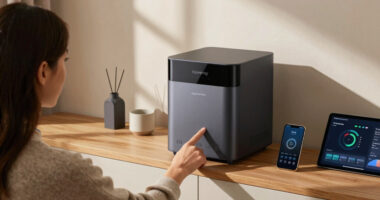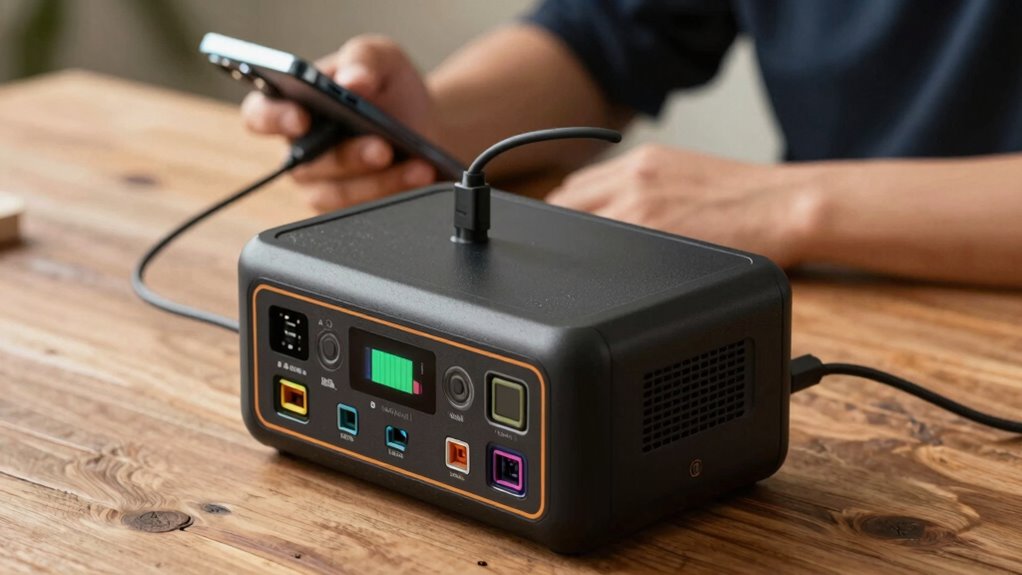

You often think a portable power station’s watt-hour (Wh) rating directly shows how long your devices will run, but that’s misleading. Many factors affect actual performance, like battery chemistry, recharge speed, and internal management systems. High capacity alone doesn’t guarantee longer use if recharging is slow or batteries degrade over time. To make sure you get the right station, it’s important to understand all these internal factors—stay with us to learn more.
Key Takeaways
- Buyers often focus solely on capacity (Wh), ignoring how internal factors affect actual usable power.
- Capacity numbers don’t account for battery chemistry, which influences lifespan and safety.
- High capacity doesn’t guarantee longer runtime if recharging is slow or inefficient.
- Recharging speed and efficiency are crucial, yet frequently overlooked in assessing station performance.
- A holistic view considering capacity, chemistry, recharge time, and management systems leads to better choices.
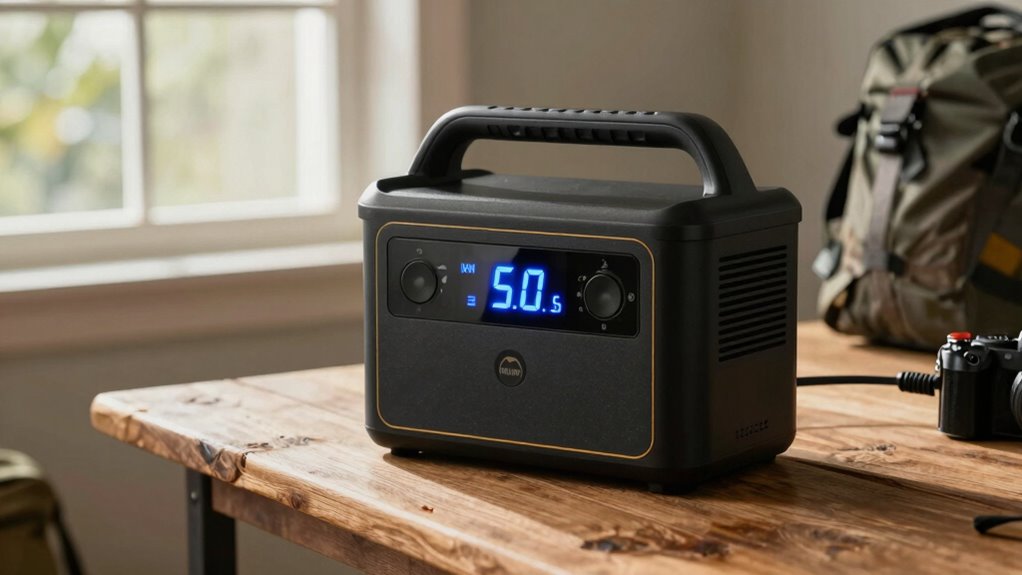
Have you ever wondered how much power a portable station can provide when you’re off the grid? It’s a common question, but the answer isn’t always straightforward. Many buyers focus solely on the capacity number—measured in watt-hours (Wh)—without understanding what it truly means for their needs. That number can be misleading if you don’t consider how the station’s internal factors, like battery chemistry and charging speed, influence performance. You might see a high capacity and assume it’ll power your devices for days, but in reality, other specifications determine how effectively you can use that stored energy.
High capacity isn’t everything—battery chemistry and charging speed are key to real-world performance.
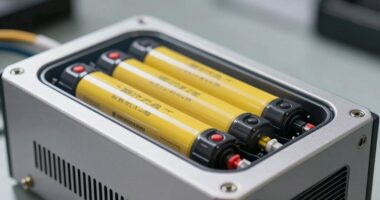
Battery chemistry plays a vital role here. Different types of batteries—such as lithium-ion, lithium-polymer, or even newer solid-state options—have distinct characteristics that impact their capacity, lifespan, and safety. Lithium-ion batteries, for example, are common in portable stations because they offer a good balance of energy density and weight. However, their capacity can degrade over time if they’re not managed properly. This degradation can affect how much usable power you actually get from a station with a high capacity label. So, when you’re comparing models, don’t just look at the number; consider what kind of battery chemistry is behind that capacity and how it might perform over the long term.
Charging speed is another critical factor that many overlook. A station with a large capacity but slow charging capabilities might leave you waiting hours before you can use it again after a recharge. Conversely, a model with a slightly lower capacity but faster charging speed can be more versatile, especially if you need quick power boosts in remote locations. The charging speed isn’t just about how fast it refills; it also influences how often you might need to recharge, which affects your overall usability. Additionally, understanding battery chemistry helps you evaluate the safety and environmental impact of the power station, which are important considerations for long-term use. Moreover, battery management systems play a crucial role in maintaining the health and safety of the batteries over time.
Many buyers mistakenly assume that capacity alone determines a portable station’s usefulness. But the truth is, understanding how quickly it can be recharged and what kind of battery chemistry it uses gives you a clearer picture of its real-world performance. It’s about balancing capacity with rechargeability and longevity. When considering these factors, it’s also helpful to evaluate recharge times and how they fit your specific needs. This is especially relevant because different battery chemistries have varying safety protocols and environmental footprints. When you evaluate a portable power station, dig deeper into these specifications. A high capacity doesn’t mean much if it takes forever to recharge or if the battery chemistry isn’t suitable for your needs. Ultimately, knowing these details helps you choose a station that not only has the capacity you need but also performs reliably when you’re off the grid.
portable power station with fast recharge
As an affiliate, we earn on qualifying purchases.
As an affiliate, we earn on qualifying purchases.
Frequently Asked Questions
How Do I Determine the Right Capacity for My Needs?
To find the right capacity, start by listing devices you’ll use, noting their wattage and how long you’ll need power. Consider battery life for each device and choose a power station with enough capacity to handle peak energy demands. Prioritize energy efficiency, selecting models that optimize power use and extend battery life. This way, you’ll avoid under or overestimating your needs, ensuring reliable power when you need it most.
Does Higher Capacity Mean Faster Charging Times?
Higher capacity doesn’t mean faster charging times; in fact, it can slow down charging efficiency because larger batteries take longer to fill. Imagine your power station as a marathon runner versus a sprinter—battery longevity improves with proper capacity, but charging efficiency depends on design. So, choosing a capacity that guarantees your needs ensures quicker, more efficient charging, without sacrificing battery health over time.
Can Capacity Affect the Device’s Portability?
Yes, capacity can affect a device’s portability because larger batteries often mean bigger, heavier units, impacting portability factors. While a higher capacity offers longer usage, it can reduce battery lifespan if not designed well. You should consider your portability needs versus capacity; if you need lightweight, compact options, lower capacity models are better, but for extended use, higher capacity units might be worth the trade-off.
Are Larger Capacities More Expensive to Maintain?
You might be surprised, but larger capacities often lead to higher maintenance costs. As you use a bigger power station, its battery lifespan can decrease faster, meaning you’ll need replacements more frequently. While it might seem cost-efficient initially, over time, the expense of maintaining and replacing batteries can add up. So, for better cost efficiency, choosing a capacity that matches your needs helps you avoid unnecessary expenses.
How Accurate Are Capacity Ratings From Manufacturers?
Manufacturer capacity ratings can be somewhat optimistic, so you shouldn’t take them at face value. Your portable power station’s actual capacity may be slightly lower due to factors like battery lifespan and power efficiency. Over time, batteries degrade and lose some capacity, affecting performance. To get the most accurate idea, consider real-world reviews and test results, and remember that your station might not always meet the rated capacity under heavy use.
lithium-ion portable power generator
As an affiliate, we earn on qualifying purchases.
As an affiliate, we earn on qualifying purchases.
Conclusion
Understanding the true capacity of a portable power station helps you make smarter choices. For example, if you think a 500Wh station can run your fridge for hours, you might be disappointed. In reality, factors like efficiency and device power draw matter. So, always check the actual watt-hour rating and your device needs. Being informed guarantees you pick a station that truly powers your adventures without surprises, making your outdoor trips or emergencies smoother and more reliable.
high capacity portable power bank
As an affiliate, we earn on qualifying purchases.
As an affiliate, we earn on qualifying purchases.
portable solar generator with quick charging
As an affiliate, we earn on qualifying purchases.
As an affiliate, we earn on qualifying purchases.