

You’ll see that AI capital expenditures benefit far more than just chipmakers. Data centers, cloud platforms, and infrastructure developers play a vital role in supporting AI’s growth, offering the processing power and scalability needed. Ethical stakeholders guarantee responsible AI use, while hardware innovators design specialized tools to boost performance. This interconnected ecosystem fuels AI’s expansion across industries. To discover how these varied beneficiaries shape the future, keep exploring the exciting developments around AI investments.

Get smart everyday buys delivered free with Prime
- Fast, free delivery on millions of items
- Prime Video, Amazon Music and more included
- Member-only deals all year
Key Takeaways
- Data centers and high-speed networking infrastructure are critical beneficiaries supporting AI scalability and performance.
- Cloud platform providers enable broader AI access, benefiting organizations with flexible, scalable resources.
- Specialized hardware like GPUs and TPUs are optimized for AI workloads, driving hardware innovation.
- Ethical stakeholders and research firms influence responsible AI deployment and infrastructure governance.
- AI infrastructure investments benefit a wide range of sectors beyond chipmakers, including enterprise, cloud, and research institutions.
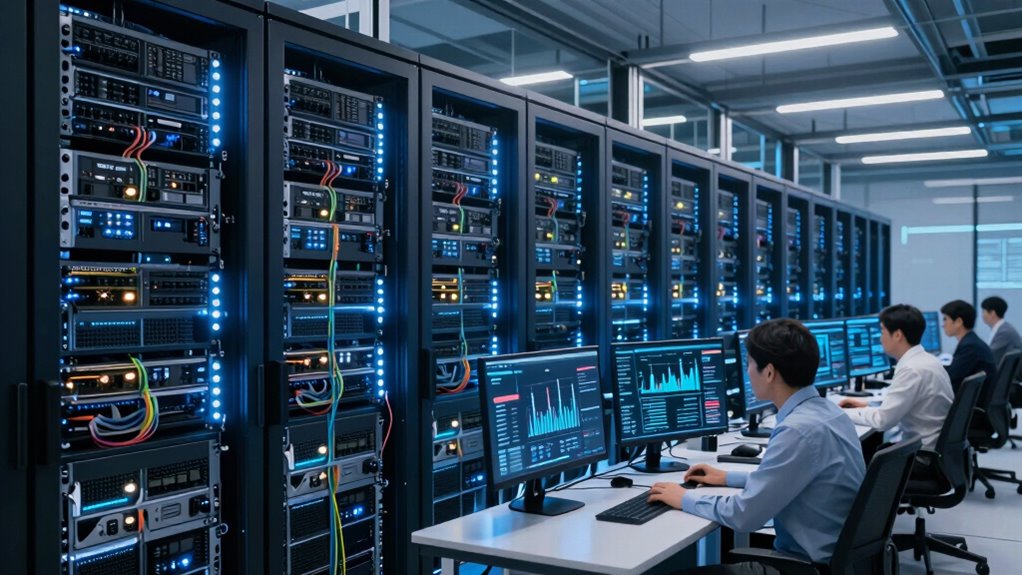
While chipmakers often steal the spotlight in AI capital expenditure discussions, the beneficiaries extend far beyond them. As organizations ramp up investments in AI, you’ll find that the focus isn’t solely on semiconductor companies. Instead, a broad ecosystem emerges, encompassing the development of AI infrastructure that powers these advanced systems. This infrastructure includes data centers, high-speed networking, and specialized hardware designed for machine learning workloads. These investments are essential because AI’s growth hinges on the ability to process vast amounts of data swiftly and securely. Your role might involve overseeing or utilizing this infrastructure, guaranteeing that it remains reliable, scalable, and capable of supporting complex AI models.
AI growth depends on reliable, scalable infrastructure like data centers and high-speed networks, vital for processing vast data efficiently.
Beyond hardware, the rise of AI infrastructure prompts serious ethical considerations. As you work with AI systems, you need to be mindful of issues like data privacy, algorithmic bias, and transparency. Companies investing heavily in AI must develop policies and safeguards to address these concerns, making sure that AI benefits society without causing harm. You could be involved in establishing ethical frameworks, conducting audits, or designing systems that prioritize fairness and accountability. These efforts not only protect users but also build trust, which is essential for widespread AI adoption. Additionally, the growth of AI infrastructure emphasizes the importance of robust data management to ensure data quality and security throughout AI workflows. This focus on data governance helps maintain the integrity and compliance of AI systems, fostering greater confidence among users and regulators. Incorporating cybersecurity best practices into AI infrastructure further safeguards sensitive data from emerging threats, reinforcing trust and resilience.
Furthermore, the expansion of AI infrastructure influences cloud platforms, as they adapt to support increasing demands for compute power and storage. These platforms are crucial in democratizing AI access, allowing organizations to leverage scalable solutions without significant upfront hardware costs. Your organization might leverage these services to accelerate AI projects, reducing the need for extensive in-house infrastructure investments. This democratizes AI, allowing more businesses to harness its power without massive capital expenditure on hardware. The evolution of AI infrastructure also fosters innovation in specialized hardware, such as GPUs and TPUs, optimized specifically for AI workloads.
Consultants and AI-focused research firms also benefit, as they guide organizations through the complexities of AI deployment, ethical implementation, and infrastructure optimization. You may engage with these experts to ensure your AI initiatives align with best practices, compliance standards, and ethical norms. Their insights help you navigate the technical and moral landscape, making sure your AI initiatives are sustainable and responsible.
In essence, the beneficiaries of AI Capex are diverse, spanning hardware manufacturers, cloud providers, service firms, and ethical watchdogs. Your involvement might range from building and managing the necessary AI infrastructure to ensuring that ethical considerations are embedded in every stage of development. As AI continues to evolve, it’s clear that the growth of AI Capex will shape a broad, interconnected ecosystem—one where your contributions are essential for both innovation and responsibility.
As an affiliate, we earn on qualifying purchases.
Frequently Asked Questions
How Do AI Investments Impact Non-Technology Industries?
Your AI investments influence non-technology industries by transforming how you handle data privacy and AI ethics. You can streamline operations, improve customer experiences, and develop innovative products. However, you must prioritize ethical use and data privacy to build trust and avoid risks. These investments push sectors like healthcare, finance, and retail to adopt responsible AI practices, ultimately shaping the future of business and society for the better.
What Role Do Software Companies Play in AI Capex Growth?
Imagine you’re in a 90s cyber cafe—software companies are pivotal in AI capex growth, fueling AI innovation and expanding software ecosystems. You play a crucial role by developing AI algorithms, platforms, and tools that drive adoption across industries. Your investments enable businesses to implement smarter solutions, optimize operations, and access new revenue streams. Without your contributions, AI’s potential would be limited, making software companies essential architects of this technological revolution.
Are Emerging Markets Benefiting Equally From AI Capex?
Emerging markets aren’t benefiting equally from AI Capex due to limited market access and varying policy implications. You may find that some countries struggle with infrastructure, regulatory hurdles, or lack of investment, which hampers their growth. Conversely, markets with supportive policies and better access to technology tend to capitalize more effectively on AI investments. To close this gap, you need strategic policy reforms and improved market access initiatives.
How Do AI Capex Trends Influence Employment Across Sectors?
Think of AI capex trends as a mighty river shaping the landscape of jobs. You see, as companies invest in AI workforce and Capex automation, some sectors flourish while others face change. You might find new roles emerging, demanding fresh skills, but also see traditional jobs shifting or shrinking. Overall, you’re part of this transformation, riding the waves of innovation, where adaptability becomes your strongest tool in this evolving employment scene.
What Are the Environmental Implications of Increased AI Infrastructure?
You should consider that increased AI infrastructure raises concerns about energy consumption, as data centers and processing units require significant power, impacting the environment. Additionally, e-waste management becomes a challenge as outdated hardware needs proper disposal to prevent pollution. By focusing on energy-efficient technologies and responsible e-waste practices, you can help mitigate these environmental implications and support sustainable AI development.
high-speed networking equipment for AI
As an affiliate, we earn on qualifying purchases.
As an affiliate, we earn on qualifying purchases.
Conclusion
So, as you see, the AI boom isn’t just about chipmakers—it’s a ripple effect touching every corner of the tech world and beyond. Think of it as a vast, interconnected web where each new investment sparks opportunities in data centers, software, and even industries like healthcare and finance. Don’t overlook the bigger picture; the beneficiaries of AI Capex are truly far-reaching, transforming our future in ways you might not have imagined.
As an affiliate, we earn on qualifying purchases.
As an affiliate, we earn on qualifying purchases.
Halloween Picks
halloween
As an affiliate, we earn on qualifying purchases.