
TL;DR
Japanese robotics and manufacturing companies are adopting NVIDIA Cosmos, a platform for developing physical AI, to accelerate innovation in industrial automation. This collaboration aims to enhance robotic capabilities and improve manufacturing efficiency.
Japan’s top robotics and manufacturing companies are actively utilizing NVIDIA’s Cosmos platform to advance the development of physical AI systems, according to a recent announcement from GlobeNewswire. This initiative aims to boost the capabilities of industrial robots and automate complex manufacturing processes, marking a significant step forward in Japan’s industrial innovation efforts.
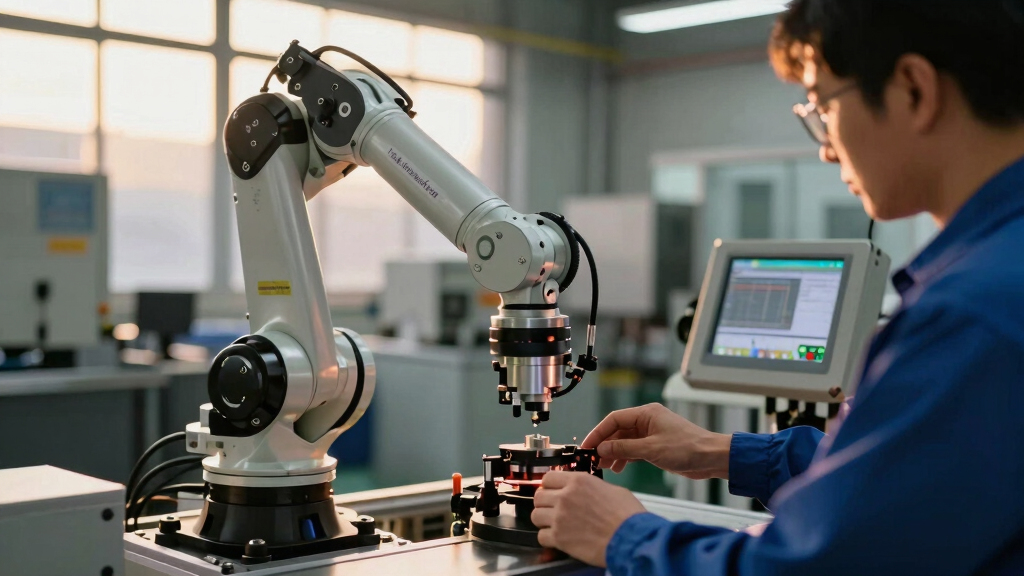
The collaboration involves major Japanese firms such as Fanuc, Yaskawa, and Kawasaki, which are integrating NVIDIA Cosmos — a platform that combines simulation, AI, and robotics — into their development pipelines. The goal is to create more adaptable, intelligent robots capable of performing complex tasks in manufacturing environments with minimal human intervention.
NVIDIA Cosmos provides a comprehensive environment for developing and testing physical AI models, enabling firms to simulate real-world scenarios and train robots more efficiently. The platform’s capabilities include physics simulation, AI model deployment, and real-time data integration, which are crucial for advancing industrial automation.
Sources close to the companies confirm that initial pilot projects are underway, focusing on tasks such as assembly, quality inspection, and material handling. These efforts are expected to lead to more flexible and efficient manufacturing lines, reducing costs and increasing productivity across Japan’s industrial sector.
Why Japan’s Use of NVIDIA Cosmos Matters for Industry Innovation
This development is significant because it demonstrates Japan’s commitment to maintaining its leadership in robotics and manufacturing by adopting cutting-edge AI technology. The integration of NVIDIA Cosmos can potentially transform traditional factories into more autonomous, intelligent systems, boosting global competitiveness.
For global industries, this signals a shift toward more sophisticated, AI-driven automation solutions. If successful, Japanese firms could set new standards for industrial robotics, influencing manufacturing practices worldwide and accelerating the adoption of physical AI in various sectors.
industrial robot simulation software
As an affiliate, we earn on qualifying purchases.
As an affiliate, we earn on qualifying purchases.
Japan’s Robotics Sector and the Rise of Physical AI
Japan has long been a leader in robotics, with companies like Fanuc and Yaskawa pioneering industrial automation. Over the past decade, the focus has shifted toward integrating AI into robotics to enhance flexibility and autonomy. NVIDIA’s Cosmos platform, launched in 2023, offers a comprehensive environment for developing physical AI, which combines simulation with real-world deployment.
Previous efforts in Japan have centered on incremental improvements in robotic hardware and software. The current push to incorporate NVIDIA Cosmos represents a strategic move to leapfrog traditional limitations and develop more adaptive, intelligent robots capable of handling complex manufacturing tasks efficiently.
As an affiliate, we earn on qualifying purchases.
Unclear Scope and Timeline of Deployment
While initial pilot projects are confirmed, details about the full deployment timeline, scale, and specific applications remain unclear. It is not yet confirmed how quickly these advanced robots will be integrated into mainstream manufacturing processes or the extent of their capabilities in real-world settings.
As an affiliate, we earn on qualifying purchases.
Next Steps in Japan’s Physical AI Development
Expect further updates on pilot project results over the coming months, with potential announcements of broader deployment plans. Industry observers anticipate that successful pilots could lead to increased investment and collaboration among Japanese firms and NVIDIA, accelerating the adoption of physical AI in manufacturing.
As an affiliate, we earn on qualifying purchases.
Key Questions
What is NVIDIA Cosmos?
NVIDIA Cosmos is a platform that combines simulation, AI, and robotics tools to develop and test physical AI systems, enabling more adaptable and intelligent robots for industrial applications.
Which Japanese companies are involved?
Major firms such as Fanuc, Yaskawa, and Kawasaki are actively participating in pilot projects using NVIDIA Cosmos to enhance their robotic systems.
What types of tasks will these robots perform?
Initial focus areas include assembly, quality inspection, and material handling, with potential expansion into other complex manufacturing tasks.
When will these advanced robots be widely deployed?
It is not yet clear; pilot projects are ongoing, and full-scale deployment will depend on pilot success and further development over the coming year.
Why is this development important globally?
This signals a shift toward more autonomous, AI-driven manufacturing, which could influence global industry standards and competitiveness.
Source: primary