
TL;DR
For Thanksgiving, choose shallow, stackable containers in a mix of sizes, then match each one to its job: glass for labeled oven reheating when approved, lightweight plastic for carrying, and stainless steel for storage without microwave use. Refrigerate perishable leftovers within two hours, date the containers, and eat refrigerated leftovers within three to four days; freeze food you plan to keep longer. [1]
Thanksgiving dinner can leave you with a fridge that looks like a game of container Tetris: a roasting pan that will not fit, a bowl of gravy balanced on a shelf, and a stack of plates waiting for room. The right food storage containers make that late-night cleanup easier and help you get more from the meal you cooked.

Get smart everyday buys delivered free with Prime
- Fast, free delivery on millions of items
- Prime Video, Amazon Music and more included
- Member-only deals all year
This guide walks you through choosing materials, sizes, and lids, then shows how to cool, label, stack, share, and freeze leftovers. You will also get the key facts on storage timing, because a sturdy lid can prevent a spill, but it cannot make food safe indefinitely. Think of containers as useful tools for the practical side of Thanksgiving: good planning, less waste, and easier lunches tomorrow.
Choose shallow, stackable containers in several sizes; divide large batches to cool faster and fit the fridge.
Refrigerate perishable leftovers within two hours, or within one hour above 90°F (32°C), and date each container. [1]
Eat refrigerated Thanksgiving leftovers within three to four days; freeze portions you plan to keep longer. [1]
Check the maker’s directions for the base and lid separately before using a container in an oven, microwave, dishwasher, or freezer.
Test lids with water before trusting them with gravy or cranberry sauce in a travel bag.
Pick a Container Material That Matches the Food
For Thanksgiving, choose container material by how you will store, carry, and reheat the food. Glass handles many storage and reheating jobs when its label permits, plastic is light for sending portions home, and stainless steel is handy for storage but not microwave use. Check the maker’s instructions for both the base and lid, since the part that touches the food and the part that seals it may have different limits.
Glass is sturdy and nonporous, so it does not hold odors as readily as some plastics. Its weight can make a full dish awkward to carry, and it can break if a sudden temperature change stresses it. A glass dish labeled oven-safe could hold tomorrow’s stuffing, but follow its warming instructions before moving it from a cold fridge to a hot oven. That extra care matters when you want one container to serve as both storage and bakeware.
Plastic is convenient when your cousin is balancing a pie plate and a coat at the door. Its low weight makes portions easier to transport, though staining and lingering odors can make a heavily used tub less appealing for serving. Only microwave plastic marked for microwave use, and check whether the lid can go in too; a microwave-safe base does not automatically make the lid safe. Stainless steel can keep turkey or salad contained on the trip home and avoids the risk of a glass break, but transfer the food to a microwave-safe dish before reheating.
Reusable containers can cut down on disposable bags and takeout boxes, but that benefit depends on whether the pieces are easy to clean and keep using. Narrow corners and lids with many small grooves can trap cranberry sauce, adding cleanup time and making it harder to inspect the seal. Look for designs you can wash thoroughly and use as directed; claims like “sustainable” or “stain-resistant” do not replace material and care details.
Products Worth Considering

Canon SELPHY CP1500 Wireless Compact Photo Printer Bundle with RP-108 Ink and Paper Set, White

HP Sprocket Studio Plus Wireless 4×6 Photo Printer

Dell UltraSharp U3225QE 31.5-Inch 4K UHD 120Hz IPS Black Thunderbolt Hub Monitor
As an affiliate, we earn on qualifying purchases.
Use Shallow, Stackable Shapes to Make Fridge Space
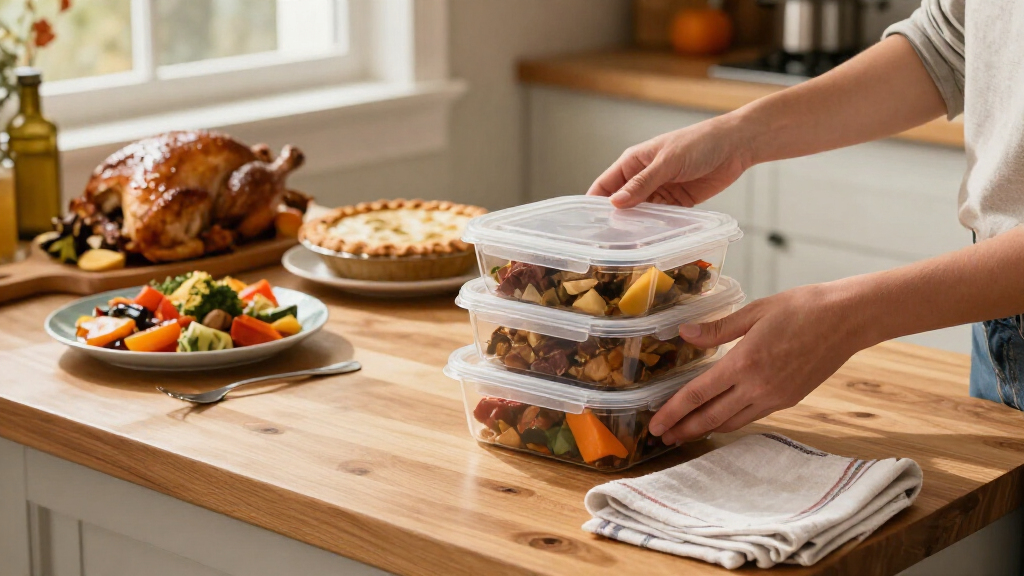
Shallow, stackable containers help Thanksgiving leftovers cool faster and use refrigerator space efficiently. Choose a few rectangular shapes for shelves, small tubs for sauces, and larger containers for bulk food. A container should fit the food without forcing you to wedge it between a milk carton and a pie box; that makes it easier to place leftovers promptly and retrieve them later.
Shape can matter as much as capacity. A wide, shallow container gives turkey slices and mashed potatoes room to spread out; a deep, narrow tub leaves a thick pile in the middle that takes longer to cool. Large amounts of food cool more quickly when divided into smaller, shallow portions, and the USDA says you can refrigerate food while it is still warm. [1] The tradeoff is using more containers and spending a little longer portioning, but those portions are easier to chill, stack, and serve.
Imagine clearing one shelf before dinner and keeping a few inches of space between containers afterward. That little gap lets cold air circulate, while a tidy stack makes it easier to spot the gravy before it gets lost behind the cranberry sauce. Avoid packing the refrigerator so tightly that air cannot move around the food; a full fridge can save counter space, but it may make it harder for cold air to reach each container.
For organizing a crowded fridge, group containers by meal or use: turkey and stuffing together on one shelf, sauces in a small bin, and desserts elsewhere. Modular sets and interchangeable lids can save cupboard space, but they only help if you can match lids quickly and the shapes suit your shelves. A simple set of shallow rectangles often beats a dozen unusual shapes you cannot stack.
Cool and Store Leftovers Safely Before the Kitchen Closes
Refrigerate perishable leftovers within two hours of serving, or within one hour if the room or outdoor temperature is above 90°F (32°C), according to the USDA. Divide large portions into shallow containers so they cool faster, and do not leave the turkey or casserole on the counter while you finish a long cleanup. [1] The time limit is useful because food can spend too long at unsafe temperatures even when it still looks and smells normal.
Here is a practical after-dinner sequence: first clear a shelf, then portion the food, label it, and get it into the fridge. You can put warm food directly in the refrigerator; split a large roasting-pan portion into smaller containers rather than waiting for the whole pan to reach room temperature. The smaller portions cool more evenly and are easier to fit, though they may use more shelf space. That makes the job manageable when guests are still chatting around the table.
- Portion: Separate turkey, stuffing, potatoes, and casseroles into shallow containers.
- Label: Write the food name and storage date on a removable label or the container. This helps distinguish similar dishes and makes the oldest portions easier to use first.
- Refrigerate: Put perishable food away within the recommended time window.
- Plan: Eat refrigerated leftovers within three to four days, or freeze what you will keep longer. [1]
Containers help with the practical side of keeping leftovers safe, but they do not reset the clock. Freezing pauses bacterial growth; it does not make food safe if it sat out too long before freezing. When you are unsure how long a dish has been out, do not rely on a tight lid to solve the problem.
Choose Lids That Can Handle Gravy and Cranberry Sauce
A secure, leak-resistant lid helps prevent spills and keeps food from drying out or picking up refrigerator odors. For gravy, soup, or cranberry sauce, test the seal before you put the container in a bag: fill it with water, close the lid, and tilt it over the sink. “Airtight” and “leakproof” claims vary by product, so a quick test is useful before a drive or walk makes a small leak into a larger mess.
Different foods need different fits. A turkey container should leave room for the slices without pressing the lid against them, while a small sauce tub needs a lid that clicks or locks evenly around the rim. If the lid has tabs, check each one; a single unlatched corner can turn a neat drive home into a gravy spot on the passenger seat. For food you want to serve directly from the container, enough headroom also helps keep the lid from smearing sauce across the rim.
For guests, pack liquids upright in a small, well-sealed container and place it inside a second bag or box. That extra layer is particularly useful if someone will carry food on a bus or make several stops before reaching home, when the container may tilt or shift. Keep the food cold during transport when needed, and remind the recipient when it was prepared so they can plan when to eat or freeze it.
Follow care instructions so lids keep fitting as intended. A plastic lid that warps in a dishwasher may stop sealing properly, even if the container base still looks fine. If you often send guests home with food, look for replacement lids and simple designs that are easy to wash and inspect; replacing one damaged lid can be more practical than retiring an otherwise useful container.
Freeze Extra Portions and Reheat Them in the Right Dish
Freeze Thanksgiving leftovers you will not eat within three to four days, and use containers rated for freezer storage. Leave room at the top when freezing liquids because they expand, and label each portion with its name and date. A small container of gravy can be more useful than a huge frozen block when you want a quick weekday meal: single-meal portions thaw more quickly and let you use only what you need.
Container labels matter at reheating time. Glass is not automatically oven-safe, plastic is not automatically microwave-safe, and a safe base does not mean its lid can take the same heat. Follow the specific product guidance, and transfer food to a suitable dish if the container or lid is not rated for the appliance you plan to use. Doing so adds a dish to wash, but it avoids guessing about whether a container can handle that temperature.
For example, thaw a frozen portion of mashed potatoes in the refrigerator, then reheat it in a dish approved for that appliance. Add a splash of milk and stir to bring back a creamy texture. Turkey slices can dry out, so warming them covered with a little broth can help; follow food safety guidance for reheating and use a thermometer when appropriate. Thawing in the refrigerator takes planning, but it keeps the portion cold while it softens and makes reheating more even.
Do not move glass straight from freezer to a hot oven unless the manufacturer says that use is safe. Sudden temperature changes can cause breakage. The most convenient container is the one that suits the whole route—from freezer storage to safe thawing and reheating—without making you guess at the label.
Build a Small Container Set Around Your Thanksgiving Menu
A useful Thanksgiving container set includes a few shallow medium containers, a couple of larger ones, and several small tubs for sauces or single portions. Start with the foods you actually make, then add capacity for likely extras. If your family always sends guests home with pie and turkey, those needs matter more than a large set of mismatched tubs; buying around the menu can reduce cupboard clutter and ensure the right sizes are available when cleanup starts.
Here is one example for a dinner serving eight: use two medium rectangles for sliced turkey and stuffing, one larger shallow container for casserole, and small leak-tested tubs for gravy and cranberry sauce. Add individual containers if guests want lunch portions. This is a starting point, not a universal count; a meal with several casseroles may need more large containers, while a smaller gathering may need fewer. Thinking about portions in advance also helps you reserve enough fridge space instead of discovering that every large dish needs the same shelf.
Before Thanksgiving, check that lids fit, containers are clean, and the set can stack on your refrigerator shelves. Nesting bases save cupboard room; interchangeable lids reduce the lid hunt, but only when the sizes genuinely match. A container that will not fit your fridge shelf is less useful than a plain one that stacks neatly.
- Small: gravy, cranberry sauce, nuts, or one lunch portion.
- Medium: sliced turkey, stuffing, vegetables, or mashed potatoes.
- Large and shallow: casseroles and larger batches that need faster cooling.
If you use disposable containers for guests, choose food-safe options intended for the task and tell recipients whether they are suitable for microwave or oven use. Do not assume a takeout tub can handle heating. A clear label and a sensible portion make it easier for someone to use the food before it gets forgotten in the back of the fridge.
Frequently Asked Questions
How long can Thanksgiving leftovers stay in the refrigerator?
The USDA says refrigerated leftovers are generally best eaten within three to four days. Date each container so you can tell when the food went away, and freeze what you will keep longer. [1]
How soon should I refrigerate Thanksgiving food?
Refrigerate perishable leftovers within two hours of serving, or within one hour if the temperature is above 90°F (32°C). Divide large amounts into shallow containers so they cool faster. [1]
Can I put warm food in the refrigerator?
Yes. You can refrigerate food while it is still warm; split a large amount into smaller, shallow portions rather than leaving it out to cool on the counter. That helps it cool faster and makes it easier to stack.
Are glass containers safe in the oven and microwave?
Some glass containers are suitable for oven or microwave use, but not every glass container is. Check the manufacturer’s instructions for both the base and lid, and avoid sudden temperature changes unless the product is rated for them.
What containers work best for gravy and cranberry sauce?
Use small containers with secure, leak-resistant lids, and test them with water over the sink before packing them for a trip. Keep the containers upright in a bag or box for an added layer against spills.
Can I freeze Thanksgiving leftovers in their storage containers?
Only if the container is labeled for freezer use. Leave room for liquids to expand, write the food and date on the container, and remember that freezing does not make food safe if it was mishandled before it went into the freezer.
Conclusion
Before the holiday, gather a few shallow containers, small sauce tubs, and lids you have already checked. After dinner, portion the food, mark the date, and refrigerate it on time; the USDA’s three-to-four-day window gives you a clear plan for what to eat first and what to freeze. [1]
A well-packed fridge should look less like a balancing act and more like tomorrow’s lunch already waiting for you: neat stacks, visible labels, and one last spoonful of gravy ready to warm.