
TL;DR

Get smart everyday buys delivered free — and shop member deals
- Fast, free delivery on millions of items
- Access to Prime Big Deal Days deals on October 6–7
- Prime Video, Amazon Music and more included
New York City is installing 17 free modular public bathrooms across its five boroughs, with access by text message, QR code, app or tap card. The one-year, $4 million pilot will test whether the units can stay clean and available while serving people who may lack a working smartphone. The city has not yet shown how the timed visits will accommodate people who need longer.
New York City is installing 17 free modular bathrooms across its five boroughs, with doors that visitors can open by text message, QR code, app or tap card. The $4 million, one-year pilot adds a new public restroom option and tests whether digital access can help operators keep the facilities clean and available.
The units are designed with flushing toilets, running water, climate control and baby-changing stations. They are scheduled to be open from 7 a.m. to 10 p.m. Installation began in mid-September and is expected to continue into October, according to the report. Throne Labs will operate and clean the bathrooms.
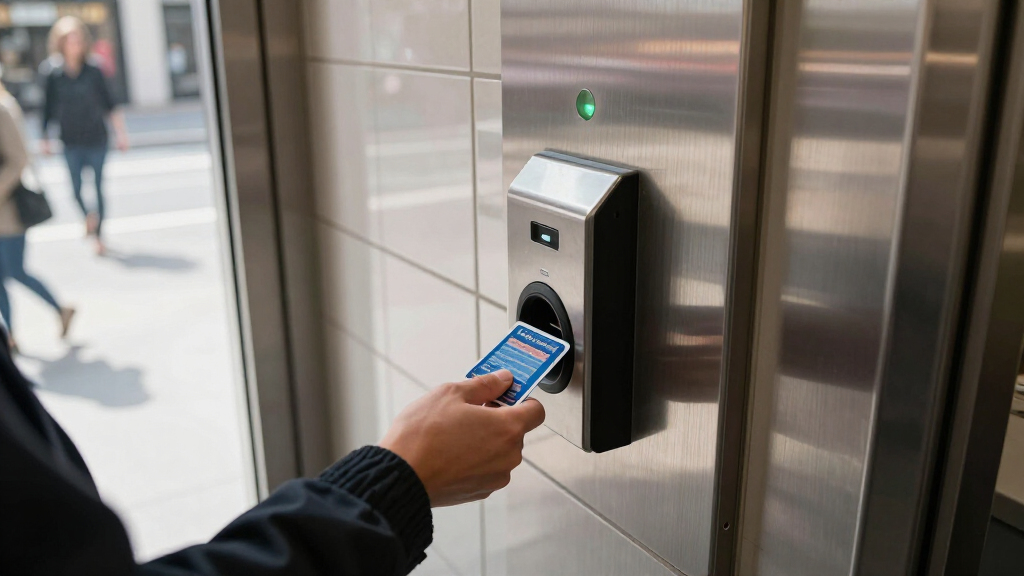
Visitors can text “Throne” and the unit number to open a door; scanning a QR code starts a prewritten text. The company’s app displays nearby bathrooms, availability and cleanliness ratings. Tap cards will be distributed free by local partners, providing an entry option for people without a smartphone or with a dead battery. Signs at each unit are expected to direct visitors to a card pickup point within a 10-minute walk, the report says.
The access system also sets a limit on visits. At five minutes, an announcement says the visit is halfway over; at eight minutes, it warns time is running out. At 10 minutes, lights flash and, after a short warning, the door opens. Throne says the limit is intended to keep units available and can help in a medical emergency. The company acknowledged at the city’s September 16 announcement that it cannot currently extend a visit for someone who needs more time, including a person with mobility challenges.
More Restrooms, Multiple Ways In
The pilot addresses a practical access problem: finding a usable public restroom when one is needed. City officials say New York has roughly 1,000 public bathrooms for more than 8 million residents, as well as visitors and commuters. The new facilities are free, so access does not depend on buying something from a business to use its restroom.
The tap card is a significant part of the design because phone-based entry can fail when a device is unavailable, uncharged or difficult to use. Free cards give visitors another way through the door, although the nearest pickup location may still require a walk. The project’s results could inform how the city balances convenient entry with dependable access for people with different needs.
For the operator, digital entry offers a way to count visits and receive cleanliness reports. Throne says those records help direct cleaners to units that need attention. The pilot will provide a test of that approach, but the source material does not report results on cleaning performance or public use yet.
How the Pilot Will Work
The city’s announcement on September 16, 2026, described a one-year trial with 17 modular bathrooms distributed across the five boroughs. The September 26 report said installation was under way, with work planned from mid-September into October. The project is funded with $4 million for the pilot year; the city has not announced a longer-term commitment in the source material.
Throne Labs will manage and clean the facilities. The company says the system can identify activity such as smoking during a visit tied to a phone and warn the user. It also uses timed announcements before opening the door at the 10-minute mark. These features are part of the operator’s design; their effectiveness in the New York pilot has not yet been established.
“The city has roughly 1,000 public bathrooms for more than 8 million residents.”
— New York City officials, as reported by PYMNTS
Access Limits Still Need Answers
How the city will address visits that exceed 10 minutes remains unclear. Throne said it does not currently offer an extension for people who need more time, including people with mobility challenges. The report does not explain whether the city or operator plans to change that policy during the pilot.
The source material also does not identify all 17 locations, provide usage or cleaning results, or explain what will happen after the one-year trial. It is not yet clear how frequently the units will be cleaned, how availability and cleanliness ratings are verified, or how often tap cards will be replenished at pickup points.
Installation and Pilot Results
Installation is scheduled to continue through October 2026, followed by operation during the one-year pilot. The city and Throne will need to demonstrate how the units perform on cleanliness, availability and access across the five boroughs. Further information about individual locations and the process for handling longer visits would clarify how residents and visitors can use the service.
At the end of the pilot, the city’s decision on whether to continue or expand the program will determine whether the 17 units become a lasting part of its public restroom network. No outcome or expansion plan has been reported yet.
Key Questions
How many bathrooms is New York City installing?
The city is installing 17 modular bathrooms across its five boroughs as part of a one-year pilot.
Do visitors have to pay to use them?
No. The bathrooms are reported to be free to use.
How can someone open a bathroom door?
Visitors can use a text message, QR code, app or tap card. Local partners will distribute tap cards free, and signs at the units are expected to show where to pick one up.
How long can a visitor stay inside?
The system gives warnings at five and eight minutes. At 10 minutes, lights flash and the door opens after a short warning period. Throne says it currently has no way to extend the visit for someone who needs more time.
When will the bathrooms open?
The units are scheduled to operate from 7 a.m. to 10 p.m. Installation is expected to run from mid-September into October 2026.
Source: rss
Fall Picks
fall essentials
As an affiliate, we earn on qualifying purchases.